Golden Pass Texas Prepares for First LNG Export as Train 1 Moves Into Cargo Phase
🔔 Subscribe to ShipUniverse Weekly →
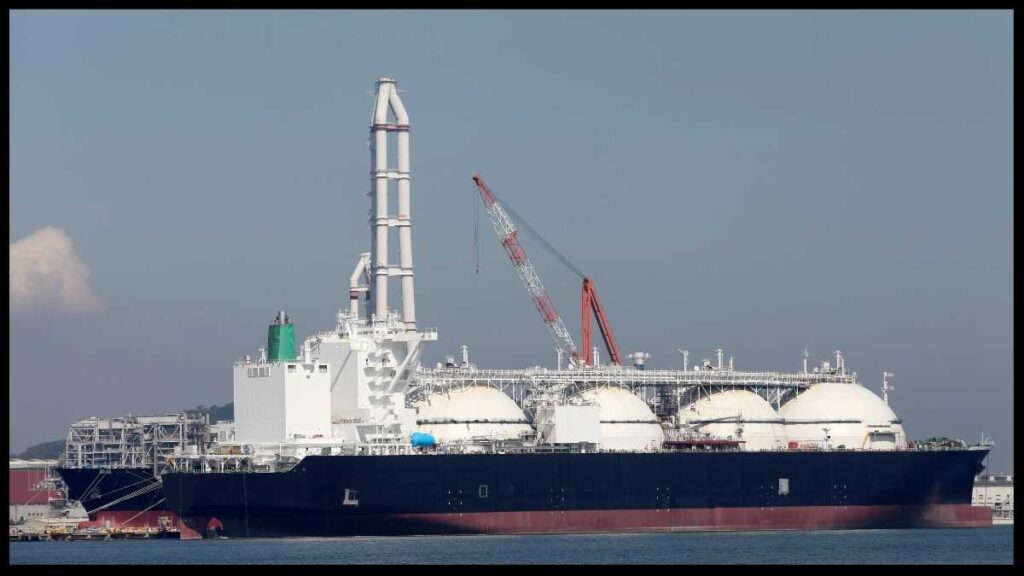
Golden Pass LNG in Sabine Pass, Texas is now at the point where its first export cargo is about to leave the terminal, marking the shift from startup milestones into actual seaborne LNG trade. The facility produced its first LNG on March 30, 2026, and on April 20 received its first LNG tanker, Al Qaiyyah, for the inaugural export loading sequence. Reporting says the plant is currently taking in about 400 million cubic feet of gas per day on Train 1, roughly half of that train’s nameplate feed level of 800 million cubic feet per day, and that the initial cargo is expected to head to Italy. Golden Pass is a 70/30 joint venture between QatarEnergy and Exxon, and its full three-train design is intended to produce 18 million metric tons per year, with Train 1 accounting for 6 mtpa of that total.
Click here for 30 second summary of the full piece ▶
Golden Pass has moved from first LNG to first cargo readiness
The latest step at Golden Pass is no longer only about commissioning progress inside the plant. It is now about export execution. Train 1 has already produced LNG, the first export tanker has arrived at the terminal, and the project is entering the point where startup gas volumes, tank readiness, marine logistics, and offtake plans are being converted into an actual overseas shipment.
- Startup milestone: first LNG was produced at the end of March.
- Marine milestone: the first tanker has reached the terminal for inaugural loading.
- Commercial milestone: the first cargo is expected to head to Europe.
Golden Pass is no longer just a construction story. It is now entering the export market in live cargo terms.
| Fast reader take | Latest confirmed signal | Operational meaning | Commercial consequence | Shows up first | Closest stakeholders |
|---|---|---|---|---|---|
| Golden Pass is at first-cargo readiness, not just first-gas status |
The first export tanker has arrived at the terminal after the plant produced first LNG in late March.
Al Qaiyyah arrived
first LNG already produced
cargo phase
|
The project has crossed from internal plant commissioning into live marine export execution. | The terminal is beginning to matter to global LNG trade in physical shipment terms, not just as future capacity. | Spot market attention shifts from startup milestones to actual cargo timing. | Utilities, traders, shipowners, Gulf Coast terminals. |
| Train 1 is not yet at full design throughput |
Train 1 is taking in about 400 mmcf/d, around half of its full 800 mmcf/d rate.
400 mmcf/d
half of full rate
|
The plant is moving forward, but still in a ramp phase rather than mature steady-state operation. | Early cargo timing and pace remain more sensitive to commissioning behavior than at fully stabilized plants. | Short-term shipment cadence may look uneven before smoothing out. | Offtakers, schedulers, marine operations teams. |
| Train 1 alone is a meaningful addition |
Train 1 has an annual capacity of 6 mtpa within a three-train project designed for 18 mtpa.
6 mtpa Train 1
18 mtpa full project
|
Even partial startup adds real export weight to the U.S. LNG system before the full site is complete. | The U.S. export stack gains another growth platform at a time when Atlantic Basin demand remains strategically important. | More optionality for Atlantic cargo placement and portfolio balancing. | European buyers, U.S. gas suppliers, LNG portfolio players. |
| The shareholder split defines early cargo ownership |
QatarEnergy owns 70% and Exxon owns 30%, with Train 1 volumes split accordingly.
70% QatarEnergy
30% Exxon
QatarEnergy gets 4+ mtpa
|
Initial cargo strategy is shaped by shareholder offtake rights rather than by a wide merchant pool. | Early cargo destinations and marketing behavior will reflect portfolio logic from the two owners. | Visible routing choices and destination signaling from shareholder books. | Exxon, QatarEnergy, portfolio customers, destination markets. |
| The first destination is commercially telling |
The inaugural cargo is expected to go to Italy.
Italy destination
Europe-bound first cargo
|
The earliest export signal points to Europe as the first receiving market rather than Asia. | Atlantic Basin pull remains strong enough to shape the project’s opening trade pattern. | European receiving terminals and gas balancing desks become the first watchers. | European importers, regas terminals, regional traders. |
| The project is arriving after delays and cost pressure |
The project has faced delays and cost overruns, including the bankruptcy of its original lead contractor.
delay history
cost overruns
contractor bankruptcy
|
The first cargo milestone matters partly because it confirms the site has moved beyond a difficult build phase. | Execution credibility improves as physical exports replace construction promises. | Market focus shifts from project risk to ramp-up performance. | Investors, lenders, contractors, competing developers. |
Golden Pass First Cargo Readiness Tool
This built-in dashboard converts the current startup picture into a practical export-readiness score. It helps show whether Golden Pass looks like it is merely at symbolic first-cargo stage or is already building toward a more repeatable Train 1 export rhythm.
Startup inputs
Check the confirmed startup milestones, then fine-tune how close you think Golden Pass is to steady export cadence rather than a one-off inaugural shipment.
Positive signals
Constraining signals
Fine-tune the current picture
Operational readout
The model separates inaugural-cargo readiness from ongoing export rhythm, because a successful first lift does not automatically mean a smooth steady-state ramp.
Golden Pass looks ready for its inaugural cargo, while the bigger question is how quickly it transitions from milestone shipment to repeatable export cadence.
| Stage | Project picture | Market reading | Main question |
|---|---|---|---|
| Stage 1 Milestone cargo |
The project is capable of a first export, but still early in startup behavior. | The market sees a proof point more than a full ramp. | Can it repeat cleanly? |
| Stage 2 Live startup |
Golden Pass is exporting and building commissioning rhythm at the same time. | Confidence improves, but remains cautious. | How fast does Train 1 stabilize? |
| Stage 3 Early export cadence |
Multiple cargoes begin to establish a more reliable pattern. | The market starts treating Golden Pass as active supply. | How smooth is ramp-up? |
| Stage 4 Established train |
Train 1 behaves more like a normal export asset than a startup asset. | The project becomes a steadier part of Atlantic Basin supply planning. | How fast do the later trains follow? |
Golden Pass is now at the point where physical cargo movement starts to replace commissioning theory. The milestone is the first shipment. The larger commercial test is whether Train 1 quickly converts that shipment into dependable export rhythm.
We welcome your feedback, suggestions, corrections, and ideas for enhancements. Please click here to get in touch.