China Turns Up the Heat on Maersk and MSC in the Panama Canal Port Fight
🔔 Subscribe to ShipUniverse Weekly →
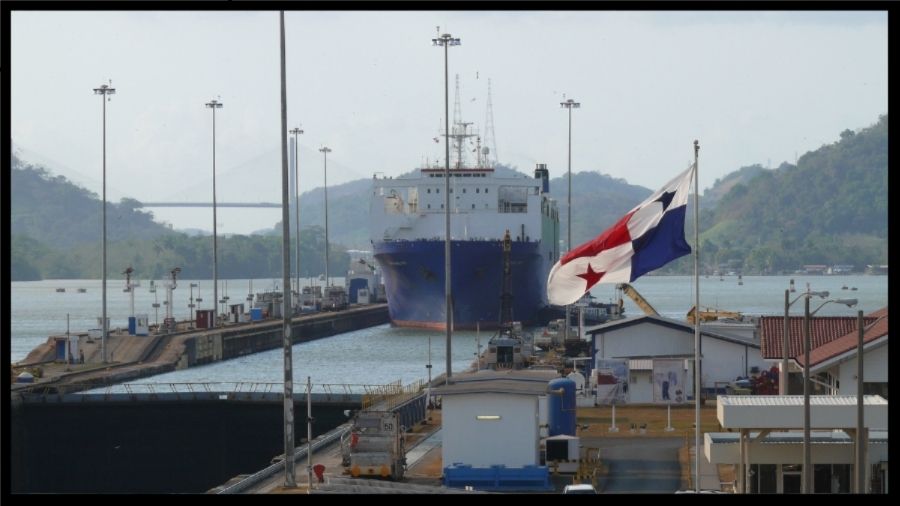
China has reportedly told Maersk and MSC to back away from operating the Balboa and Cristóbal terminals at either end of the Panama Canal, escalating a dispute that has already widened from a local port concession fight into a broader geopolitical and commercial confrontation. The reported warning came after Panama stripped CK Hutchison of the two concessions and handed temporary 18-month operating roles to APM Terminals Panama, part of Maersk, and TIL Panama, part of MSC. The issue now sits at the intersection of canal logistics, great-power pressure, and corporate legal conflict: Beijing has already pushed back publicly against Panama’s court-driven move, Panama says Chinese inspections of Panama-flagged ships increased after the ruling, and CK Hutchison’s Panama unit is pursuing arbitration claims of more than $2 billion while also accusing Maersk of helping to undermine its contract position. No public operating withdrawal by Maersk or MSC has been announced, and neither Chinese authorities nor the companies publicly confirmed the reported instruction, but the episode shows the Panama Canal port battle is no longer only about who runs two terminals. It is now also about who can pressure global shipping lines, how far that pressure will go, and whether canal-side operations become a wider fault line in U.S.-China maritime competition.
The dispute is no longer just about two terminals
The latest pressure campaign turns a Panama concession fight into a broader shipping and geopolitical risk story.
| Pressure lane | Current position | Importance | Commercial effect | Next signal to watch |
|---|---|---|---|---|
| Reported Chinese warning | China has reportedly told Maersk and MSC to drop the Panama Canal port roles. The message appears to be political pressure, not a formal legal order published into an international operating framework. Pressure signal, not yet a withdrawal | It tells the shipping market that Beijing now sees the terminal handover as a direct strategic issue, not just a Panama domestic matter. | Even without immediate operational change, the reported warning raises political risk around any company seen as benefiting from the takeover. | Whether either carrier publicly adjusts its position or whether Panama issues fresh reassurances. |
| Temporary terminal control | Panama handed Balboa to APM Terminals Panama and Cristóbal to TIL Panama under temporary 18-month concessions. That gave Maersk and MSC operating exposure in one of the world’s most sensitive canal-linked logistics zones. Temporary role, strategic location | The temporary nature matters because it leaves the operating structure legally and politically vulnerable. | Customers can use the terminals, but the background uncertainty makes the arrangement feel provisional rather than settled. | Whether the temporary structure holds or gets interrupted by legal or diplomatic escalation. |
| CK Hutchison response | CK Hutchison’s Panama unit is seeking arbitration and major damages. The company is arguing the concession cancellation and subsequent handover were unlawful and has also targeted Maersk in the dispute. Legal fight still expanding | This means the dispute has both a state-to-state track and a corporate litigation track at the same time. | Operators, customers, and lenders now face legal overhang in addition to geopolitical pressure. | Whether the arbitration broadens further or produces interim relief requests affecting operations. |
| Chinese retaliation pattern | Panama says Chinese inspections and detentions of Panama-flagged ships increased after the court ruling. That suggests the pressure campaign may not be confined to the two terminals themselves. Pressure spreading beyond the ports | The issue is becoming a wider maritime leverage story rather than a localized concession fight. | Panama-flagged shipping may carry added friction in Chinese ports even outside direct canal-related operations. | Whether detentions normalize or continue as part of broader leverage against Panama. |
| Canal-side strategic value | The terminals sit at one of the most important chokepoints in global trade. That is why even temporary operator changes are drawing outsized international attention. Control around the canal matters | The Panama Canal is too important for major powers to treat nearby port control as a routine commercial reshuffle. | Every operational move near Balboa and Cristóbal is now being read through a strategic lens. | Whether the dispute affects carrier network planning or stays contained to terminal governance. |
| Market uncertainty | No public withdrawal by Maersk or MSC has been announced. That leaves the market in a familiar grey zone: strong political pressure, limited formal clarity, and continuing operations under dispute. Operations continue under a cloud | Shippers care less about diplomatic language than about whether the terminals keep functioning smoothly. | Business can continue, but counterparties may price in more caution and contingency planning. | Whether port users begin diverting volume or simply wait for clearer political signals. |
This is becoming a test of how far maritime coercion can travel
The dispute is widening from terminal control into inspections, diplomacy, litigation, and pressure on third-party operators.
The deeper significance here is that Maersk and MSC did not create the Panama dispute, but they are now being pulled directly into it because temporary operating control placed them on top of a strategic fault line. Once Panama voided the old terminal framework and installed APM Terminals Panama and TIL Panama, the canal-side issue stopped looking like a passive legal transfer and started looking, from Beijing’s point of view, like a strategic displacement of Chinese commercial interests. That helps explain why pressure has moved beyond statements into corporate warnings and wider friction around Panama-flagged shipping.
The risk for the carriers is not only whether they hold the terminals. It is whether their broader commercial exposure begins to absorb retaliation costs. A global liner does not evaluate Balboa or Cristóbal as isolated assets. It evaluates them as parts of a wider network that depends on trade fluidity, diplomatic predictability, and manageable regulatory friction. If China keeps using inspections, port-state scrutiny, or other informal pressure tools, the terminal question can quickly become a larger network-risk question.
The temporary concession structure is commercially awkward
Temporary control can keep cargo moving, but it is weaker than a settled long-term concession. That makes every political shock more consequential.
China’s leverage is broader than the ports themselves
The rise in Panama-flagged ship inspections shows the pressure can spread into wider maritime flows, not just the two terminals at issue.
CK Hutchison is still shaping the battlefield
By pursuing arbitration and publicly accusing Maersk of helping undermine its contract position, CK Hutchison is making the operators part of the legal fight, not just temporary replacements.
Canal politics now sit inside carrier strategy
For Maersk and MSC, the issue is not only operational continuity at Balboa and Cristóbal. It is whether involvement there starts to affect their wider geopolitical risk profile.
Signals on the board now
The market is watching whether Beijing escalates beyond reported warnings, whether Panama-flagged inspections normalize, whether the arbitration widens further, and whether either carrier begins changing language around its temporary canal-side operating role.
Canal-Side Exposure Estimator
Model how temporary terminal control near the Panama Canal can accumulate added cost through delay, inspection friction, legal overhang, and network rerouting.
This model is not about terminal valuation. It is about operating friction. It shows how a politically unstable temporary concession can raise logistics cost even when the cranes keep moving and the terminals stay open.
We welcome your feedback, suggestions, corrections, and ideas for enhancements. Please click here to get in touch.