First Japan-Linked Crude Tanker Clears Hormuz, But Traffic Is Still Far From Normal
🔔 Subscribe to ShipUniverse Weekly →
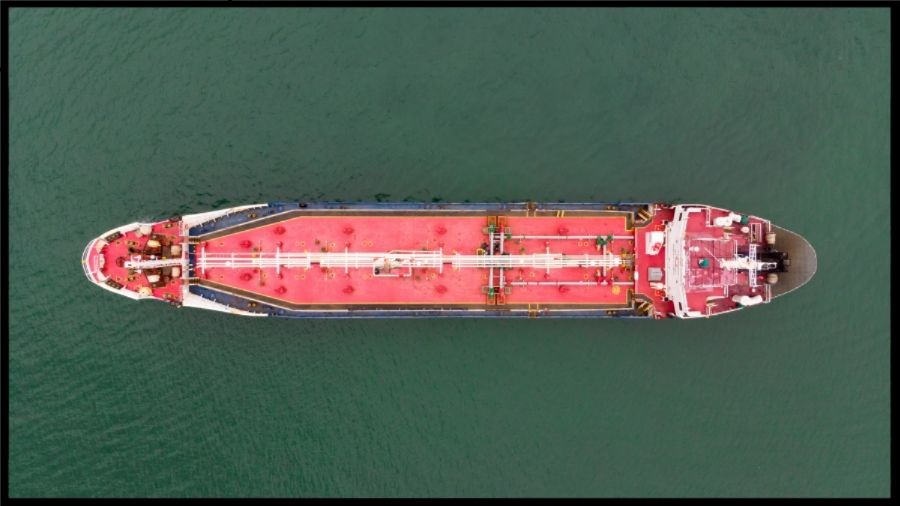
Japan-linked tanker traffic through the Strait of Hormuz is beginning to move again, but only in a very limited and carefully managed way. A tanker operated by a subsidiary of Idemitsu Kosan has now passed through the strait carrying about 2 million barrels of Saudi crude bound for Japan, marking the first Japan-linked crude transit since the war began. At the same time, overall Hormuz activity remains sharply depressed, with ship-tracking data showing only seven vessels crossed in the past 24 hours compared with roughly 125 to 140 ships a day before the conflict. Shipping companies are still dealing with Iranian transit restrictions, U.S. blockade enforcement against Iran-linked shipping, thousands of stranded seafarers, and unusually thin oil-export traffic, which means the Japanese transit looks more like a tightly controlled test case than the start of a broad reopening.
Click here for 30 second summary ▶
The first successful Japan-linked crude transit is a signal, but not yet a reopening
The latest Japan-linked movement through Hormuz looks important mainly because it broke a drought rather than because it proved normal trade conditions have returned. The Idemitsu-linked tanker moved through carrying Saudi crude for Japan, but it did so inside a corridor where total ship counts remain deeply suppressed and commercial movement still depends on political tolerance, route discipline, and close risk management. The current picture is one of selective passage, not broad confidence. For Japanese energy buyers, that means access has improved at the margin, but the supply route is still operating under stress and exceptional conditions.
| Pressure lane | Current marker | Immediate operating read | Importance | Commercial consequence | Next checkpoint |
|---|---|---|---|---|---|
| Japan-linked crude movement | An Idemitsu-linked tanker carrying Saudi crude completed a Hormuz transit toward Japan. First successful crude test | Japan-linked crude traffic is no longer fully frozen, but it is still operating in isolated rather than routine form. | Japan depends heavily on Gulf crude, so even one completed transit is closely watched for supply planning. | Refiners gain a practical proof point that some movement is possible, but not enough evidence yet to assume steady flow. | Watch whether a second and third Japan-linked crude tanker can cross without special treatment or major delay. |
| Overall Hormuz ship count | Only seven ships crossed in the past day, versus 125 to 140 before the war. Restart still extremely thin | The corridor remains commercially impaired despite a few headline passages. | A functioning energy chokepoint cannot be judged by one tanker alone. It has to be judged by repeatable daily flow. | Freight, scheduling, and refinery planning will stay defensive while ship counts remain this low. | Watch whether daily traffic rises into double digits and stays there across several consecutive days. |
| Failed broader restart attempt | Around 20 ships tried to exit on April 17 after Iran said the strait was open, but many halted or turned back. Confidence gap still visible | The market has already shown it does not trust verbal reopening signals on their own. | That failed attempt still hangs over every new transit decision. | Operators are likely to treat any reopening window as provisional until repeated safe passage is proven. | Watch whether future convoy-like clusters move through successfully or stop short again. |
| U.S. blockade enforcement | 37 vessels have been turned back by U.S. forces since April 13. Traffic still filtered | The strait is constrained not only by Iranian control but also by U.S. enforcement pressure on Iran-linked shipping. | This makes any restart partial and politically selective rather than broadly commercial. | Owners and charterers still face route uncertainty, cargo screening complexity, and the risk of sudden redirection. | Watch whether enforcement remains concentrated on Iran-linked shipping or spills more broadly into other traffic. |
| Japan’s supply posture | Japan has already been pulling more crude from the U.S. Gulf Coast to hedge Middle East disruption. Fallback sourcing already active | Japan is not waiting for Hormuz normality. It is already building alternative supply lines. | That shows how little confidence buyers still have in a quick full restoration of Gulf flows. | Long-haul replacement barrels can support supply security, but they also change voyage lengths, freight demand, and inventory timing. | Watch whether Japanese refiners keep increasing Atlantic Basin intake even if a few more Hormuz transits succeed. |
| Human and operational strain | Around 20,000 seafarers remain stranded inside the Gulf. Shipping system still under stress | The corridor is not just thin on cargo flows. It is still burdened by a broader maritime disruption. | Crew risk, vessel backlog, and prolonged idle time make restart harder even when a few ships begin moving. | Transit recovery can remain shallow if ships, crews, and operators are still trapped inside a larger crisis system. | Watch whether stranded-vessel numbers begin falling in tandem with any increase in Japan-linked movements. |
We welcome your feedback, suggestions, corrections, and ideas for enhancements. Please click here to get in touch.