Panama Canal June Maintenance Could Tighten Slots Just as Rerouted Demand Builds
🔔 Subscribe to ShipUniverse Weekly →
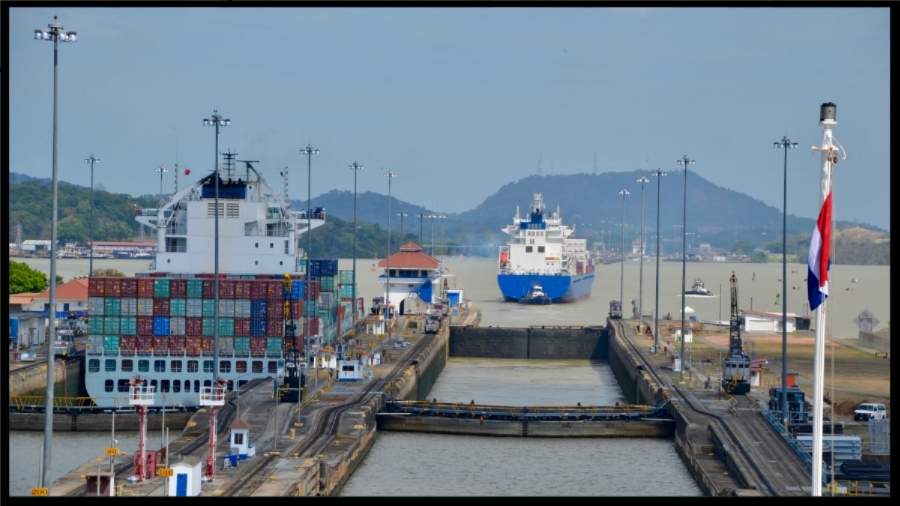
Fresh concern is building around the Panama Canal ahead of a scheduled Gatun Locks outage in June, not because the waterway is planning a drought-style shutdown, but because demand has already been rising before the maintenance window arrives. The Panama Canal Authority’s latest advisory says dry chamber maintenance on the East Lane of the Gatun Locks will run from June 9 through June 17, and during that period the number of Panamax-lock slots will be reduced to 16, with the West Lane remaining available but taking additional time for lockages. The authority also says full 26-slot Panamax capacity will return beginning June 18. This is landing into a busier market: the canal recorded 6,288 transits in the first half of fiscal 2026, up 224 year on year, auction prices have surged as rerouted trade linked to the Middle East conflict lifted demand, and the canal recently said it is currently handling about 38 ships a day without planning broader passage restrictions for the rest of 2026. The issue for operators is that even a short maintenance window can matter more when booking pressure, auction values, and rerouted flows are already elevated.
Maintenance is short, but the market around it is already tight
The core issue is not a canal shutdown. It is that a scheduled reduction in Panamax slots is arriving while rerouted trade has already pushed booking pressure and auction pricing much higher.
| Pressure lane | Current position | Importance | Commercial effect | Next signal to watch |
|---|---|---|---|---|
| June outage window | Gatun Locks east-lane dry chamber maintenance is scheduled for June 9 to June 17. During that period, Panamax-lock slot availability is cut to 16 and the west lane remains available with slower lockages. Short outage, meaningful slot squeeze | Even a limited outage matters more when demand is already elevated and customers are competing harder for passage certainty. | Owners and charterers face a higher chance of rescheduling, premium slot competition, or timing risk around the maintenance dates. | Whether more customers pull bookings forward into late May and early June to avoid the maintenance window. |
| Booking-system restriction | For June 9 to 17 booking dates, only four booking slots will be offered to supers in Period 2 and none to regular vessels, with no Period 3 slots for either. The total available during the maintenance period will be 13 slots for supers and 3 for regular vessels. Last-minute flexibility reduced | This tightens late-stage booking options precisely when many operators may still be reacting to changing trade flows. | Shippers with weak booking discipline are more exposed to auctions, waiting time, and higher logistics cost. | Whether auction activity spikes again as the reduced-slot period approaches. |
| Traffic backdrop | Canal traffic has already been running stronger in fiscal 2026. The first half recorded 6,288 transits, up year on year, with April operations described by the canal as efficient and uncongested despite rising demand. Higher baseline demand | Maintenance is more disruptive when it lands into a market with less spare timing capacity. | A short outage can produce a bigger commercial effect than its calendar length suggests. | Whether May traffic holds near recent levels or rises further before the outage starts. |
| Auction-price signal | Slot-auction pricing has already surged in recent weeks. The canal said some auctions exceeded $1 million and average auction prices rose to about $385,000 from roughly $135,000 to $140,000 before the Middle East disruption intensified. Urgency already expensive | That means the price of getting timing wrong is already much higher than before the June maintenance announcement. | Late-booking exposure becomes a bigger budgeting risk for operators during the outage window. | Whether auction values jump again once June-bound booking dates tighten. |
| Current operating stance | The canal says it is not planning broader 2026 passage restrictions despite El Niño concerns later in the year. It is currently allowing about 38 ships a day and says water-conservation measures have kept Gatun reservoir levels high. No drought-style cap planned | This matters because the market is dealing with a maintenance-driven tightness, not a return to drought emergency controls. | The commercial shock is likely to be concentrated around scheduling and booking economics rather than a systemwide capacity collapse. | Whether the authority keeps the same confidence after maintenance begins and rainy-season conditions evolve. |
| Global rerouting effect | Trade disruption linked to the Middle East conflict is still helping redirect flows toward Panama. The canal authority has directly linked recent demand growth and auction volatility to shifting global trade routes. External shock still feeding demand | Panama is not dealing with a local demand story alone. It is also absorbing second-order effects from other disrupted corridors. | That makes June maintenance more commercially sensitive for container, LPG, LNG, and energy-linked movements. | Whether rerouted energy and container flows remain elevated into June. |
The June work itself is temporary. The concern is that it arrives while booking pressure is already high, auction prices are already inflated, and rerouted trade is still leaning on Panama more heavily than normal.
The commercial risk is less about closure and more about paying for certainty
When a short maintenance event hits a busier canal, the main consequence is usually not total gridlock. It is that schedule discipline becomes more valuable and last-minute passage becomes more expensive.
The strongest reading of the June situation is that Panama is not moving back into a 2023-style drought crisis. The authority is openly saying it plans to keep 2026 unrestricted from a water-management perspective, and it has been maintaining Gatun reservoir levels at unusually high levels ahead of possible El Niño conditions later in the year. But that reassurance does not remove the commercial tension around June. The canal is already carrying stronger demand, it is already running close to its maximum sustainable daily range at about 36 to 38 ships, and the booking market has already shown that marginal passage certainty is expensive when trade flows shift suddenly. In that setting, a temporary Panamax-lane outage can have an outsized commercial effect even if the system as a whole keeps operating.
The second important point is that the June maintenance matters most for operators who depend on timing flexibility rather than those with strong booking discipline. ACP’s advisory sharply narrows late-stage slot availability during the outage window, and earlier April changes to the booking system show the canal has already been actively fine-tuning how additional slots, last-minute reservation services, and Transit in Advance opportunities are allocated. That means the market is not only tighter because of maintenance. It is also more structured, which tends to reward customers who plan early and penalize those who arrive late into a crowded booking calendar. This is especially relevant for Panamax trades and for cargoes where missing a window can erase voyage economics.
Auction pricing has already shown the market’s pain threshold
Once some auctioned slots move above $1 million and average auction values nearly triple, the market is already telling operators that timing mistakes are expensive before June even starts.
Traffic growth makes short outages feel larger
ACP’s first-half fiscal data and recent reporting on stronger transit levels suggest the canal is entering the maintenance period with less slack than it had when demand was weaker.
The outage is concentrated in Panamax-lock capacity
That matters because the June advisory focuses on Gatun east-lane work and cuts Panamax-lock slots to 16, meaning the maintenance effect is most acute where booking flexibility is being squeezed directly.
The canal still looks operationally steady
ACP continues to say operations are efficient and uncongested overall, so the story is not system failure. It is a tighter commercial environment inside an operating canal.
This model is built for a short maintenance window inside a busy canal. It shows when paying more for timing certainty may still make commercial sense because the cost of delay and missed scheduling windows is even larger.
We welcome your feedback, suggestions, corrections, and ideas for enhancements. Please click here to get in touch.