Three VLCCs Slip Out of Hormuz, but the Gulf Still Is Not Back to Normal
🔔 Subscribe to ShipUniverse Weekly →
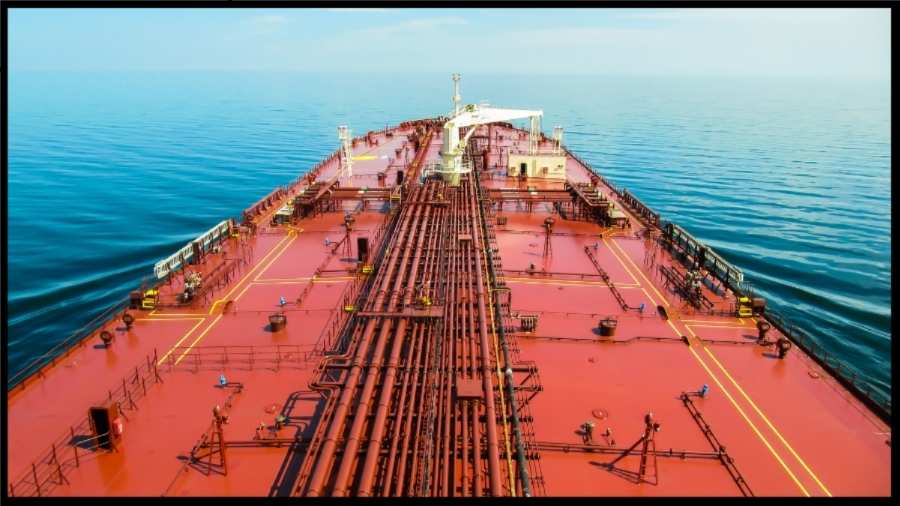
Three very large crude carriers are now exiting or have just exited the Strait of Hormuz carrying a combined 6 million barrels of Middle East crude, marking the biggest single day of crude movement through the corridor in weeks but not a broad recovery in Gulf shipping. Shipping data cited by Reuters show the South Korean-flagged Universal Winner is carrying about 2 million barrels of Kuwaiti crude to Ulsan for SK Energy, while the Chinese-flagged Yuan Gui Yang is carrying about 2 million barrels of Iraqi Basrah crude to Shuidong Port, and the Chinese-flagged Ocean Lily is carrying about 2 million barrels split between Qatari al-Shaheen and Iraqi Basrah crude to Quanzhou Port. The same reporting says the ships had been stalled in or near the Gulf for more than two months as the U.S.-Israeli war on Iran severely disrupted navigation, and that daily traffic through Hormuz had fallen from roughly 125 to 140 transits before the crisis to around 10 recently. Last week Iran had begun allowing certain Chinese vessels through after an understanding with Beijing, but industry caution remains high because the route still sits inside a live security and control dispute.
| Fast reader take | Latest shipping signal | Operational meaning | Commercial consequence | Shows up first | Closest stakeholders |
|---|---|---|---|---|---|
| Three VLCCs have finally started clearing the strait |
Two Chinese-flagged VLCCs and one South Korean-flagged VLCC are exiting with roughly 6 million barrels combined.
3 VLCCs
6 million barrels
China and Korea
|
This is a meaningful physical movement of crude, not just policy talk or vessel positioning. | Asian buyers now have proof that large crude cargoes can still be extracted from the Gulf under current conditions. | Immediate attention on discharge timing, charter execution, and cargo replacement planning. | Asian refiners, crude traders, VLCC owners, Gulf exporters. |
| The mix of cargo origins is commercially important |
The departing ships are carrying Iraqi, Kuwaiti, and Qatari crude streams to China and South Korea.
Basrah crude
Kuwaiti crude
al-Shaheen blend
|
The movement shows several Gulf export systems remain capable of loading, even if transit remains constrained. | Importers can begin testing replacement economics and run-rate assumptions again. | Refinery planning, feedstock blending, and arrival-window adjustments. | State refiners, private refiners, crude desks, scheduling teams. |
| The route still looks politically managed, not neutral |
Recent moves through the strait have followed Iranian coordination demands and a narrower set of tolerated passages.
IRGC coordination
managed passage
not open transit
|
Owners cannot assume standard commercial navigation rules have returned. | Each voyage still carries policy risk in addition to freight and marine risk. | Higher clearance uncertainty and slower decision-making at operator level. | Masters, operators, legal teams, underwriters, charterers. |
| Traffic volume remains radically below pre-crisis levels |
The corridor is still moving only a fraction of its normal vessel count despite these exits.
low throughput
abnormal traffic
queue pressure
|
These three ships represent progress, but not system normalization. | Freight markets will still price scarcity, waiting time, and uncertainty into Gulf voyages. | Elevated rates, scheduling slippage, and continued anchorage congestion. | Tanker owners, brokers, exporters, cargo receivers. |
| More tankers are still using defensive behavior |
Other recent crude movements through Hormuz have involved switched-off trackers or delayed signals.
AIS dark periods
defensive routing
risk masking
|
The market is still operating with conflict-era shipping practices. | Transparency, security, and monitoring burdens stay unusually high. | Harder voyage visibility and higher perceived risk across counterparties. | Insurers, security teams, intelligence providers, traders. |
| This still sits inside a live threat environment |
Recent warnings on projectile strikes, mine uncertainty, and unresolved transit rules remain active in the background.
projectile risk
mine risk
rules still unclear
|
Successful exits do not eliminate the hazard picture for the next ship behind them. | Operators will continue treating Gulf transits as exceptional decisions rather than routine deployment. | War-risk pricing and tighter voyage screening. | Shipowners, P&I clubs, crews, navies, cargo owners. |
Hormuz Exit Strength Tool
This built-in tool measures whether the latest VLCC departures amount to a meaningful recovery signal or only a narrow release valve inside a still-stressed corridor.
Live transit inputs
Adjust the sliders to test whether three departing VLCCs should be read as a recovery milestone or as a still-fragile exception.
Live readout
This section converts the latest departures into one score showing whether the market should treat them as a true reopening signal or as selective transit under stress.
The three departures look important because the cargo volume is real, but they still do not prove that Hormuz has returned to ordinary commercial operation.
Ship movements are beginning to resemble a broader and more dependable recovery.
Some large cargoes can move, but the route still carries unusual operational and political constraints.
Traffic remains highly abnormal and transits depend on exception, coordination, or tacit approval rather than normal shipping practice.
Large cargoes may get through, but the wider market is still too disrupted and threatened to call the corridor functionally restored.
The key commercial question is not whether three VLCCs can leave. It is whether dozens more can follow under predictable rules, visible routing, and tolerable risk. That answer still looks unresolved.
We welcome your feedback, suggestions, corrections, and ideas for enhancements. Please click here to get in touch.