Orderbook Momentum Returns as MSC Eyes Another Giant Boxship Wave
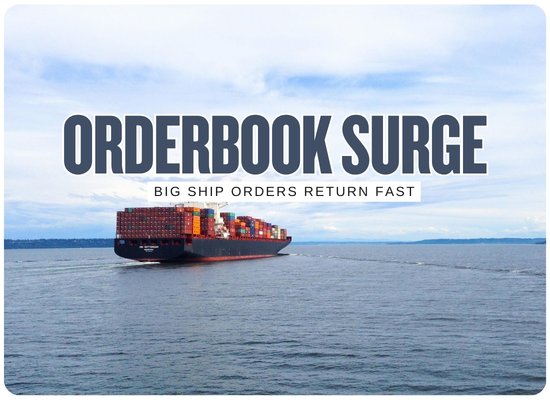
Fresh containership ordering activity is picking up again around the very top and the middle of the market. The newest development is market reporting that MSC has returned to megaship contracting with a deal that could reach as many as 20 LNG dual-fuel vessels of about 20,000 TEU, which would make it one of the largest containership orders placed this year if confirmed. That comes on top of MSC’s January move for six 11,400 TEU LNG dual-fuel ships with options for four more, CMA CGM’s recent order for eight 6,000 TEU ships, ONE’s deal for six 15,900 TEU LNG dual-fuel vessels, and Evergreen’s previously approved 23-ship expansion. The backdrop is already heavy: BIMCO said the containership orderbook reached a record 11.8 million TEU in March, and the World Shipping Council said 78% of container ship orders are now dual-fuel capable.
Operator Impact Snapshot
The orderbook is already historically large, so every fresh megaship contract adds more future capacity pressure into the late-decade delivery window.
New orders keep concentrating around LNG and other dual-fuel formats, which is narrowing the commercial room for plain conventional tonnage.
Large-ship positions at major Asian yards remain strategically important, especially when top carriers return for another wave of very large vessels.
The ordering pace is running ahead of any simple demand story, so the real question remains where all this new capacity lands once deliveries accelerate.
Engine makers, containment providers, digital vendors, coating specialists, and equipment suppliers still see a healthy pipeline while the orderbook stays elevated.
Containership Ordering Report Card
| Development | Current Read | What the market is seeing | Importance | Who feels it first | Next thing to watch |
|---|---|---|---|---|---|
|
MSC returns to the giant end
Reports point to a fresh move back into about 20,000 TEU LNG dual-fuel tonnage with room for a much larger total if options are exercised.
|
Very Active | The reported contract could reach 20 ships and would mark one of the biggest containership ordering moves of the year if finalized at the indicated scale. | It reinforces the idea that top-tier carriers still want premium large-ship positions despite an already swollen orderbook. | Yards, rival liners, engine suppliers, containment vendors, and charter market watchers. | Whether the deal is confirmed as fully firm, partly optional, or followed by another large-carrier response. |
|
MSC is not ordering only at one size
Earlier this year the line also booked six 11,400 TEU LNG dual-fuel ships with options for more.
|
Multi Layered | The carrier appears willing to add capacity both in giant sizes and in lower but still significant mainline segments. | That widens the impact because it points to network planning rather than a one-off headline order. | Brokers, competitors, and suppliers trying to read MSC’s multi-year fleet shape. | Whether more orders emerge in the 10,000 to 16,000 TEU bands from MSC or peers. |
|
Mid-size ordering is still alive
CMA CGM recently added eight 6,000 TEU ships, showing that the order story is not only about giant units.
|
Still Building | Fresh mid-size orders suggest carriers still see room to tune regional and secondary trunk exposure while larger vessels dominate headlines. | It keeps the order wave broader than a simple megamax narrative. | Regional service operators, yard planners, feeder-adjacent suppliers, and chartering desks. | Whether more 5,000 to 8,000 TEU orders follow as trade lanes adjust around India, Med, or intra-Asia demand. |
|
ONE is still leaning into dual fuel
ONE’s six 15,900 TEU LNG dual-fuel ships add more depth to the mainline order stream.
|
Strategic | The order supports the idea that large carriers are still willing to commit to dual-fuel newbuilds in sizes that matter for major east-west and related loops. | It adds another data point showing that fuel choice and fleet renewal are still tightly linked. | Fuel-system suppliers, yard sales teams, financiers, and charter market analysts. | Whether more carriers stay with LNG, tilt back toward methanol, or diversify across both. |
|
Evergreen already made a large move
Evergreen approved 23 new ships earlier in the year, confirming that capacity expansion plans have not faded.
|
Established | The order was large enough to stand on its own even before the latest MSC reports added fresh momentum to the sector. | It shows that this year’s containership ordering story is cumulative rather than dependent on one carrier alone. | Competing liners, secondhand buyers, and shipyard commercial teams. | Whether other top carriers answer with their own fresh round of approvals. |
|
The orderbook is already historically heavy
BIMCO put the containership orderbook at 11.8 million TEU in March.
|
Record | The backlog is already large enough to keep future capacity growth front and center even before late-June ordering headlines are added in. | Every new order now lands against a much less forgiving supply backdrop. | Owners, financiers, lessors, and anyone trying to model delivery absorption. | How much recycling and delivery slippage are needed to stop the backlog from feeling excessive later on. |
|
Fuel choice is becoming less optional
Dual-fuel capability now dominates containership contracting.
|
High Conviction | Alternative-fuel readiness is no longer a niche feature. It is quickly becoming the default expectation for major new container orders. | That changes capex assumptions, supplier demand, technical standards, and asset-competitiveness thinking. | Engine makers, tank-system suppliers, class, yards, and owners comparing long-life competitiveness. | Whether the next ordering wave remains LNG-heavy or swings more visibly toward methanol-capable designs. |
The most important thing in this ordering cycle is not that one carrier is buying another set of ships. It is that fresh deals are being added while the industry is already sitting on a record backlog and while dual-fuel specifications continue to dominate new contracts. That combination keeps the containership market commercially busy even as it makes the medium-term capacity puzzle harder to solve cleanly.
Containership Ordering Pressure Gauge
Use this tool to estimate how exposed your business is to the current newbuild ordering wave across capacity pressure, fuel strategy, yard-slot competition, and delivery timing.
Your current setup points to a fairly elevated exposure to the latest containership ordering cycle.
The biggest issue in your profile appears to be how future capacity lands relative to market conditions, not just the headline number of new orders.
How strongly the dual-fuel shift could shape competitiveness in your part of the market.
How much premium yard access and contracting competition matter to your planning.
How much operational flexibility you appear to have if ordering momentum changes the market faster than expected.
We welcome your feedback, suggestions, corrections, and ideas for enhancements. Please click here to get in touch.