Cruise Demand Holds Strong as Fuel Costs and Softer Guidance Test the Sector
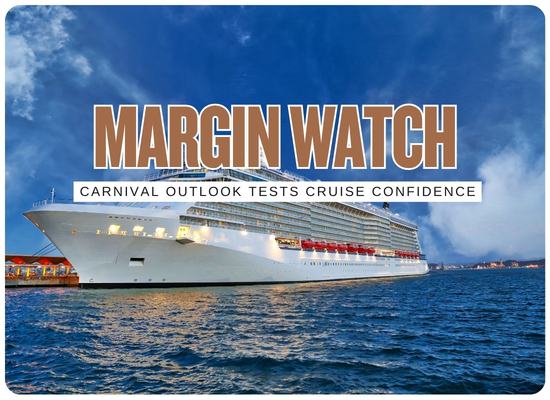
The current cruise industry outlook is sending a mixed but important signal across the market. Demand remains strong, ships are still sailing with high occupancy, and industry passenger volume is sitting at record levels, but the latest financial updates show that operators are facing a tighter operating environment than the booking headlines alone suggest. Carnival’s record second quarter came with lower parts of its 2026 outlook, including pressure from higher fuel costs, softer Mediterranean booking conditions tied to geopolitical uncertainty, and a more cautious earnings setup for the current quarter. Royal Caribbean and Norwegian Cruise Line have also pointed to fuel and Middle East-related travel pressure in recent updates, even as overall cruise demand remains resilient.
Cruise Demand Is Strong, But Margin Pressure Is Back in Focus
The sector is still carrying high booking levels and passenger growth, while fuel costs, geopolitical disruption, and softer guidance are creating a more cautious commercial readout.
Fuel Cost Exposure
Higher fuel prices are pressuring cruise margins, with Carnival particularly exposed because its fuel strategy leaves more of the cost movement flowing directly into earnings.
Mediterranean Booking Sensitivity
Recent company updates point to softer booking behavior around Europe and Mediterranean itineraries as travelers react to Middle East-related uncertainty and higher travel costs.
Demand Still Resilient
Global passenger volume is at record levels, repeat-cruise intent remains high, and major operators continue reporting strong booked positions despite near-term pressure.
Supplier and Port Opportunity
Fleet growth, terminal expansion, LNG readiness, digital guest systems, shore power, foodservice, hotel operations, and maintenance demand remain active investment areas.
Operator Readout
The current cruise outlook is best read as a strong-demand market with tighter operating discipline. Passenger interest remains healthy, but fuel, itinerary risk, airfare, regional softness, and lower guidance from Carnival have made the margin picture more sensitive. Cruise lines are still filling ships, ports are still planning growth, and suppliers still have a large service opportunity. The shift is that investors and operators are watching earnings quality more closely than headline demand.
Cruise Industry Outlook
Strong demand is meeting higher fuel costs, softer guidance, and more careful itinerary planning.
Carnival’s Guidance Shift Changes the Tone
Carnival’s latest update has become the clearest near-term signal for the cruise sector. The company reported record second-quarter revenue and strong adjusted earnings, but the market focused on its softer guidance, lower adjusted EBITDA outlook, and reduced yield expectations for the rest of the year. The company also pointed to higher fuel costs and booking disruption tied to geopolitical uncertainty, particularly around Europe and Mediterranean itineraries. That combination has raised concern because Carnival remains one of the industry’s largest volume players, so a softer outlook from the group can influence how investors and suppliers read the broader cruise market.
Carnival’s reported second-quarter revenue, a record level but slightly below some market expectations.
Carnival’s reported booked position for the rest of 2026, showing demand remains strong even as guidance became more cautious.
Global cruise passenger volume reported by CLIA for 2025, a record level that frames the sector’s current growth base.
Fuel Is the Biggest Near-Term Margin Test
Fuel has returned as one of the cruise industry’s most visible cost pressures. Carnival’s update showed a sharp increase in fuel expense, and recent reporting also noted that the company does not hedge fuel in the same way some peers do. That matters because a cruise ship’s voyage economics depend heavily on fuel, itinerary distance, hotel load, port sequencing, weather, and speed. When fuel rises quickly, operators have only a few levers: adjust pricing, improve onboard revenue, trim costs, optimize speed, modify deployment, or rely on hedges if they exist.
Royal Caribbean and Norwegian have also flagged fuel-related pressure in recent guidance updates, although their hedging profiles and brand mix differ. Norwegian lowered its outlook after Middle East-related conflict lifted fuel expectations and affected booking behavior, while Royal Caribbean reduced profit guidance tied partly to higher fuel and travel-cost pressures. Together, those updates show that the issue is not limited to one operator. Fuel is now a sector-wide planning variable across itinerary design, sourcing, procurement, and guest pricing.
Commercial readout: The cruise sector is still selling cabins, but earnings quality is more exposed to fuel, itinerary geography, airfare, onboard spend, and the ability to protect pricing without weakening booking momentum.
Demand Remains a Supportive Force
The industry’s strongest support is still consumer demand. CLIA’s 2026 industry report showed record passenger volume and nearly 90% of cruisers indicating they intend to sail again. That repeat-intent signal matters because cruise lines depend on loyal guests, onboard spending, pre-cruise packages, loyalty programs, private-island offerings, and repeat booking cycles to stabilize revenue. High occupancy also supports onboard revenue from dining, beverage, excursions, retail, casino, Wi-Fi, and premium experiences.
Demand is not uniform across every itinerary or passenger segment. Caribbean sailings, short cruises, drive-to ports, luxury ships, expedition products, and premium family ships can behave differently. Europe and Mediterranean bookings are more sensitive to airfare, war-risk headlines, and traveler confidence. That split creates a market where operators with flexible deployment, strong direct booking channels, private destinations, and diversified sourcing can defend margins better than operators exposed to softer regions or fuel-heavy itineraries.
Ports and Suppliers Still Have a Growth Market
Even with softer guidance from large operators, the cruise infrastructure story remains active. Ports are investing in terminals, parking, baggage systems, shore power readiness, LNG and alternative-fuel planning, traffic flow, digital passenger processing, and dual-use waterfront assets. Galveston, for example, is expecting nearly 3.9 million passenger movements in 2026 and has been investing heavily in cruise infrastructure and future terminal capacity. For ports and terminal developers, the current outlook still supports long-term planning, but with more pressure to prove that investments can handle bigger ships, faster turnarounds, and higher passenger volumes.
Suppliers also remain tied to a growing service market. Cruise ships are floating hotels with marine systems, foodservice operations, HVAC, water treatment, waste management, entertainment technology, safety equipment, hotel refurbishment cycles, connectivity upgrades, and environmental compliance needs. If cruise demand stays resilient, suppliers with efficiency-focused products may benefit from the exact cost pressures that are worrying investors.
Commercial Signals for Cruise Stakeholders
- ①Cruise lines: Fuel planning, deployment flexibility, guest pricing, onboard revenue, and regional booking mix will carry more weight through the next earnings cycle.
- ②Port authorities: Passenger growth still supports terminal investment, but projects need strong traffic, parking, baggage, and shore-side flow logic.
- ③Suppliers: Efficiency, automation, hotel operations, energy savings, water systems, waste handling, and maintenance products remain high-value opportunities.
- ④Travel advisors: Messaging may need to balance strong demand with traveler concerns around airfare, regional instability, itinerary changes, and total trip cost.
- ⑤Investors: Occupancy and bookings are not enough by themselves. Fuel, yield, onboard spend, debt, and capital spending are now central to the cruise equity story.
Cruise Outlook Watch Table
| Market Signal | Current Readout | Commercial Meaning | Stakeholders Affected | Watch Level |
|---|---|---|---|---|
| Carnival guidance shift | Record Q2 revenue, but softer outlook signals caution | Strong demand is being weighed against fuel, yield pressure, and regional booking uncertainty. | Cruise lines, investors, suppliers, lenders | High |
| Fuel cost pressure | Higher fuel expense is affecting major operators | Fuel can reduce margin even when occupancy and passenger spending remain healthy. | Operators, procurement teams, ship planners, itinerary teams | High |
| Mediterranean softness | Booking sensitivity tied to geopolitical uncertainty | Europe deployment and airfare-linked demand need closer monitoring. | Travel advisors, cruise lines, European ports, tour operators | Watch |
| Passenger demand | Record global passenger volume and high repeat intent | Demand remains the sector’s main stabilizer despite cost pressure. | Ports, cruise lines, travel sellers, hospitality suppliers | Positive |
| Port expansion | High-growth homeports are investing in capacity | Terminal, parking, traffic, baggage, and shore-power projects remain commercially relevant. | Port authorities, terminal developers, civil contractors | Medium |
| Supplier opportunity | Efficiency and guest-experience upgrades stay active | Cost pressure can increase demand for systems that reduce fuel, labor, waste, water, or hotel operating cost. | Marine equipment, hotel vendors, digital platforms, service firms | Positive |
Risk note: Cruise demand can remain strong while profitability weakens if fuel, airfare, interest expense, itinerary disruption, or onboard-cost inflation rise faster than ticket and onboard revenue. Operators should separate booking strength from margin quality when reading the current outlook.
Cruise Margin Pressure Calculator
Estimate the earnings impact of fuel-cost movement, occupancy changes, and onboard-spend shifts on a cruise sailing or itinerary group.
Estimated added fuel cost versus the selected budget or prior cost case.
Estimated onboard revenue change from the selected per-night spending shift.
Fuel pressure after onboard-spend offset and occupancy impact estimate.
Estimated net pressure spread across current guests onboard.
The sailing still needs monitoring, but revenue offset is covering much of the modeled fuel pressure.
Track onboard spendThis tool is for editorial and planning sensitivity only. It does not include exact ticket yield, commissions, air packages, port fees, crew cost, maintenance, insurance, drydock timing, debt service, hedging, taxes, itinerary changes, excursion margin, casino revenue, or brand-specific accounting.
We welcome your feedback, suggestions, corrections, and ideas for enhancements. Please click here to get in touch.