Canada’s Pacific Oil Push Points to Bigger Asia Tanker Flows
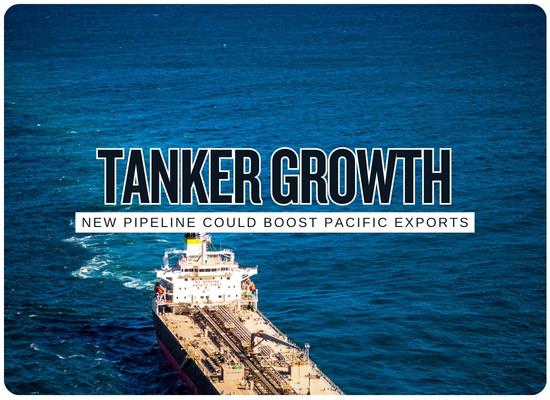
Canada has advanced a new West Coast oil pipeline proposal designed to move more Alberta crude to the Pacific Coast and expand the country’s access to Asian energy buyers. The plan, announced by Prime Minister Mark Carney and Alberta Premier Danielle Smith, would add roughly 1 million barrels per day of export capacity through a southern British Columbia route that follows the broader Trans Mountain corridor concept, while keeping the federal tanker ban on northern British Columbia in place. The project would be led through government-owned Trans Mountain Corp. with Alberta and Pembina Pipeline involved, and it has already been submitted for potential fast-track review through Canada’s major projects process.
Pacific Crude Export Capacity Moves Back Onto the Tanker Desk
Canada’s proposed West Coast pipeline would add a major new crude route toward Asia, but execution depends on permitting, Indigenous participation, environmental conditions, terminal readiness, and political durability.
Asia Tanker Demand
A 1 million barrel per day pipeline could create a meaningful stream of Pacific crude liftings for Asian refiners if terminal capacity, approvals, and marine logistics align.
Regulatory and Indigenous Track
The proposal is moving into major-project review, but long-route pipeline development still depends on consultation, permitting, environmental conditions, and legal resilience.
Terminal and Escort Capacity
More crude moving to the Pacific Coast would increase attention on berth access, tug escort capacity, pilotage, storage, loading windows, spill response, and port traffic planning.
U.S. Market Diversification
The project is built around reducing Canada’s dependence on U.S. crude buyers by creating a larger export channel to Asia and other non-U.S. markets.
Northern Tanker Ban Stays
The federal tanker ban on northern British Columbia remains a central limit, pushing attention toward southern coastal routing and existing export corridors.
Operator Readout
The tanker market signal is not immediate spot cargo tomorrow. It is a forward capacity signal. If the pipeline clears review and reaches construction, Canada could become a larger regular Pacific crude exporter to Asia, creating more Aframax, Suezmax, or shuttle-linked cargo planning depending on terminal design and port restrictions. Operators should track approval milestones, terminal upgrades, storage plans, route limits, marine safety conditions, and Asian refinery demand before treating the project as firm tanker demand.
Pacific Crude Export Update
Canada’s new pipeline push could reshape crude flows, tanker scheduling, and Asia-facing export strategy.
Canada Moves a New West Coast Oil Route Into View
Canada and Alberta have advanced a new West Coast oil pipeline proposal aimed at moving roughly 1 million barrels per day of Alberta crude to the Pacific Coast. The proposal is being positioned as a national export project that would expand access to Asian buyers and reduce Canada’s reliance on the U.S. crude market. The planned route is tied to southern British Columbia and the broader Trans Mountain corridor, rather than a northern coastal route, because the federal tanker ban on northern British Columbia remains in place.
Proposed crude export capacity from Alberta to the Pacific Coast under the new West Coast pipeline plan.
Pembina’s expected construction stake, with potential for additional participation after the pipeline enters service.
Jobs Canada says could be supported during construction and operation of the new west coast oil pipeline.
Pacific Tanker Trade Becomes the Maritime Angle
The maritime angle is straightforward: more crude moving to the Pacific Coast means more tanker liftings if the project reaches operation. Since the Trans Mountain expansion opened, a significant share of Canadian crude shipped from the Pacific Coast has moved to Asia, and the new proposal is built around enlarging that export pathway. For Asian refiners, Canadian heavy crude can offer supply diversification away from U.S.-centered logistics and Middle East exposure. For tanker owners, the question is which vessel classes, terminal constraints, and sailing patterns would dominate the trade.
Commercial signal: The project points toward larger Canada-to-Asia crude flows, but the tanker market should treat it as a staged opportunity. The decisive markers are regulatory approval, Indigenous participation, terminal design, storage capacity, marine safety conditions, and firm Asian offtake interest.
Environmental and Political Conditions Stay Central
The project is moving forward alongside several political and environmental conditions. Ottawa has said the northern British Columbia tanker ban will remain in place, protecting that coast from crude tanker traffic and pushing the proposal toward a southern route. British Columbia’s government has not endorsed the pipeline, but has indicated it will not use the courts to fight a project if constitutional authority rests elsewhere. Canada has also linked the broader energy agreement with carbon capture development, Indigenous partnerships, and additional infrastructure commitments.
Commercial Signals for Maritime Stakeholders
- 01Tanker owners: Track expected cargo size, terminal constraints, escort rules, berth timing, and Asian refinery demand before modeling vessel employment.
- 02Charterers: A larger Pacific export lane could create more optionality for Canadian crude into Northeast Asia, India, and other Asian refining centers.
- 03Ports and terminals: More crude volume would raise demand for berth productivity, storage, spill response, pilots, tugs, loading arms, and marine traffic systems.
- 04Insurers: Environmental sensitivity, coastal navigation, escort requirements, and spill-response readiness will be central underwriting considerations.
- 05Brokers and traders: The trade could affect Pacific tanker triangulation, U.S. West Coast pricing, Asia heavy crude competition, and freight optionality.
- 06Suppliers: Pipeline-linked export growth can create demand for marine construction, dredging support, tugs, response craft, terminal systems, and monitoring technology.
Canada Pacific Pipeline Watch Table
| Market Signal | Current Readout | Maritime Meaning | Stakeholders Affected | Watch Level |
|---|---|---|---|---|
| Pipeline capacity | About 1 million barrels per day proposed | Could support a significant stream of Pacific crude liftings if approved and built. | Tanker owners, charterers, crude traders, Asian refiners | High |
| Asia export strategy | Canada is seeking more non-U.S. crude market access | More cargo could move toward Asian refiners, changing Pacific crude trading patterns. | Refiners, brokers, traders, freight desks | High |
| Southern coastal route | Northern B.C. tanker ban remains in place | Marine traffic planning stays focused on southern coastal export corridors and terminal options. | Ports, pilots, tug operators, insurers, regulators | Watch |
| Government ownership | Trans Mountain and Alberta entities expected to lead majority ownership | Public ownership may keep the project moving, but commercial structure and cost recovery remain important. | Lenders, taxpayers, shippers, pipeline users, investors | Medium |
| Regulatory pathway | Proposal submitted for major-project review | Approval timing, route decisions, consultation, and conditions will shape the real tanker timeline. | Operators, ports, First Nations, regulators, terminal contractors | Watch |
| Terminal and escort needs | Higher export volume would require coordinated marine infrastructure | Storage, loading capacity, tugs, pilots, response assets, and traffic systems become critical. | Terminal operators, tug owners, port authorities, spill-response firms | High |
Risk note: This is a proposed pipeline, not an operating export route. Tanker demand depends on final approval, construction timing, terminal design, storage capacity, vessel-size permissions, coastal navigation rules, Indigenous participation, environmental conditions, crude supply, and Asian buyer commitments.
Pacific Crude Tanker Call Estimator
Estimate potential tanker liftings from a Canada Pacific crude export route using pipeline capacity, utilization, cargo size, and Asia-bound share assumptions.
Modeled total annual crude volume moving through the export route after utilization.
Estimated volume headed to Asian buyers under the selected share assumption.
Estimated loaded tanker calls needed for the Asia-bound cargo program.
Estimated tanker days committed after applying voyage length and buffer.
The modeled cargo stream would require steady tanker scheduling, berth discipline, and commercial coordination.
Plan fleet coverageThis tool is for editorial and planning sensitivity only. It does not include actual terminal draft, berth limits, tug escort rules, port restrictions, storage capacity, crude quality allocation, demurrage, weather downtime, canal routing, sanctions risk, insurance, fuel cost, freight rates, or project approval status.
We welcome your feedback, suggestions, corrections, and ideas for enhancements. Please click here to get in touch.