
🔔 Subscribe to ShipUniverse Weekly →
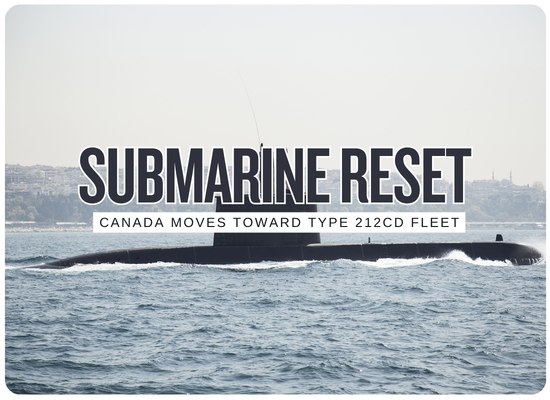
Canada has selected Thyssenkrupp Marine Systems as the preferred supplier to begin negotiations for up to 12 conventionally powered submarines, moving the Canadian Patrol Submarine Project into its next procurement phase and putting the German-Norwegian Type 212CD team ahead of South Korea’s Hanwha bid. The program is intended to replace Canada’s aging Victoria-class fleet and give the Royal Canadian Navy a larger under-ice-capable submarine force suited for Arctic, Atlantic, and Pacific operations. Canada says the selection is a key step toward maintaining future naval readiness, while current reporting notes that the final contract still has to be negotiated, delivery would be phased, and the full project could involve tens of billions of dollars once acquisition, sustainment, infrastructure, training, and long-term support are included. The decision also carries a clear alliance signal because the Type 212CD is tied to Germany and Norway, NATO interoperability, European defence industrial cooperation, and Canada’s broader push to raise defence spending.
Canada’s submarine choice shifts the naval supply chain toward Europe
The TKMS selection creates a major signal for submarine builders, combat-system suppliers, Arctic infrastructure firms, sustainment providers, and NATO planners.
Canada has selected TKMS as preferred supplier for negotiations covering up to 12 conventionally powered submarines.
The program is aimed at under-ice-capable patrol needs across Canada’s northern approaches, Atlantic, and Pacific operating areas.
The Type 212CD team brings NATO alignment, European industrial cooperation, and potential Canadian supplier participation.
The preferred supplier decision is not the final contract. Price, schedule, sustainment, infrastructure, and industrial benefits still need to be locked down.
Local ship-repair, training, sensor, communications, steel, cyber, and base-infrastructure firms will watch the industrial package closely.
Canada submarine program signal map
The table converts the TKMS selection into practical signals for naval suppliers, yards, planners, and maritime contractors.
| Signal | Current status | Commercial effect | Operator read | Next item to watch | Level |
|---|---|---|---|---|---|
| Preferred supplier | TKMS selected for negotiations. | German-Norwegian submarine team moves into lead position. | Supplier focus shifts from bid positioning to contract details. | Final contract award and scope. | High |
| Fleet size | Up to 12 submarines planned. | Large long-term naval procurement with decades of support work. | Lifecycle revenue may matter as much as initial build value. | Firm quantity and delivery phasing. | High |
| Arctic operations | Under-ice-capable requirement remains central. | Cold-region systems, navigation, communications, and sustainment gain weight. | Arctic capability will shape design acceptance and infrastructure planning. | Base upgrades and under-ice certification details. | High |
| Canadian industry | Local participation expected to be a major negotiation point. | Training, repair, cyber, steel, sensors, and infrastructure suppliers may benefit. | Domestic workshare will affect political and industrial support. | Industrial and technological benefits package. | Watch |
| NATO interoperability | European design strengthens alliance fit. | Common systems can support training, logistics, and allied operations. | Interoperability is a strategic advantage, not only a technical feature. | Combat-system and weapons integration choices. | Strong |
| Schedule risk | Early deliveries remain a key concern. | Canada must bridge the current fleet while new boats are built. | Transition planning may become the hardest operational issue. | First delivery date and crew-training ramp. | Watch |
Submarine Program Readiness Meter
A practical tool for estimating how contract scope, delivery pace, local workshare, and sustainment planning affect program confidence.
The program has strong strategic logic, but delivery timing, domestic workshare, and sustainment details still need stronger definition.
We welcome your feedback, suggestions, corrections, and ideas for enhancements. Please click here to get in touch.