Israel Pushes Back as ZIM Sale Faces Security Test
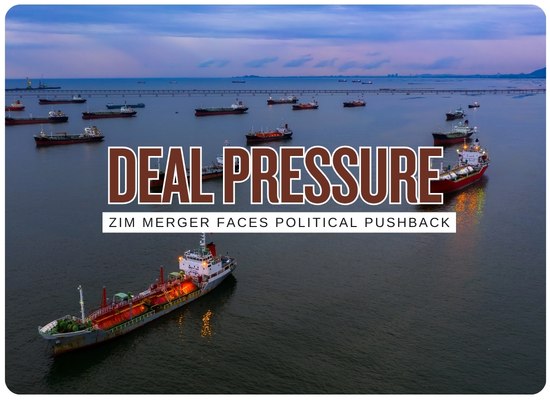
The proposed $4.2 billion sale of ZIM to Hapag-Lloyd has moved into a more difficult political and regulatory phase after Israeli Prime Minister Benjamin Netanyahu and Defense Minister Israel Katz urged that the transaction be scrapped or blocked on national security grounds. The deal, announced earlier as a cash acquisition at $35 per ZIM share, was already structured around a sensitive carve-out: a new Israeli-controlled liner company under FIMI would take over part of ZIM’s business, the ZIM brand, the state’s golden share responsibilities, and a fleet of 16 vessels designed to preserve Israel-linked maritime connectivity. The latest development is that senior Israeli leadership is now signaling that this structure may not be enough, while ZIM says it remains bound by the merger agreement and is continuing to work with state authorities through the regulatory review process.
Ship Universe Liner M&A Watch
Operator Impact Snapshot
The ZIM transaction is now being judged through national security, liner connectivity, and government approval risk.
The sale has not collapsed in company filings, but the political pressure has increased sharply. ZIM says it is still working through the merger agreement and regulatory review, while senior Israeli officials are signaling that the current carve-out structure may not satisfy the state’s security and strategic shipping concerns.
Government approval risk
Netanyahu and Katz have raised the political barrier around the transaction, making state approval the central issue for deal completion.
Strategic shipping control
The dispute centers on whether Israel would retain enough practical control over maritime connectivity, emergency capacity, and sensitive trade routes.
Carrier consolidation delay
Hapag-Lloyd’s expansion plan depends on regulatory and state approvals, while ZIM remains publicly committed to the review process.
Customer and employee uncertainty
Cargo owners, employees, and service partners now face a longer period of uncertainty around ownership, routes, staffing, and brand control.
Fallback deal structure
The carve-out into a smaller Israeli liner company may need changes if the state demands stronger safeguards or wider domestic control.
Commercial Reading
The ZIM sale is now less about valuation and more about control. The state’s golden share, military and emergency logistics concerns, employee issues, and foreign ownership sensitivities are all part of the transaction file.
- Shippers: track service continuity, booking confidence, routing changes, and any customer-facing transition plan.
- Ports: watch Israeli port activity, labor risk, brand control, and possible service reshuffling if the deal changes.
- Carriers: read this as a warning that container M&A involving national carriers can face a tougher security screen.
- Financiers: monitor deal-break risk, share-price volatility, termination terms, and financing conditions.
- Suppliers: prepare for delayed decisions around contracts, fleet services, systems, terminals, and procurement.
ZIM Transaction Board
Sale Status, Security Concerns, and Market Signals
The transaction is still in review, but Israeli political opposition has become the main obstacle.
Current Deal Setup
Approximate equity value of Hapag-Lloyd’s proposed all-cash acquisition of ZIM.
Price agreed under the merger agreement announced earlier this year.
New Israeli-controlled liner business planned under FIMI as part of the security structure.
ZIM says it continues to work with relevant state authorities under the regulatory review process.
Deal Risk Table
| Issue Area | Latest Detail | Market Effect | Stakeholder Move | Pressure Meter |
|---|---|---|---|---|
| Political Position Netanyahu and Katz | Senior Israeli officials are reported to oppose the sale, arguing that the current structure does not adequately protect national security interests. | Raises deal-break risk and increases the chance of revised terms, stronger safeguards, or government intervention. | Track official ministry statements, golden share authority, and any revised carve-out proposal. |
High
|
| ZIM Response Merger update | ZIM says it continues to act in accordance with the merger agreement and cooperate with relevant state authorities. | Keeps the transaction alive procedurally, even as political opposition grows. | Watch for company filings, deadlines, shareholder communications, and regulatory review updates. |
Watch
|
| Golden Share State control rights | The proposed New ZIM structure would take over golden share responsibilities along with the ZIM brand and strategic Israeli liner role. | The state may demand stronger protections if the proposed transfer is viewed as too narrow or too exposed. | Monitor whether golden share powers are exercised, expanded, or made a condition of approval. |
High
|
| Hapag-Lloyd Strategy Carrier consolidation | The acquisition would expand Hapag-Lloyd’s global scale and strengthen trade coverage across several major liner markets. | Delay or rejection would slow a major containerline consolidation move and preserve ZIM as a separate competitive player. | Competitors should model both outcomes: full acquisition and failed transaction. |
Medium High
|
| Israeli Maritime Links Emergency and strategic trade | The central security concern is whether Israel retains reliable maritime connectivity during crisis, disruption, or geopolitical pressure. | Service continuity, flag exposure, domestic control, and emergency capacity become part of the deal’s approval logic. | Cargo owners should watch schedule stability and any required continuity commitments. |
High
|
| Labor and Operations Employee uncertainty | Earlier labor opposition showed employee concerns around job security and the scale of the carved-out Israeli business. | Labor pressure can affect port activity, transition planning, and customer confidence during the review period. | Ports, shippers, and suppliers should keep contingency plans for disruption-sensitive Israeli cargo. |
Medium
|
ZIM Sale Approval Risk Calculator
Estimate transaction pressure from security concerns, golden share sensitivity, labor exposure, and regulatory friction.
Use this as a quick scenario tool for shippers, ports, suppliers, investors, and operators tracking whether the ZIM sale is moving toward approval, revision, or rejection.
Deal Pressure Score
76 / 100
Higher means greater risk that the current structure is blocked or revised.
Approval Readiness
36%
Estimated strength of current terms under the selected assumptions.
Revision Need
High
Signal for whether stronger safeguards or a new deal structure may be needed.
Operational Disruption Risk
65%
Estimated labor, customer, service, and transition friction.
Deal Signal
The current structure appears under heavy pressure. Stronger state protections, a larger carve-out, or revised control terms may be needed before approval becomes realistic.
We welcome your feedback, suggestions, corrections, and ideas for enhancements. Please click here to get in touch.