Hormuz Tanker Traffic Freezes as Truce Pressure Returns
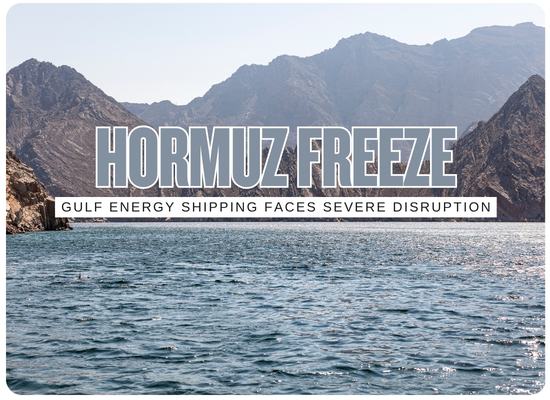
Oil tanker traffic through the Strait of Hormuz has fallen to a near standstill after renewed attacks on commercial vessels strained the U.S.-Iran truce and pushed operators back into crisis-mode routing decisions. Current reporting says only two tankers were recorded passing through the strait early Thursday, the Iranian crude supertanker Berg 1 and the chemical tanker Well Sail, while other vessels delayed, drifted, rerouted, or reduced tracking visibility amid heightened risk. The slowdown follows U.S. strikes against Iran after attacks on commercial ships transiting Hormuz, with insurance desks reassessing coverage and some war-risk underwriters advising shipowners to pause voyages through the waterway.
Hormuz tanker movement has shifted from slow to frozen
The latest traffic screen shows tanker operators pausing, drifting, or reassessing voyages as the truce comes under renewed strain.
Reported tanker movement through Hormuz has dropped to near standstill, with only a small number of tankers recorded in the latest window.
Some underwriters are advising voyage pauses or reassessing terms, creating immediate cost and coverage uncertainty for owners.
Crude, product, LNG, and LPG cargoes are exposed to delayed liftings, missed windows, and higher replacement-cost pressure.
Reduced tracking visibility can make risk assessment harder for charterers, insurers, port agents, and cargo interests.
Delay, deviation, demurrage, security cost, cancellation, and premium-allocation clauses may become active commercial issues.
Near-zero tanker flow puts energy logistics back on alert
The immediate maritime concern is not a formal closure announcement. It is the practical pause in tanker movement through one of the world’s most important oil and LNG corridors.
Oil tanker traffic through Hormuz has slowed to a near standstill after attacks on commercial vessels and U.S. retaliatory strikes weakened confidence in the truce. A small number of tankers reportedly passed through the strait in the latest early-day window, while other vessels waited outside, delayed sailing, or adjusted visibility and routing behavior.
Traffic confidence is the first test
For shipowners and charterers, the main question is whether tankers resume normal movement quickly or remain paused while military and insurance signals develop. A short delay can be managed as a security interruption. A longer freeze starts pushing into refinery schedules, LNG delivery planning, bunker demand, demurrage, and spot freight premiums.
Insurance pressure is now operational
War-risk discussions are no longer theoretical. Some underwriters are advising voyage pauses or reviewing cover, while premium levels and policy terms may shift quickly. That can affect both whether a vessel sails and who pays for the added cost under the charter party.
AIS gaps complicate the picture
Reduced tracking visibility can be a safety tactic, but it also makes commercial decision-making harder. Charterers, insurers, cargo owners, port agents, and analysts rely on vessel-position data to estimate queueing, transit counts, cargo delays, and regional exposure. Less visibility adds uncertainty at exactly the moment operators need clear information.
Hormuz tanker freeze signal map
The table converts the near-standstill into practical signals for tanker owners, charterers, insurers, ports, refiners, and LNG buyers.
| Signal | Current status | Commercial effect | Operator read | Next item to watch | Level |
|---|---|---|---|---|---|
| Tanker movement | Traffic through Hormuz is reported near standstill. | Cargo timing, refinery scheduling, and voyage economics are exposed. | Transit confidence has become the main commercial variable. | Hourly tanker counts and resumed laden movements. | High |
| War-risk cover | Some underwriters are advising voyage pauses or reassessing policy terms. | Premiums, exclusions, and sailing approvals can change quickly. | Coverage review may decide whether a vessel sails. | Insurer circulars, listed-area guidance, and premium calls. | High |
| Crude cargo exposure | Hormuz remains central to Gulf crude and condensate flows. | Delayed liftings can affect refinery runs and replacement cargo pricing. | Crude buyers need schedule and substitution checks. | Loading delays at Gulf export terminals. | High |
| LNG and LPG exposure | Gulf gas cargoes depend heavily on Hormuz transit. | Limited rerouting options make schedule reliability critical. | Energy buyers should monitor vessel lineups and delivery slots. | Qatar and UAE cargo departures. | High |
| AIS behavior | Some vessels may reduce visible tracking during heightened risk. | Less visibility complicates queue estimates and exposure modeling. | Use multiple data points, not AIS alone. | Dark activity, port calls, satellite confirmation, and agent updates. | Watch |
| Charter-party cost | Delay, deviation, and premium allocation may become contested. | Disruption cost can shift depending on fixture language. | Clauses need review before new voyage orders. | War-risk, safe-port, demurrage, and cancellation language. | Watch |
| Bunker and freight pricing | Energy risk can feed into fuel and freight markets quickly. | Higher voyage cost can spread beyond tankers. | Bunker-adjusted earnings need real-time updates. | Brent, VLSFO, MGO, tanker rates, and bunker spreads. | Watch |
| Truce stability | Recent attacks and strikes have strained the ceasefire framework. | Diplomatic confidence affects whether vessels resume normal movement. | Traffic recovery depends on both security and political signals. | Military statements, mediation updates, and new incident reports. | High |
Hormuz Tanker Flow Stress Meter
A practical tool for estimating cost and operational stress when tanker movement through Hormuz slows or freezes.
This transit environment is under severe stress because observed tanker movement is far below normal and the voyage carries large delay and insurance exposure.
We welcome your feedback, suggestions, corrections, and ideas for enhancements.
Please click here to get in touch