Antwerp Acid Leak Freezes Key Box Capacity as Terminal Recovery Turns Uneven
🔔 Subscribe to ShipUniverse Weekly →
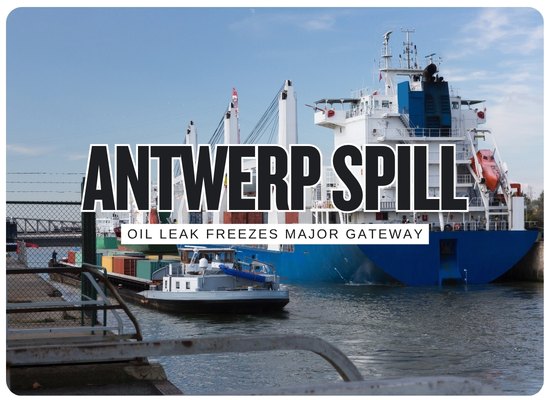
A hydrofluoric acid leak aboard the MSC Mia Summer II at Deurganckdock triggered a major emergency response at the Port of Antwerp-Bruges, sending 155 people for medical checks after possible exposure. Local authorities said 28 people showed more serious symptoms and one person was placed in intensive care, while the port authority activated a safety perimeter around the affected quay and temporarily suspended vessel traffic in the zone. The disruption hit two of the port’s most important container gateways at the outset, with MPET and Antwerp Gateway both halted during the response. As the situation stabilized, Antwerp Gateway and most other locations were cleared to resume, but MPET remained under restrictions into the following day while emergency teams continued to manage the affected area around the leaking container.
Operator Impact Snapshot
The immediate disruption has shifted from a full two-terminal shock toward a more uneven recovery pattern. The operating picture now centers on how long MPET stays constrained, how much cargo gets re-phased across the Left Bank, and whether inland planning absorbs the spillover cleanly.
Current read: The incident is no longer just a safety story. It has become a timing and terminal-allocation story, with the largest question sitting around how quickly the remaining restricted area is cleared without creating a second wave of yard and inland congestion.
Antwerp Terminal Disruption Table
| Pressure Lane | Current Position | Immediate Market Effect | First Stakeholders Hit | Next Signal to Watch |
|---|---|---|---|---|
|
Hazard Source
The incident began with a damaged container of hydrofluoric acid aboard MSC Mia Summer II.
|
The leak triggered a large emergency response at Deurganckdock, medical checks for 155 people, and hospital observation for the more serious cases. | Safety management moved ahead of terminal productivity immediately, which is typical when a highly corrosive cargo is involved. | Terminal labor, vessel crew, emergency teams, and quay-side operations. | Whether site clearing and container removal close out the last restricted area without renewed stoppages. |
|
Terminal Capacity
The earliest shock hit both MPET and Antwerp Gateway.
|
Both terminals were initially shut, but later updates showed broader resumption across the port while MPET remained the main restricted node. | This changes the issue from a blanket Antwerp shutdown into a more complex redistribution and backlog-management problem. | Carriers with Antwerp calls, forwarders, inland planners, and box operators juggling cut-offs. | How much residual queueing develops at MPET and whether adjacent facilities absorb cargo without fresh bottlenecks. |
|
Waterway Movement
Vessel traffic in the affected zone was temporarily suspended.
|
Nearby movements and access around the incident area were paused during the emergency phase, then partially or broadly restored outside the most sensitive zone. | Even short marine interruptions around a major container district can create berth, pilotage, and landside sequencing effects. | Feeder operators, barge schedules, tug and pilot coordination, and vessels already committed to Left Bank timings. | Whether the restored traffic pattern normalizes quickly or creates knock-on berth pressure into following calls. |
|
Cargo Timing
Recovery is now more about timing than pure closure.
|
As most areas reopen, the practical question becomes how quickly delayed container moves, gate activity, and inland handoffs are re-sequenced. | Late gates, missed connections, and demurrage exposure can become the bigger commercial story after the first shutdown headline fades. | Shippers with fixed delivery windows, truck planning teams, rail and barge operators, and time-sensitive import cargo. | Whether carriers and terminals start issuing wider operational advisories around backlog clearance or acceptance windows. |
|
Documentation Exposure
Incidents like this create a second layer of commercial work.
|
Shippers, carriers, and operators need clean records on cut-off changes, discharge timing, gate availability, and cargo transfer sequence. | That paperwork burden matters because disputes after hazardous shutdowns often center on timing proof rather than on the incident itself. | Claims teams, chartering desks, customer service, cargo interests, and marine insurers. | How quickly participants move from disruption alerts into formal delay, storage, or cost-recovery discussions. |
The present operating picture is narrower than the original shutdown headline but still commercially important because one restricted major terminal inside Antwerp can reshape yard flow, gate behavior, and inland planning well beyond the immediate hazard perimeter.
Antwerp Terminal Delay Exposure Estimator
Use this tool to estimate how strongly the terminal disruption could hit your cargo timing based on Antwerp dependence, urgency, and fallback strength.
Your current profile suggests that uneven terminal reopening is the biggest risk to cargo flow.
The current mix points to a meaningful Antwerp disruption exposure profile.
Limited rerouting or alternative terminal flexibility appears to be the factor most likely to amplify disruption.
The current mix suggests the incident can still create cost and timing pressure even after much of the port resumes moving.
This estimator is for operational planning use. It does not calculate actual storage charges, demurrage, detention, contractual liability, or terminal-specific service commitments.
We welcome your feedback, suggestions, corrections, and ideas for enhancements.
Please click here to get in touch