Ship Fires Are Turning Into a Bigger Cargo Risk Test
🔔 Subscribe to ShipUniverse Weekly →
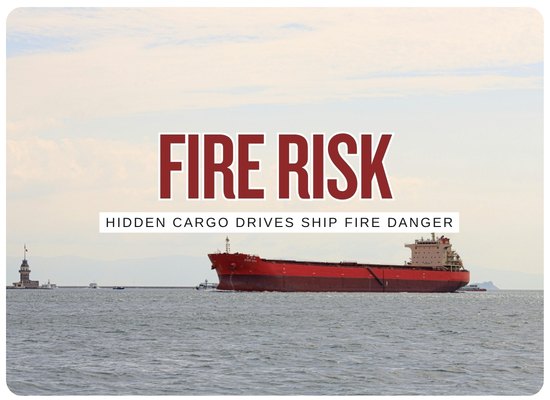
Ship fire risk has moved back into the foreground in 2026, with a mix of container fires, engine-room fires after attacks, battery and dangerous-goods concerns, and port-side firefighting cases forcing owners, carriers, insurers, terminals, cargo interests, and regulators to treat fire prevention as an active operating issue rather than a rare casualty file. The Container Ship Safety Forum has been discussing fire risks, navigational safety, and geopolitical risk with members this year, while recent industry analysis points to a harder problem inside container shipping: the box that looks ordinary but may contain undeclared batteries, chemicals, or other dangerous cargo before it is loaded. Allianz-linked industry reporting says a containership fire now breaks out somewhere roughly every 17 days, and misdeclared or undeclared dangerous goods remain a major driver, especially as lithium-ion battery shipments expand. The 2026 update on fires on ships includes the MSC Giada III fire after an explosion near St. Petersburg, the Safeen Prestige engine-room fire after being hit near Hormuz, the E VER LENIENT container fire at Singapore’s Pasir Panjang Terminal, the GFS Galaxy fire after damage off Oman, and the Stolt Magnesium fire after an external explosion off Oman, showing that this year’s fire file is split between cargo risk, machinery-space exposure, port response, and regional security pressure.
Ship fire risk is now a cargo, crew, insurance, and terminal problem
The 2026 fire file shows the risk moving through container stacks, engine rooms, ports, batteries, hazardous cargo, and conflict-zone transits.
Undeclared batteries, chemicals, and dangerous goods remain the hardest fire risk because crews may not know the hazard is aboard.
Terminal firefighting, berth isolation, patrol craft, marine firefighting vessels, and cargo access can decide whether a fire stays contained.
Larger ships increase access problems, cargo concentration, salvage complexity, and general average exposure when a fire escalates.
Several 2026 casualties were tied to external damage or conflict-zone exposure, adding another fire path beyond cargo declarations.
Fire files can trigger cargo claims, delay claims, salvage costs, general average, survey disputes, and tougher underwriting questions.
2026 ship fire signal map
The table converts this year’s notable public ship-fire cases into practical signals for carriers, cargo owners, terminals, insurers, and safety teams.
| Incident | Vessel type | Fire path | Commercial effect | Operator read | Signal level |
|---|---|---|---|---|---|
| MSC Giada III | Containership | Explosion followed by fire near St. Petersburg. | Machinery and access risk, towage response, inspection delay. | Engine-room fire readiness and emergency tow planning remain critical. | Watch |
| Safeen Prestige | Container feeder | Projectile impact above the waterline followed by engine-room fire. | Crew abandonment, vessel disablement, regional cargo disruption. | Conflict-zone damage can become a fire casualty within minutes. | High |
| E VER LENIENT | Containership | Container fire while berthed at Pasir Panjang Terminal. | Multi-agency firefighting, berth safety controls, cargo disruption risk. | Port-side response planning is central to container fire containment. | High |
| GFS Galaxy | Containership | Damage near Oman followed by onboard fire and engine-room impact. | Crew abandonment, missing seafarer report, route security pressure. | Security exposure now overlaps with containership fire planning. | High |
| Stolt Magnesium | Chemical tanker | External explosion followed by fire off Oman. | Shows broader regional fire exposure beyond boxships. | Chemical tanker fires bring cargo, pollution, and response complexity. | Watch |
| Industry frequency marker | Containership sector | Fire reported roughly every 17 days globally. | Routine underwriting and cargo-screening issue, not a rare event. | Pre-loading screening and dangerous-goods discipline are the strongest controls. | High |
| Battery cargo risk | Containerized supply chain | Lithium batteries and dangerous goods may be hidden or improperly packed. | Wrong stowage, delayed detection, harder firefighting, larger claims. | AI screening and shipper accountability should move earlier in the booking process. | High |
Container Fire Exposure Scorecard
A practical tool for estimating how cargo mix, declaration quality, ship size, stowage access, and response readiness affect fire exposure before loading.
This cargo profile needs active fire-risk review before loading. The main focus should be declaration quality, battery cargo screening, and stowage access.
We welcome your feedback, suggestions, corrections, and ideas for enhancements.
Please click here to get in touch