Red Sea Threat Adds Second Chokepoint Shock as Hormuz Traffic Falls
🔔 Subscribe to ShipUniverse Weekly →
Iran’s reported move to have the Houthis prepare for possible Bab el-Mandeb disruption adds a second maritime pressure point to an already strained Gulf shipping picture. Hormuz traffic has dropped sharply during the latest U.S.-Iran escalation, with commodity-vessel movement falling to extremely low levels and major tanker and LNG transits becoming more selective. The Bab el-Mandeb risk changes the operating map because it sits at the southern entrance to the Red Sea, linking the Indian Ocean with the Suez route and Mediterranean trades. For operators, charterers, insurers, energy traders, cargo owners, and ports, the update is not just another regional threat. It creates a two-corridor planning problem where Hormuz uncertainty can affect Gulf energy flows while Bab el-Mandeb pressure can keep ships away from the Red Sea, extend Cape diversions, lift bunker exposure, tighten war-risk terms, and complicate schedule reliability across Asia-Europe, Middle East, East Africa, and Mediterranean-linked trades.
Two Chokepoints Move Into the Same Risk Frame
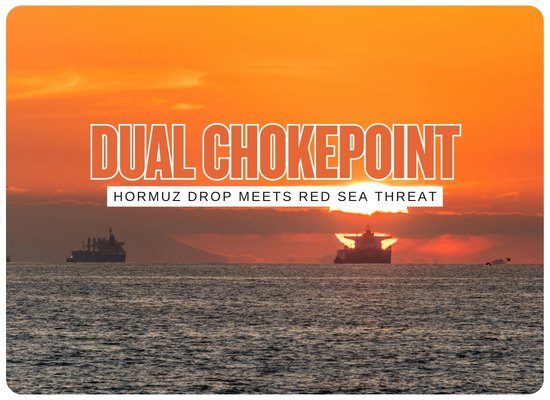
Hormuz traffic is already under pressure, while Bab el-Mandeb threats could extend disruption into Red Sea and Suez-linked trades.
Bab el-Mandeb Threat
Iran’s reported instruction to the Houthis puts the Red Sea gateway back into active risk planning for container, tanker, bulk, and project cargo routes.
Hormuz Traffic Drop
Commodity transits through Hormuz have fallen sharply, creating immediate uncertainty for crude, LNG, LPG, and refined product movements.
Cape Diversion Pressure
If Red Sea risk rises again, more vessels may remain on the Cape route, increasing voyage days, fuel burn, emissions exposure, and schedule drag.
War-Risk Repricing
Two active chokepoint threats can push insurers to recheck premiums, exclusions, voyage declarations, crew clauses, and cargo-specific terms.
Energy and Freight Spillover
Oil, LNG, container rates, bunker prices, port congestion, and charter decisions can all move faster when two strategic corridors are stressed at once.
Operator Readout
The working issue is corridor overlap. Hormuz disruption affects Gulf energy and tanker flows, while Bab el-Mandeb risk affects Red Sea access and the Suez route. Operators need to compare route safety, insurance approval, fuel exposure, cargo timing, and charterparty responsibility across both corridors at the same time.
Dual Chokepoint Watch
Hormuz is already showing traffic weakness, while Bab el-Mandeb is moving back into the threat picture.
The latest update puts two corridors into the same maritime planning cycle. Hormuz is the immediate traffic problem, with fewer commodity vessels moving through the strait. Bab el-Mandeb is the escalation risk, because a renewed Houthi threat could affect Red Sea access and keep Suez-linked shipping on longer diversion routes.
Reported commodity-vessel transits through Hormuz on July 16, the lowest daily level since May.
Reported VLCC and LNG tanker passages through Hormuz for the second straight day in the latest traffic snapshot.
EIA’s readout for LNG flows through Bab el-Mandeb in 2024 and the first half of 2025 after Red Sea disruption.
Maritime Risk Planning Table
| Risk Signal | Latest Readout | Maritime Meaning | Stakeholders Affected | Watch Level |
|---|---|---|---|---|
| Bab el-Mandeb threat | Iran reportedly told the Houthis to prepare for possible closure action | Red Sea and Suez-linked trades face renewed attack, closure, and diversion risk. | Container lines, tanker owners, bulk operators, insurers | High |
| Hormuz traffic drop | Commodity-vessel transits have fallen sharply | Gulf energy flows, port calls, and tanker scheduling remain under heavy pressure. | Energy traders, LNG buyers, refiners, port agents | High |
| VLCC and LNG pause | No VLCC or LNG passages reported for the second straight day in the latest snapshot | Large energy cargoes may face waiting, rerouting, or delayed loading and discharge windows. | VLCC owners, LNG carriers, charterers, utilities | Watch |
| Red Sea routing | Bab el-Mandeb risk can keep vessels away from Suez-linked lanes | Cape diversions can extend voyage time, fuel burn, equipment cycles, and inventory delays. | Shippers, carriers, forwarders, cargo owners | Medium |
| War-risk cover | Two active chokepoint threats can reshape premium discussions | Underwriters may tighten conditions around route declarations, crew terms, and cargo classes. | P&I clubs, war-risk insurers, owners, brokers | Watch |
| Energy and freight pricing | Oil and bunker markets are reacting to corridor risk | Fuel costs, freight quotes, surcharge timing, and charter economics may shift quickly. | Bunker buyers, freight desks, charterers, cargo interests | Medium |
Planning note: The main commercial stress comes from simultaneous route uncertainty. A ship can avoid one corridor and still face exposure in the other, especially on energy, Asia-Europe, Middle East, East Africa, and Mediterranean-linked trades.
Dual Chokepoint Exposure Calculator
Estimate the cost impact when Hormuz and Bab el-Mandeb risks affect the same voyage or cargo program.
Selected delay or diversion case from the route exposure menu.
Estimated vessel-time and bunker cost tied to the route case.
Estimated cargo cost tied to delay, inventory, or replacement pressure.
Estimated exposure after selected cost recovery.
The modeled route case creates major fuel, time, security, and cargo exposure.
Escalate reviewThis tool is for editorial and commercial sensitivity only. It does not replace live security advisories, naval guidance, insurance quotes, carrier schedules, bunker prices, charterparty terms, cargo contracts, sanctions screening, or professional voyage planning.
We welcome your feedback, suggestions, corrections, and ideas for enhancements.
Please click here to get in touch