
🔔 Subscribe to ShipUniverse Weekly →
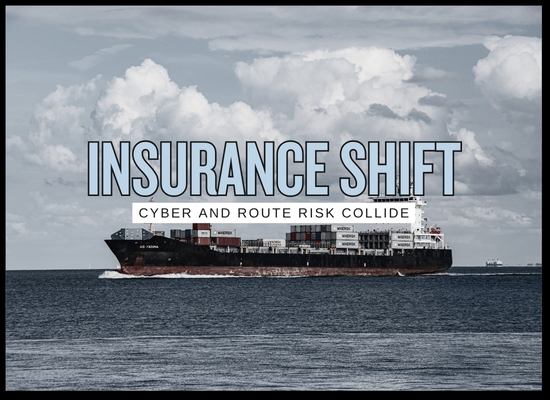
Marine insurance is moving into a more complicated phase because four pressure points are starting to overlap instead of staying separate. Cyber risk is no longer just an IT issue. IMO’s updated cyber risk guidelines say growing digitalization, integration, automation, and network-based systems have created an increasing need for cyber risk management, and MARAD now has an active 2026 advisory warning of foreign adversarial technological, physical, and cyber influence across maritime infrastructure. Autonomy is also crossing from theory into live regulation, with IMO adopting the first global MASS Code in May 2026 and setting it to take effect from 1 July 2026 for cargo ships. At the same time, sanctions exposure remains broad and extraterritorial, with the UK’s January 2026 maritime sanctions guidance stressing that operators must consider both geographic and thematic regimes, while OFAC’s April 2025 maritime advisory highlights AIS manipulation, obscure oil brokering networks, and deceptive shipping practices tied to Iranian oil trades. Route risk remains just as active: the Joint War Committee expanded listed areas in March 2026, MARAD still has active advisories for both the Gulf and the Red Sea, and BIMCO’s 2025 war clauses give owners and charterers sharper contractual tools around dangerous voyages and insurance costs.
| # | Pressure point | Why it is becoming more important | How it affects cover and pricing | How it affects operations | Main legal or contractual pinch point | Best owner response | Urgency |
|---|---|---|---|---|---|---|---|
| 1️⃣ |
Cyber risk is shifting from background threat to underwriting condition
Ships, ports, terminals, vendors, and remote maintenance links are all part of the same surface
|
The shipping stack is more digital, more connected, and more dependent on third-party software and service access than it was even a few years ago. | Underwriters are increasingly focused on cyber hygiene, contractual allocation, resilience, and recovery planning rather than treating cyber as an abstract modern risk. | Operational disruption can extend beyond the vessel to terminals, cargo release, maintenance access, and route execution. | Contractual liability caps, notification duties, and whether the cyber event sits inside or outside core marine cover architecture. | Push cyber governance higher, tighten supplier access, and make response and recovery drills part of normal fleet assurance. | High |
| 2️⃣ |
Autonomy is moving from concept risk to code-based operational risk
The insurance question is becoming less theoretical because the regulatory framework is moving
|
As remotely controlled and AI-enabled commercial ships gain a formal code framework, insurers and owners will need clearer answers on control, fault, intervention, and evidence. | Coverage language and risk appetite are likely to evolve around software integrity, remote control dependencies, sensor reliability, and human oversight responsibilities. | Operators will need stronger assurance around fallback modes, shore control, crew interaction, and accountability in mixed conventional and autonomous environments. | Attribution of fault, seaworthiness standards, remote-master questions, and the interface between conventional marine law and autonomous systems. | Track the code early, pressure-test who controls risk acceptance onboard and ashore, and review whether existing cover assumptions still make sense. | Case by case |
| 3️⃣ |
Route risk is becoming a standing insurance variable rather than a temporary surcharge problem
The Gulf, Red Sea, Black Sea, and other exposed regions are reshaping how voyage decisions are insured
|
Listed areas, advisories, and war clauses are now active commercial tools instead of distant contingency language. | Premiums can move sharply, listed areas can widen, and cover can become more conditional depending on the exact route and exposure window. | Routing, waiting, master discretion, security procedures, and customer-service promises all become harder to manage under uncertainty. | Notice obligations, refusal rights, deviation rights, and who pays additional insurance costs under the charter. | Shift from generic route approval to voyage-specific insurance and clause review before the fixture is treated as firm. | High |
| 4️⃣ |
Sanctions due diligence is becoming inseparable from insurability
A voyage can fail commercially even before a casualty because banks, insurers, and regulators see different risk signals
|
Sanctions exposure now travels through counterparties, documents, ownership structures, AIS behavior, STS activity, and payment chains. | Cover can be stressed or complicated by sanctions issues even when the ship itself appears technically insurable. | Cargo nominations, port calls, payment instructions, and last-minute trading changes can all trigger escalation. | Sanctions clauses, payment blocks, false attestation risk, and whether the owner escalated unusual requests soon enough. | Integrate sanctions review into commercial approval instead of treating it as a late legal box-check. | High |
| 5️⃣ |
Cyber and sanctions are starting to overlap through AIS spoofing, data integrity, and digital deception
The battleground is not only physical anymore
|
AIS manipulation, network compromise, and digital identity distortion can create both safety and sanctions problems. | The coverage question becomes more complex when a cyber-linked event also undermines voyage evidence, routing proof, or sanctions screening confidence. | Bridge teams, operations teams, and compliance teams may all interpret the same event differently unless escalation rules are clear. | Evidence preservation, reporting, and whether the owner can show prudent response to manipulated or unreliable digital information. | Create one escalation workflow for cyber-navigation anomalies instead of separate technical and compliance tracks. | Core |
| 6️⃣ |
Underwriters are watching third-party maritime technology more closely
Vendor access and infrastructure technology now matter more to risk assessment
|
Port and terminal systems, automated cranes, remote service access, logistics platforms, and supplier-maintained systems all widen the risk surface. | Insurance conversations increasingly include technology provenance, access controls, segmentation, remote maintenance, and resilience against hostile influence. | Operational resilience is now partly a technology-supply-chain question, not only a shipboard question. | Contract language with vendors, data-sharing terms, access rights, and responsibilities for patching and remote servicing. | Review who has remote access, what data they can reach, and how contracts allocate cyber and operational failure consequences. | Core |
| 7️⃣ |
Owners need better links between P and I, hull, war, cyber, and charter teams
Risk transfer is becoming harder to manage in separate silos
|
Modern claims and disputes increasingly cross category boundaries instead of staying inside one neat policy bucket. | Coverage assumptions can break down when a route-risk event includes cyber disruption, sanctions friction, or ambiguous contractual performance. | Commercial teams can overcommit a ship before insurance and legal teams fully assess the risk stack. | Clause mismatch, inconsistent notices, and internal misalignment over who approves a risky or digitally exposed voyage. | Build a shared approval model that forces insurance, operations, chartering, and compliance to review the same live file. | High |
| 8️⃣ |
Seaworthiness is becoming more digital and systems-based
The debate is moving beyond steel and machinery alone
|
As software, sensors, data links, and remote controls become more central to safe operation, the practical meaning of seaworthiness grows more layered. | Insurance disputes may increasingly involve whether digital systems, cyber controls, and operational technology were adequate for the intended voyage. | Maintenance, updates, backups, crew training, and digital resilience become more directly tied to safe voyage execution. | Disclosure, due diligence, system maintenance duties, and the standard of prudent operation for connected ships. | Treat cyber resilience and operational technology integrity as part of technical readiness, not as a side compliance topic. | Case by case |
| 9️⃣ |
The strongest insurance position will come from better preparation, not only better pricing
The market is rewarding discipline more than generic optimism
|
In a risk environment this mixed, the best protection often starts with clean process, strong records, strong clauses, and faster escalation rather than with any single premium decision. | Owners with stronger governance are more likely to keep options open, preserve cover confidence, and negotiate from a stronger position. | Prepared fleets react faster when routes shift, counterparties change, or digital anomalies appear. | Missed notices, weak evidence, bad internal handoffs, and outdated clauses are increasingly preventable sources of pain. | Upgrade governance first, then let insurance buying, charter wording, cyber controls, and sanctions review follow the stronger framework. | High |
| # | Pressure point | Why it is becoming more important | How it affects cover and pricing | How it affects operations | Main legal or contractual pinch point | Best owner response | Urgency |
|---|---|---|---|---|---|---|---|
| 1️⃣ |
Cyber risk is shifting from background threat to underwriting condition
Ships, ports, terminals, vendors, and remote maintenance links are all part of the same surface
|
The shipping stack is more digital, more connected, and more dependent on third-party software and service access than it was even a few years ago. | Underwriters are increasingly focused on cyber hygiene, contractual allocation, resilience, and recovery planning rather than treating cyber as an abstract modern risk. | Operational disruption can extend beyond the vessel to terminals, cargo release, maintenance access, and route execution. | Contractual liability caps, notification duties, and whether the cyber event sits inside or outside core marine cover architecture. | Push cyber governance higher, tighten supplier access, and make response and recovery drills part of normal fleet assurance. | High |
| 2️⃣ |
Autonomy is moving from concept risk to code-based operational risk
The insurance question is becoming less theoretical because the regulatory framework is moving
|
As remotely controlled and AI-enabled commercial ships gain a formal code framework, insurers and owners will need clearer answers on control, fault, intervention, and evidence. | Coverage language and risk appetite are likely to evolve around software integrity, remote control dependencies, sensor reliability, and human oversight responsibilities. | Operators will need stronger assurance around fallback modes, shore control, crew interaction, and accountability in mixed conventional and autonomous environments. | Attribution of fault, seaworthiness standards, remote-master questions, and the interface between conventional marine law and autonomous systems. | Track the code early, pressure-test who controls risk acceptance onboard and ashore, and review whether existing cover assumptions still make sense. | Case by case |
| 3️⃣ |
Route risk is becoming a standing insurance variable rather than a temporary surcharge problem
The Gulf, Red Sea, Black Sea, and other exposed regions are reshaping how voyage decisions are insured
|
Listed areas, advisories, and war clauses are now active commercial tools instead of distant contingency language. | Premiums can move sharply, listed areas can widen, and cover can become more conditional depending on the exact route and exposure window. | Routing, waiting, master discretion, security procedures, and customer-service promises all become harder to manage under uncertainty. | Notice obligations, refusal rights, deviation rights, and who pays additional insurance costs under the charter. | Shift from generic route approval to voyage-specific insurance and clause review before the fixture is treated as firm. | High |
| 4️⃣ |
Sanctions due diligence is becoming inseparable from insurability
A voyage can fail commercially even before a casualty because banks, insurers, and regulators see different risk signals
|
Sanctions exposure now travels through counterparties, documents, ownership structures, AIS behavior, STS activity, and payment chains. | Cover can be stressed or complicated by sanctions issues even when the ship itself appears technically insurable. | Cargo nominations, port calls, payment instructions, and last-minute trading changes can all trigger escalation. | Sanctions clauses, payment blocks, false attestation risk, and whether the owner escalated unusual requests soon enough. | Integrate sanctions review into commercial approval instead of treating it as a late legal box-check. | High |
| 5️⃣ |
Cyber and sanctions are starting to overlap through AIS spoofing, data integrity, and digital deception
The battleground is not only physical anymore
|
AIS manipulation, network compromise, and digital identity distortion can create both safety and sanctions problems. | The coverage question becomes more complex when a cyber-linked event also undermines voyage evidence, routing proof, or sanctions screening confidence. | Bridge teams, operations teams, and compliance teams may all interpret the same event differently unless escalation rules are clear. | Evidence preservation, reporting, and whether the owner can show prudent response to manipulated or unreliable digital information. | Create one escalation workflow for cyber-navigation anomalies instead of separate technical and compliance tracks. | Core |
| 6️⃣ |
Underwriters are watching third-party maritime technology more closely
Vendor access and infrastructure technology now matter more to risk assessment
|
Port and terminal systems, automated cranes, remote service access, logistics platforms, and supplier-maintained systems all widen the risk surface. | Insurance conversations increasingly include technology provenance, access controls, segmentation, remote maintenance, and resilience against hostile influence. | Operational resilience is now partly a technology-supply-chain question, not only a shipboard question. | Contract language with vendors, data-sharing terms, access rights, and responsibilities for patching and remote servicing. | Review who has remote access, what data they can reach, and how contracts allocate cyber and operational failure consequences. | Core |
| 7️⃣ |
Owners need better links between P and I, hull, war, cyber, and charter teams
Risk transfer is becoming harder to manage in separate silos
|
Modern claims and disputes increasingly cross category boundaries instead of staying inside one neat policy bucket. | Coverage assumptions can break down when a route-risk event includes cyber disruption, sanctions friction, or ambiguous contractual performance. | Commercial teams can overcommit a ship before insurance and legal teams fully assess the risk stack. | Clause mismatch, inconsistent notices, and internal misalignment over who approves a risky or digitally exposed voyage. | Build a shared approval model that forces insurance, operations, chartering, and compliance to review the same live file. | High |
| 8️⃣ |
Seaworthiness is becoming more digital and systems-based
The debate is moving beyond steel and machinery alone
|
As software, sensors, data links, and remote controls become more central to safe operation, the practical meaning of seaworthiness grows more layered. | Insurance disputes may increasingly involve whether digital systems, cyber controls, and operational technology were adequate for the intended voyage. | Maintenance, updates, backups, crew training, and digital resilience become more directly tied to safe voyage execution. | Disclosure, due diligence, system maintenance duties, and the standard of prudent operation for connected ships. | Treat cyber resilience and operational technology integrity as part of technical readiness, not as a side compliance topic. | Case by case |
| 9️⃣ |
The strongest insurance position will come from better preparation, not only better pricing
The market is rewarding discipline more than generic optimism
|
In a risk environment this mixed, the best protection often starts with clean process, strong records, strong clauses, and faster escalation rather than with any single premium decision. | Owners with stronger governance are more likely to keep options open, preserve cover confidence, and negotiate from a stronger position. | Prepared fleets react faster when routes shift, counterparties change, or digital anomalies appear. | Missed notices, weak evidence, bad internal handoffs, and outdated clauses are increasingly preventable sources of pain. | Upgrade governance first, then let insurance buying, charter wording, cyber controls, and sanctions review follow the stronger framework. | High |
We welcome your feedback, suggestions, corrections, and ideas for enhancements. Please click here to get in touch.