LNG Shipping Restart Is Still Stuck at Sea as Qatar Prepares Output Recovery
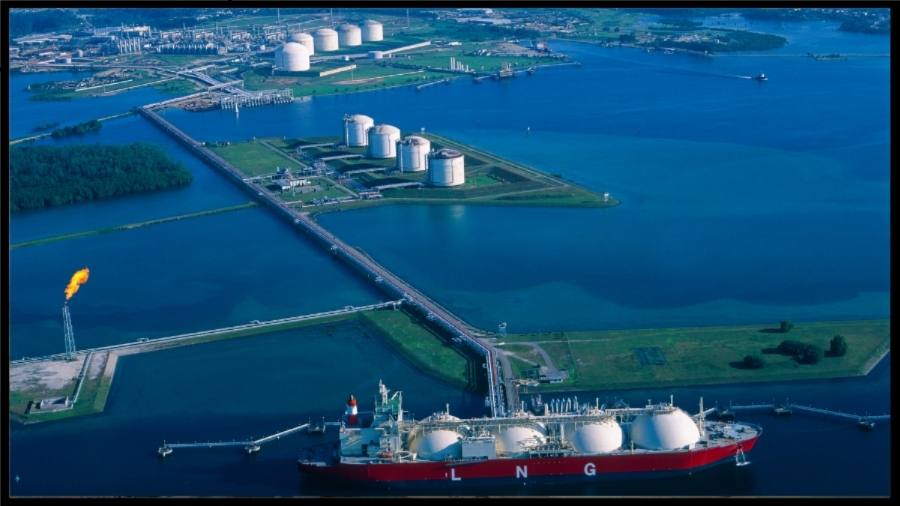
QatarEnergy is preparing to restart LNG production quickly after the damage at Ras Laffan, with a source saying unaffected facilities could be back at current capacity within about a month. But the bigger constraint is no longer production alone. It is shipping. It is reported that two of Qatar’s 14 LNG trains were damaged, cutting export capacity by about 17%, and that full repairs to the damaged facilities could take years. Even after the U.S.-Iran framework to reopen Hormuz, only a small number of LNG carriers have exited, mine-clearance and safety concerns are still hanging over the route, and major operators remain cautious about sending vessels back at scale. Over the past few days, the LNG market has also been absorbing other important signals: Europe’s gas system has so far held up better than feared through the Hormuz shock, Cheniere’s Corpus Christi Stage 3 resumed taking in more gas after an operational upset, and European buyers are still locking in longer-dated U.S. LNG supply as geopolitical risk keeps spot dependence uncomfortable.
LNG freight conditions remain highly sensitive because vessel availability and routing confidence still matter more than nominal production recovery.
Mine-clearance concerns, partial traffic return and lingering route uncertainty keep marine risk elevated even after diplomatic progress.
Longer waiting time, delayed loadings and possible rerouting are still raising voyage-cost sensitivity even as outright panic has eased.
The core bottleneck is still the route itself, with shipowners waiting for better operating proof before restoring normal Gulf transits.
The market is balancing between a temporary logistics squeeze and a longer period of tighter vessel utility across Qatar, Asia and Europe-linked LNG flows.
| Pressure lane | Current marker | Immediate operating read | Importance | Commercial consequence | Next checkpoint |
|---|---|---|---|---|---|
| Qatar production versus shipping | QatarEnergy is ready to restart LNG output quickly, but the real bottleneck is how fast ships can return and load via Hormuz. Production is not the same as deliverability | The LNG market is still constrained by marine logistics even as upstream recovery planning improves. | That matters because buyers care about cargo arrival, not only plant readiness. | Freight, loading schedules and delivery certainty remain fragile even if supply capacity looks better on paper. | Watch actual tanker loadings at Ras Laffan and the pace of repeat outbound voyages rather than restart claims alone. |
| Hormuz traffic recovery | Only limited LNG traffic through Hormuz has resumed and that safety concerns may delay fuller normalization for several weeks. Route normalization is still slow | Carriers are still treating the strait as an abnormal operating zone. | That matters because LNG shipping is unusually sensitive to loading windows, fleet positioning and timing risk. | Delayed return of vessels can stretch charter demand and keep freight conditions distorted longer than headline diplomacy implies. | Watch mine-clearance progress, insurer language and whether visible transits start moving from isolated cases to a steady pattern. |
| Europe’s near-term resilience | Europe avoided market fragmentation during the Hormuz shock because higher imports from the U.S., Algeria and Nigeria cushioned the blow. System held, but not cheaply | Europe’s LNG system worked better than feared, but only by leaning harder on alternative supply. | That matters because it shows LNG shipping flexibility still has value even when a core route is impaired. | Atlantic Basin supply and vessel positioning remain crucial to how Europe absorbs Gulf disruption. | Watch whether Europe keeps drawing more U.S. cargoes if Qatari shipping recovery stays uneven. |
| U.S. LNG reliability signal | Cheniere’s Corpus Christi Stage 3 resumed taking in more gas after an upset, according to Reuters and LSEG data. Atlantic supply resilience still matters | Even a temporary U.S. outage matters more when Qatar-linked logistics are strained. | That matters because the market currently has less tolerance for operational slips outside the Gulf. | U.S. liquefaction stability remains central to balancing Europe and parts of Asia while Hormuz-linked flows stay restricted. | Watch feedgas levels and whether any further U.S. plant issues emerge while Gulf shipping is still recovering. |
| Long-dated contracting response | Venture Global and Atlantic-SEE doubled a Greece-linked LNG supply deal starting in 2030. Buyers are still de-risking future supply | European buyers are continuing to secure long-term LNG even amid near-term shipping uncertainty. | That matters because volatility in Hormuz reinforces the appeal of contract certainty over spot-market dependence. | Shipping demand visibility improves when long-term supply chains are locked in, even if near-term logistics remain uneven. | Watch whether more European and Asian buyers sign multi-year LNG deals while freight and route risk remain elevated. |
| Broader LNG route map | Three more LNG tankers exited Hormuz on June 11, including QatarEnergy-controlled ships and ADNOC-linked tonnage. Some movement is happening, but selectively | The market has proof that LNG transit is possible, but not yet proof that normal tempo is back. | That matters because selective movement can stabilize sentiment without fully solving congestion and timing problems. | Owners and charterers are still likely to price caution until these isolated passages become a broader operating pattern. | Watch for a rising count of visible departures rather than one-off shiptracking breakthroughs. |
We welcome your feedback, suggestions, corrections, and ideas for enhancements. Please click here to get in touch.