Zanzibar’s Free-Port Push Enters a Bigger Capital Phase as New Gateway Plans Gather Pace
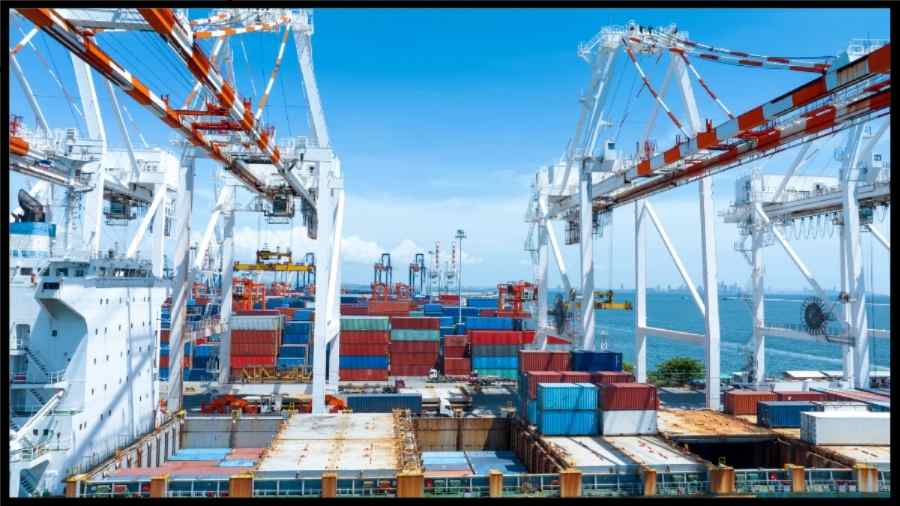
Zanzibar is pushing ahead with a larger free-port and maritime logistics buildout as part of its blue-economy and trade-hub strategy, with current market and project coverage describing the investment push in the range of roughly $560 million in some project framing and around $300 million to $600 million in other recent coverage tied to the wider Mangapwani port platform. What is clearly confirmed is that Zanzibar has already launched the Mangapwani Integrated Port project, is using the Zanzibar Investment Summit 2026 to market infrastructure opportunities, and is positioning new port, logistics, fuel-storage, and trade-zone capacity as a major part of its next investment cycle. The immediate story is that Zanzibar is trying to move beyond the limits of the old Malindi setup and build a deeper, more modern maritime gateway with stronger logistics and free-zone potential.
The project is still developmental, but it points to a future push for transshipment, regional distribution and stronger East Africa-linked cargo flows.
Execution risk matters more than route-war risk here, with lenders and insurers likely focused on construction delivery, utilities, and long-term operating reliability.
Fuel storage and logistics support are part of the wider port logic, which could improve regional supply-chain resilience if delivered at full planned scope.
Near-term disruption is limited, but the strategic objective is to shift cargo away from older congestion points and create a more modern gateway structure.
The real upside is long-dated. If Zanzibar executes the port-plus-free-zone model well, regional logistics land, warehousing and marine-support demand could strengthen materially.
| Fast reader take | Latest confirmed signal | Operational meaning | Commercial consequence | Shows up first | Closest stakeholders |
|---|---|---|---|---|---|
| The project is being framed as a major gateway upgrade |
Recent coverage describes Mangapwani as a flagship maritime project designed to replace or relieve the limitations of Malindi and build a modern logistics platform.
gateway upgrade
Malindi relief
blue economy focus
|
The ambition is bigger than a berth expansion. It is a trade-structure reset for Zanzibar’s maritime role. | Regional logistics players will evaluate it as a future hub play rather than a local port repair project. | Investor and land-use interest arrives before shipping volumes do. | Port operators, logistics firms, infrastructure investors. |
| Current value estimates vary, but the scale is clearly large |
Recent sources describe the development in a range from roughly $300 million to about $600 million, while project-pipeline coverage frames the broader deep-water concept near $600 million.
$300m recent launch framing
$600m pipeline framing
large-capex project
|
The exact scope may still be evolving, but the project is plainly being marketed as one of Zanzibar’s biggest infrastructure pushes. | Capital intensity raises the importance of PPP structure, investor confidence, and phased execution. | Financing structure matters as much as construction scope. | PPP advisers, lenders, sovereign partners, developers. |
| The capacity plan aims well beyond current constraints |
Ecofin said the port is intended to handle about 200,000 TEUs and 1 million tonnes of general cargo annually, with fuel storage and power components also included.
200,000 TEUs
1m tonnes cargo
fuel and power support
|
The project is being designed as a multi-function maritime and logistics node, not just a container berth. | That broadens the commercial case but also increases execution complexity. | Utility and industrial planning become part of the port story. | Terminal planners, energy suppliers, industrial tenants. |
| Free-zone logic is central to the wider investment pitch |
ZIPA’s 2026 investment messaging highlights infrastructure, industrialization, blue economy projects and special/free economic zone style incentives as central to Zanzibar’s growth model.
investment summit push
infrastructure priority
zone-based incentives
|
The port is being positioned to work alongside a broader investor ecosystem rather than in isolation. | Success depends on whether customs, warehousing, energy and land policy move together with marine infrastructure. | Policy design becomes a commercial variable. | Investors, freight operators, customs-linked businesses, manufacturers. |
| Zanzibar is targeting a regional logistics role, not only domestic relief |
Current reporting says authorities want the new platform to strengthen links with mainland Tanzania and serve wider East and Central African trade flows.
regional hub ambition
mainland link
East and Central Africa
|
The commercial thesis depends on capturing cargo and logistics relevance beyond Zanzibar’s own consumer market. | Competition with other East African gateways becomes part of the equation immediately. | Benchmarking against regional ports starts early. | Shippers, port strategists, trade-corridor investors. |
| The project sits inside a broader state-led investment cycle |
The Zanzibar Investment Summit 2026 explicitly marketed infrastructure diversification and strategic partnerships as part of shaping the island’s next growth phase.
state-led investment cycle
strategic partnerships
Vision 2050 alignment
|
This is not an isolated port announcement. It sits inside a coordinated effort to attract capital into logistics and industrial infrastructure. | Execution credibility will matter because the project is also a test of Zanzibar’s wider investment-readiness narrative. | Project confidence becomes a proxy for policy confidence. | Foreign investors, development partners, PPP advisers. |
The most useful way to read the story is as a gateway-and-zone strategy rather than a simple port expansion. Zanzibar is trying to combine deeper maritime capacity with fuel, utility, logistics and investor-zone support so the island can compete more credibly for regional trade and re-export activity.
Zanzibar Gateway Buildout Tool
This built-in tool estimates whether Zanzibar’s current port-and-free-zone push looks like a moderate capacity upgrade or a bigger regional logistics play. It combines capex ambition, hub potential, execution complexity, and policy support into one live score.
Live project inputs
Adjust the sliders to test whether the current Zanzibar plan looks more like a local decongestion project or a stronger long-range logistics and free-port platform.
Live readout
This section converts the latest Zanzibar port and free-zone signals into one score showing whether the market should read the plan as incremental or genuinely strategic.
Zanzibar’s current project push reads like a strategic logistics play because port capacity, free-zone logic, utility support and investment promotion are all being linked together in one growth narrative.
The project mainly relieves current bottlenecks without materially changing Zanzibar’s competitive role in regional trade.
The buildout is clearly important, though still oriented more toward domestic efficiency than regional hub status.
The project is being structured as a broader logistics and gateway platform with regional ambitions beyond simple port relief.
The market is justified in treating the plan as a serious attempt to reposition Zanzibar inside East African maritime and re-export networks.
The real test is not whether Zanzibar can build a bigger port. It is whether it can make the port, logistics zone, energy support, customs environment and investor structure work together well enough to capture trade that would otherwise stay with larger mainland gateways.
We welcome your feedback, suggestions, corrections, and ideas for enhancements. Please click here to get in touch.