UK Dutch Ship Deal Sets Up a New NATO Amphibious Fleet
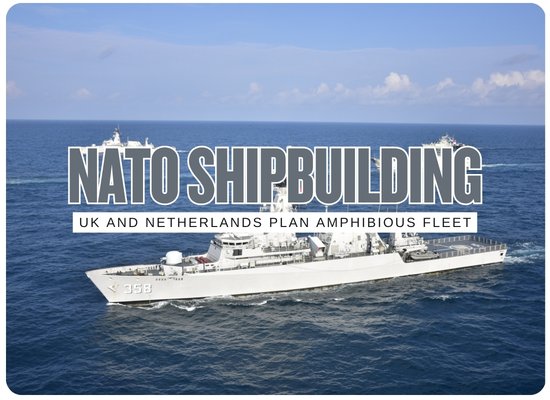
The UK and the Netherlands have signed a £2.4 billion maritime partnership to develop and field a new class of amphibious transport ships for both countries’ forces, creating a joint naval procurement program with direct implications for shipbuilding, naval suppliers, marine technology firms, logistics contractors, and NATO amphibious planning. The ships will be based on a Dutch design, built in UK shipyards alongside Dutch industry, and are expected to form the backbone of a strengthened UK-Netherlands amphibious force, with each nation operating four vessels. The platform is described as a 160-metre, 15,000-tonne ship built to move troops, vehicles, equipment, drones, and autonomous systems, while supporting a more integrated hybrid navy model.
Joint Amphibious Shipbuilding Moves Into Procurement Focus
The UK-Dutch agreement gives naval suppliers, yards, systems integrators, and maritime technology firms a new NATO-linked program to track.
Shipbuilding Demand
The program sets a path for new amphibious transport ships built in UK yards with Dutch industrial participation and a shared platform approach.
Supplier Opportunity
Naval electronics, propulsion, deck systems, cranes, communications, mission systems, and autonomy suppliers may see future tender interest.
Fleet Interoperability
Each country is expected to operate four vessels, creating a common fleet structure for training, deployment, maintenance, and support planning.
Hybrid Navy Integration
The ships are being framed around drones, autonomous systems, and future maritime technology, making integration scope a key contract variable.
NATO Readiness Signal
The partnership supports amphibious lift, North Atlantic deterrence, JEF cooperation, and protection of critical undersea infrastructure.
Operator Readout
This is mainly a naval procurement and industrial capacity story. The agreement does not create immediate commercial cargo volume, but it does point to future work for shipyards, marine suppliers, defence integrators, lifecycle support providers, and technology firms tied to amphibious lift and uncrewed systems.
UK Dutch Amphibious Ship Program
A joint platform plan puts amphibious lift, shipbuilding work, and uncrewed systems into one allied naval package.
The partnership centers on a new Amphibious Transport Ship program for British and Dutch forces. The vessels are expected to use a Dutch design, be built in UK shipyards with Dutch industry involved, and support a more interchangeable amphibious fleet. The platform is described as large enough to move troops, vehicles, equipment, drones, and autonomous systems, giving the project a wider technology scope than a traditional landing ship replacement.
Announced value of the UK-Netherlands maritime partnership, equal to about $3.2 billion.
Planned combined fleet, with four vessels expected for each country.
Stated ship size, paired with a 160-metre design profile.
Partnership Watch Table
| Program Signal | Latest Readout | Maritime Meaning | Stakeholders Affected | Watch Level |
|---|---|---|---|---|
| Joint ship program | UK and Netherlands move toward common amphibious transport ships | Creates a shared naval platform with common training, maintenance, and support potential. | Navies, shipyards, integrators, support contractors | High |
| Industrial structure | Dutch design paired with UK shipyard construction and Dutch industry participation | Workshare, supply-chain access, and procurement timing become key commercial variables. | UK yards, Dutch firms, equipment suppliers, engineering houses | Watch |
| Fleet scale | Each nation expected to operate four vessels | An eight-ship combined fleet can support common spares, training, refits, and upgrade pathways. | Lifecycle providers, maintenance yards, parts suppliers | Medium |
| Hybrid navy focus | Ships planned for drones and autonomous systems | Raises demand for launch systems, C2, sensors, data links, deck handling, and integration support. | Autonomy firms, electronics suppliers, defence tech companies | High |
| NATO and JEF posture | Program tied to amphibious readiness, High North, and undersea infrastructure protection | Links ship procurement to wider European maritime deterrence and crisis-response planning. | Naval planners, port authorities, offshore infrastructure operators | Medium |
| Procurement execution | Final contract packages, delivery schedule, and supplier selections still need detail | Commercial opportunity depends on tender timing, design freeze, budget profile, and build schedule. | Bidders, brokers, consultants, subcontractors | Watch |
Planning note: The agreement is a major policy and procurement signal, but suppliers should watch for design milestones, formal tenders, workshare announcements, and lifecycle support packages before treating the full value as addressable contract volume.
Amphibious Fleet Program Estimator
Estimate program scale, per-ship value, fleet tonnage, and supplier opportunity from a joint amphibious shipbuilding program.
Simple program value divided by combined fleet size.
Total modeled displacement across the combined amphibious fleet.
Estimated addressable share for suppliers and systems providers.
Modeled annual program activity across the selected build window.
The modeled value supports a significant shipbuilding and supplier pipeline.
Track tendersThis tool is for editorial and market-sizing sensitivity only. It does not represent official procurement allocation, final contract pricing, classified capability scope, supplier awards, currency movement, cost escalation, lifecycle cost, or government budget treatment.
We welcome your feedback, suggestions, corrections, and ideas for enhancements. Please click here to get in touch.