Panama Flag Dispute Puts China Linked Shipping Under U.S. Pressure
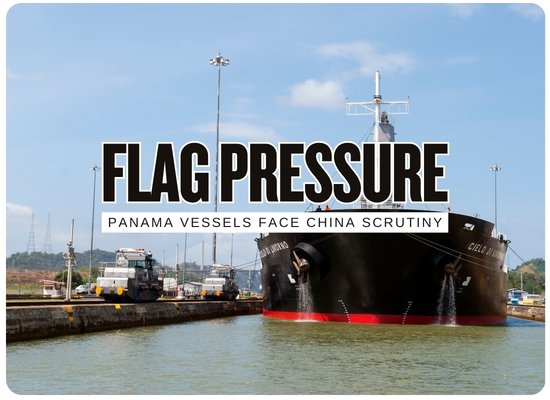
The Panama-flag detention dispute has moved back into focus after a U.S. maritime regulator warned that China’s increased port state control actions against Panama-flagged vessels are continuing and could eventually bring Chinese-controlled carriers in U.S. trades into the regulatory spotlight. The dispute grew out of Panama’s move to take control of the Balboa and Cristóbal terminal concessions after its Supreme Court invalidated the CK Hutchison-linked concession, followed by reports of a sharp rise in China port detentions of ships flying the Panama flag. Industry data cited by maritime security and shipping sources showed Panama-flagged vessels accounting for an unusually large share of China port detentions in March and April, while China has denied targeting the flag and argues its inspections are lawful safety actions.
Ship Universe Flag Risk Watch
Operator Impact Snapshot
Panama-flag exposure is now tied to Chinese port inspections, U.S. trade policy, registry confidence, and carrier access risk.
The dispute has turned an ordinary compliance process into a flag-specific operating concern. Ships flying the Panama flag may face more scrutiny in Chinese ports, while Chinese-controlled carriers could face more attention from U.S. regulators if the issue is treated as an unfair practice affecting U.S. foreign trade.
Panama flag detention exposure
Owners with Panama-flagged tonnage calling China now have to price detention risk, inspection time, schedule loss, and documentation readiness into voyage planning.
U.S. regulatory pressure
The latest FMC warning raises the possibility that a port state control dispute could spill into carrier regulation, especially for Chinese-controlled operators in U.S. trades.
Registry switching risk
Reports of owners reassessing Panama flag exposure and leasing companies pushing reflagging could weaken Panama’s registry position if the pattern persists.
Port and schedule friction
Even short detentions can disrupt rotations, feeder links, cargo release, charter timing, bunkering, and onward port windows.
Chinese denial and legal defense
China says the inspections are legitimate safety actions under port state control, which keeps the dispute legally contested rather than one-sided.
Commercial Reading
The immediate issue is operational friction, but the larger risk is escalation. If U.S. regulators move from warning to formal action, carriers, shippers, and ports could face new uncertainty around service access, compliance documentation, and trade-route reliability.
- Owners: check inspection history, PSC deficiencies, flag exposure, Chinese port calls, and reflagging restrictions in finance agreements.
- Charterers: clarify delay responsibility, off-hire language, cargo delivery exposure, and substitute tonnage rights before China-linked voyages.
- Carriers: monitor FMC statements, Chinese port treatment, U.S. trade access, and customer concerns around schedule reliability.
- Insurers: watch detention frequency, flag switching, cargo delay claims, and political risk language.
- Ports and suppliers: prepare for service adjustments if Chinese carriers, Panama-flagged ships, or canal-linked routings become more politically sensitive.
Detention and Trade Pressure Board
Flag Risk, Carrier Exposure, and Regulatory Signals
The China-Panama canal dispute is becoming a wider test for vessel flags, port state control, and U.S. liner oversight.
Current Signal
Ambrey reported Panama-flagged ships accounted for about 74 percent of China port detentions in March.
Reported April count showed the pressure accelerating after the March spike.
Short delays can still disrupt rotations, charters, cargo windows, and onward port calls.
The FMC warning keeps potential action against Chinese-controlled carriers in the conversation.
Operator Risk Table
| Issue Area | Latest Detail | Market Effect | Stakeholder Move | Pressure Meter |
|---|---|---|---|---|
| Panama Flag Detentions China port state control | Reported detentions of Panama-flagged ships in Chinese ports rose sharply in March and April, far above earlier monthly levels. | Raises schedule risk for Panama-flagged tonnage calling China and can make flag choice part of voyage risk pricing. | Pre-audit PSC files, fire safety items, lifesaving gear, MARPOL records, ISM records, crew certificates, and maintenance logs. |
High
|
| FMC Warning U.S. trade oversight | A U.S. maritime regulator warned that the practice could bring action affecting Chinese-controlled carriers in U.S. trades. | Moves the dispute from flag treatment into possible liner access, carrier regulation, and U.S. foreign trade reliability. | Carriers should review U.S. service exposure, ownership structure, compliance files, and customer communication plans. |
High
|
| Canal Port Concession Balboa and Cristóbal | Panama invalidated the CK Hutchison-linked concession and appointed interim operators while a new process is pursued. | Creates a direct link between terminal control at the canal and vessel treatment in Chinese ports. | Ports, carriers, and cargo owners should watch contract rebidding, interim operator performance, and arbitration developments. |
Medium High
|
| Chinese Carrier Exposure U.S. trades | The latest warning puts Chinese-controlled carriers in a more sensitive position if U.S. officials treat detentions as unfair trade pressure. | Potential remedies could affect service economics, regulatory review, customer confidence, or competitive positioning. | Monitor FMC filings, public statements, congressional pressure, and any move from warning to formal investigation. |
Watch
|
| Flag Registry Confidence Panama, Liberia, Marshall Islands | Owners and financiers are reassessing Panama flag exposure, with some reflagging pressure reported in finance channels. | The dispute could redirect registrations toward alternative flags if detention risk remains concentrated. | Compare registry cost, Chinese port exposure, financing conditions, class treatment, PSC profile, and charter acceptance. |
Medium High
|
| China Position Safety based defense | China denies targeting Panama and says inspections are legitimate safety actions under domestic law and international conventions. | Keeps the dispute contested and makes evidence quality central to any U.S., Panama, or industry response. | Operators should document each inspection event carefully, including deficiency basis, delay time, cost, and release conditions. |
Watch
|
Flag Detention Exposure Calculator
Estimate voyage exposure from Panama flag status, China port calls, detention days, cargo value, and U.S. trade sensitivity.
This tool is built for owners, charterers, brokers, insurers, and cargo teams reviewing a vessel that may be exposed to the Panama flag detention dispute or a possible U.S. regulatory response involving Chinese-controlled carriers.
Estimated Delay Cost
$378,000
Estimated vessel and schedule cost across expected China call exposure.
Cargo Delay Exposure
$594,000
Estimated cargo-side exposure linked to inspection or detention delay.
Total Commercial Exposure
$972,000
Combined vessel, schedule, and cargo exposure under the selected assumptions.
Regulatory Sensitivity
68 / 100
Signal based on U.S. trade exposure and Chinese carrier or ownership sensitivity.
Exposure Signal
The vessel or service has high exposure under these assumptions. Review flag risk, China port calls, PSC readiness, charter delay terms, and U.S. regulatory sensitivity before committing the voyage.
We welcome your feedback, suggestions, corrections, and ideas for enhancements. Please click here to get in touch.