Marine Insurance Costs New Shipowners Keep Underestimating
🔔 Subscribe to ShipUniverse Weekly →
The premium is only the first number
New shipowners often budget for hull insurance and P&I, then discover that the real cost sits in deductibles, trading limits, surveys, war-risk areas, crew claims, pollution exposure, cargo liability, mortgage requirements, and the fine print that decides whether a claim is smooth or painful.
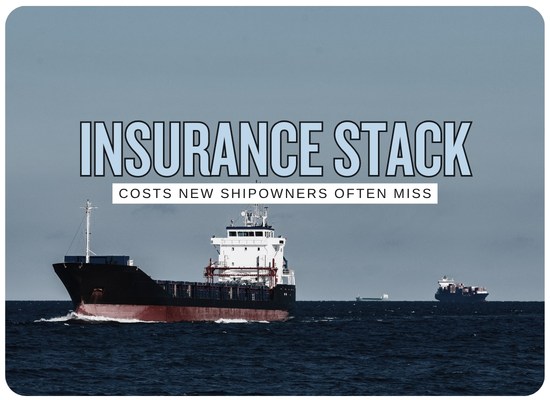
The insurance bill is a stack, not one policy
A new shipowner may hear “marine insurance” and assume it works like insuring a building, truck, or piece of equipment. It does not. A commercial vessel creates multiple categories of risk at the same time: physical damage to the ship, liability to third parties, cargo claims, pollution, crew injury, wreck removal, collision liability, charter disputes, war-risk exposure, loss of hire, mortgagee protection, sanctions compliance, and sometimes specialist cover for towing, offshore work, project cargo, passengers, or hazardous cargo.
The premium quote is only the beginning. The owner also needs to understand deductibles, exclusions, trading warranties, survey requirements, claims handling, club calls, cancellation rights, additional premiums, named-area war risks, crew coverage, cargo limitations, and charterparty insurance obligations. A vessel can be “insured” and still leave the owner exposed if the wrong trade, wrong cargo, wrong area, wrong certificate, or wrong contractual promise sits outside the policy.
New owner takeaway: The cheapest quote can become expensive if it leaves gaps in the areas that actually stop the ship from trading: P&I acceptance, lender approval, charterer requirements, port documentation, war-risk permissions, and claims support.
9 insurance costs new shipowners need to understand
Hull and machinery premium
Hull and machinery is the cover most new owners recognize first. It protects against physical loss or damage to the vessel and machinery from insured marine perils. The premium is usually shaped by insured value, vessel age, class, flag, trade, loss record, machinery condition, management quality, deductible, navigation area, repair cost inflation, and the underwriter’s appetite for that vessel type.
- Cost driver Higher insured value, older machinery, weak maintenance records, difficult trade, or high repair-cost exposure.
- Owner misunderstanding Thinking hull cover pays for every mechanical failure. Wear, poor maintenance, and excluded breakdown issues can still be owner costs.
- Budget check Compare annual premium, deductible, survey conditions, machinery exclusions, navigation warranties, and total-loss basis.
- Deal test Would the hull policy satisfy a lender, charterer, and buyer during due diligence?
P&I entry cost and renewal calls
P&I is where many first-time owners get confused. It is not mainly about damage to your ship. It is liability cover for claims connected with operating the ship, such as crew injury, passenger injury, pollution, cargo damage, wreck removal, collision liabilities, fines, and third-party property damage. Mutual P&I clubs may price through estimated total call, supplementary call risk, deductibles, and club renewal adjustments.
- Cost driver Vessel type, gross tonnage, crew profile, trading pattern, cargo type, pollution exposure, claims history, and manager reputation.
- Owner misunderstanding Treating P&I as a fixed bill instead of a relationship with club rules, calls, deductibles, and compliance obligations.
- Budget check Ask for estimated total call, release call treatment, deductible schedule, exclusions, sanctions language, and club service support.
- Deal test Can the owner prove acceptable P&I cover before the ship loads cargo or enters a port that requires it?
Deductibles that decide the real retained risk
The deductible can matter as much as the premium. A low annual premium with a high deductible may look attractive until the vessel has a machinery claim, cargo incident, collision, crew injury, or port damage. Deductibles can differ by line of cover and may be higher for certain claims, machinery, cargo, pollution, war, or named-area exposures.
- Cost driver Underwriter appetite, owner loss record, vessel age, risk quality, and requested premium level.
- Owner misunderstanding Comparing quotes by premium only while ignoring how much loss the owner must absorb first.
- Budget check Model several realistic claim sizes and calculate the owner’s cash exposure under each deductible option.
- Deal test Could the owner pay two deductibles in the same year without harming operations?
War-risk cover and named-area premiums
Standard hull and P&I cover generally does not behave the same way in war-risk areas. Owners trading near high-risk waters may need separate war-risk cover, named-area notices, additional premiums, crew-risk treatment, special security measures, and updated routing decisions. In volatile regions, pricing can change quickly and may be charged per voyage or per transit.
- Cost driver Vessel value, cargo, nationality links, trading area, geopolitical risk, security measures, and market capacity.
- Owner misunderstanding Assuming the vessel is automatically protected for conflict, terrorism, piracy, mines, strikes, or hostile acts.
- Budget check Confirm notice deadlines, cancellation provisions, additional premium basis, excluded areas, crew treatment, and charter recovery.
- Deal test If a charterer orders a risky route, who pays the added war premium and delay cost?
Loss of hire and downtime protection
Hull insurance may help repair the vessel, but it may not replace income while the ship is off-hire. Loss of hire cover can protect earnings after an insured casualty, subject to waiting periods, daily limits, policy periods, exclusions, and claim requirements. New owners often skip this because they are focused on the purchase price, then learn that one casualty can damage cash flow even when repair costs are covered.
- Cost driver Daily earning value, vessel type, deductible days, trading profile, machinery risk, and owner claims history.
- Owner misunderstanding Believing hull cover automatically pays lost charter income while the vessel is being repaired.
- Budget check Compare daily hire exposure, waiting period, maximum days covered, and likely repair duration for major machinery or grounding events.
- Deal test Can the owner cover debt service, crew, management, and operating expenses during a long off-hire period?
Trading warranties and navigational limits
Insurance can become more expensive or weaker if the vessel trades outside agreed limits. Policies may include geographic warranties, port restrictions, ice navigation conditions, cargo restrictions, offshore work limits, lay-up terms, towage restrictions, or requirements for class, flag, crew, ISM, and management standards. A new owner can accidentally create a coverage problem by accepting a charter that does not match the policy.
- Cost driver Expanding trade to higher-risk regions, cargoes, ports, weather zones, or specialist operations.
- Owner misunderstanding Assuming any profitable voyage is automatically covered because the vessel has annual insurance.
- Budget check Match policy navigation, cargo, towing, offshore, passenger, ice, and lay-up terms against actual business plans.
- Deal test Does the insurance allow the vessel to perform the highest-paying charter being considered?
Survey, class, maintenance, and risk-improvement costs
Some insurance costs are not premium at all. Underwriters, P&I clubs, lenders, or charterers may require condition surveys, class status evidence, risk-improvement work, machinery records, crew documentation, cyber procedures, navigation audits, or safety management evidence. A cheaper policy can become more expensive if it comes with urgent recommendations before the vessel can trade freely.
- Cost driver Vessel age, class comments, poor records, machinery issues, weak SMS, prior claims, and new ownership transition.
- Owner misunderstanding Treating insurance placement as finished once the premium is paid.
- Budget check Ask which surveys, recommendations, closeout deadlines, and risk improvements are expected after binding.
- Deal test Are there insurance-driven repairs or inspections that should have been included in the acquisition budget?
Charterer, lender, and port insurance requirements
The owner may be satisfied with a policy, but the market may not be. Charterers may require specific P&I club entry, waiver language, additional insured wording, pollution limits, war-risk treatment, cargo liability terms, or certificates. Lenders may require mortgagee interest cover, loss payable clauses, assignment wording, and minimum insured values. Ports and terminals may require proof before entry or operations.
- Cost driver Financing terms, charterparty requirements, cargo type, terminal rules, and counterparty risk standards.
- Owner misunderstanding Buying insurance that protects the owner but fails to satisfy the commercial parties needed to earn revenue.
- Budget check Review insurance clauses in loan agreements, charterparties, port requirements, and customer contracts before binding cover.
- Deal test Can certificates be issued quickly in the exact format required by the charterer or lender?
Specialist add-ons that depend on vessel work
A vessel doing simple cargo work may need one insurance stack. A vessel doing towing, offshore support, subsea work, passenger service, fishing, dredging, project cargo, hazardous cargo, ship-to-ship transfer, or salvage-related work may need more. Specialist operations can create gaps if the owner assumes standard hull and P&I automatically stretch to every job.
- Cost driver Non-standard operations, hazardous cargoes, passenger exposure, offshore contracts, heavy lifts, towage, and contractual indemnities.
- Owner misunderstanding Accepting a high-value job before asking whether the job changes liability, exclusions, or premium.
- Budget check Match every major revenue stream to the policy wording, P&I rules, charter indemnities, and required certificates.
- Deal test Does the insurer know the vessel is doing this work, and has the cover been endorsed if needed?
Insurance stack new owners should expect
| Cover type | Main purpose | Cost driver | Common owner surprise | Priority |
|---|---|---|---|---|
| Hull and machinery | Physical damage to vessel and machinery from insured perils. | Insured value, age, class, trade, deductible, claims history. | Not every machinery problem is automatically covered. | Core |
| P&I | Third-party liabilities from operating the ship. | Vessel type, tonnage, crew, cargo, trade, pollution exposure, club terms. | Calls, deductibles, club rules, and release-call treatment. | Core |
| War risk | War, terrorism, piracy, hostile acts, mines, and named-area risks. | Vessel value, route, cargo, nationality links, security environment. | Additional premiums can change by voyage and area. | Route driven |
| Loss of hire | Income protection after insured casualty downtime. | Daily hire value, waiting period, vessel risk, repair exposure. | Hull cover repairs the ship but may not replace earnings. | Cash-flow driven |
| FD&D | Legal-cost support for freight, demurrage, charter, and contract disputes. | Trade complexity, charter risk, legal environment, owner experience. | It is not the same as P&I liability cover. | Useful |
| Mortgagee interest | Protects lender interest if owner cover fails in certain circumstances. | Loan terms, vessel value, lender requirements, policy structure. | Lender may require wording beyond the owner’s basic policy. | Financing driven |
| Specialist covers | Towing, offshore, passenger, heavy-lift, cyber, kidnap, cargo, or project-specific risk. | Actual vessel work and contractual indemnities. | Standard cover may not fit specialized revenue. | Job driven |
Practical test: Before closing on a vessel, the owner should ask the broker for two numbers: the annual premium stack and the realistic retained-risk stack. The second number includes deductibles, uninsured items, survey work, war-risk add-ons, and income lost during downtime.
Cost questions to ask before buying the vessel
- 01. Hull value basis Is the insured value realistic compared with purchase price, market value, lender requirement, and total-loss exposure?
- 02. Deductible schedule Which deductible applies to hull, machinery, P&I, cargo, pollution, collision, war, or specialist operations?
- 03. Navigation area Does the policy match the vessel’s real trading area, including seasonal or emergency deviations?
- 04. P&I club treatment Is the vessel acceptable to a club that charterers, ports, lenders, and cargo interests will recognize?
- 05. Survey conditions Are there inspections, recommendations, repairs, or closeout dates that will cost money after binding?
- 06. War-risk exposure Which areas require prior notice, additional premium, special terms, or separate approval?
- 07. Loss-of-hire need Can the ownership structure survive a major off-hire event without income protection?
- 08. Charterparty match Do planned charter contracts require cover, limits, certificates, or endorsements not included in the quote?
- 09. Claims support Who handles casualty response, local correspondents, surveyors, lawyers, and emergency guarantees when something happens?
Marine insurance cost calculator
This tool gives new owners a rough way to think about the annual insurance stack. It is not a broker quote, but it can help show how premiums, deductibles, war-risk exposure, and downtime risk add up.
New owner insurance exposure screen
Adjust the assumptions to estimate how insurance and retained risk could affect ownership cost.
Planning note: This simplified tool does not replace broker advice, club underwriting, lender requirements, legal review, flag rules, charterparty review, or policy wording. Actual rates vary by vessel type, age, flag, class, management, trade, claims history, and market conditions.
Cost traps that make a cheap quote expensive
| Cost trap | Owner result | Better owner action | Urgency |
|---|---|---|---|
| Premium-only comparison | The owner chooses a low quote with high deductibles or restrictive terms. | Compare premium, deductible, exclusions, warranties, claims support, and certificates together. | High |
| Ignoring trading limits | A profitable voyage may require additional approval or premium. | Match navigation area and cargo scope to the actual business plan. | High |
| Weak P&I understanding | The owner underbudgets calls, deductibles, and club obligations. | Review club rules, estimated total call, release call, and deductible schedule. | High |
| No war-risk recovery clause | The owner absorbs route-risk premiums ordered by a charterer. | Make charterparty language match war-risk notices and additional premiums. | High |
| No downtime plan | Repair may be covered while cash flow collapses. | Evaluate loss of hire, reserves, debt service, and working capital. | Medium high |
| Late survey findings | Insurance-driven repairs appear after purchase closing. | Include insurance survey risk in acquisition due diligence. | Medium |
Insurance gate before vessel purchase
A new owner should run the insurance review before closing, not after the vessel is already in the fleet.
- Cover gate: Hull, P&I, war, loss of hire, lender, and specialist covers match the intended trade.
- Cost gate: Premium, deductibles, calls, additional premiums, surveys, and retained risks are in the acquisition model.
- Certificate gate: The owner can issue insurance certificates required by lender, charterer, port, terminal, and cargo customer.
- Claims gate: The owner knows who responds after a casualty and which local correspondents, surveyors, lawyers, and adjusters are available.
- Contract gate: Charterparty insurance clauses do not promise cover the owner has not actually purchased.
The new owner mindset shift
Marine insurance should be treated as part of vessel due diligence, not an administrative item after purchase. The right broker and insurer can help a new owner understand the vessel’s real risk profile before capital is committed. That includes asking uncomfortable questions about trading area, age, machinery condition, class status, cargo type, charter plans, crew exposure, war-risk routes, and cash flow during downtime.
The owner who understands the insurance stack will make better decisions on purchase price, financing, chartering, maintenance, and risk. The owner who only shops the cheapest premium may discover that the uncovered parts of the business are more expensive than the policy itself.
We welcome your feedback, suggestions, corrections, and ideas for enhancements. Please click here to get in touch.