Oil Spike Sends Marine Fuel Costs Higher Across Shipping Market
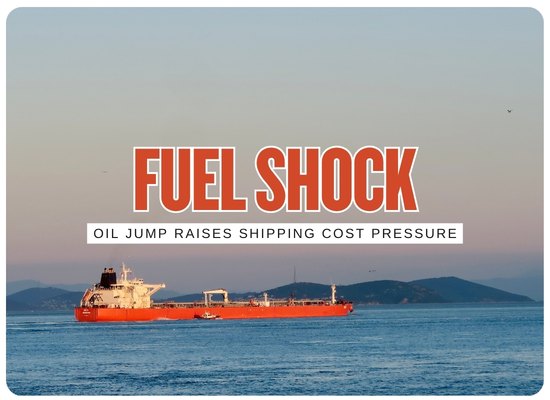
Oil prices jumped as renewed U.S.-Iran conflict put energy markets back on alert and pushed shipping risk through the Strait of Hormuz into the center of the commercial conversation. Brent and WTI both moved higher after fresh military strikes and retaliatory attacks raised concern over Gulf energy flows, with traders watching whether crude, refined product, LNG, and tanker traffic can continue moving without interruption. The market reaction is being driven by a familiar but serious chain: geopolitical escalation, Hormuz transit uncertainty, higher crude prices, bunker-cost pressure, war-risk reviews, and possible freight-cost pass-through.
Oil Shock Adds Fuel, Freight, and Security Pressure
Renewed U.S.-Iran conflict lifted crude prices and pushed Gulf transit risk back into bunker, tanker, LNG, and insurance planning.
Crude Price Pressure
Oil moved higher as traders priced fresh military risk around Gulf energy exports and Strait of Hormuz shipping flows.
Hormuz Transit Exposure
Tankers, LNG carriers, product ships, and chemical tankers remain exposed to any slowdown, closure claim, rerouting order, or security incident near the strait.
War-Risk and Insurance
Underwriters and charter desks may recheck premiums, crew terms, deviation rights, and voyage instructions if the conflict expands.
Bunker Cost Pass-Through
Higher crude can lift marine fuel prices, adding pressure to BAF formulas, voyage estimates, spot freight quotes, and bunker stem timing.
Energy Cargo Timing
Asian refiners, LNG buyers, Gulf exporters, and traders may need to watch loading windows, arrival schedules, and cargo substitution options.
Operator Readout
The immediate market signal is a linked fuel and security exposure. Oil is rising because the conflict is close to one of the world’s most important energy shipping corridors. Operators should track crude benchmarks, bunker quotes, Hormuz traffic conditions, war-risk premiums, crew instructions, and charterparty cost allocation before locking route economics.
Oil and Hormuz Risk Watch
Higher crude prices are feeding directly into maritime fuel, freight, and security planning.
The renewed U.S.-Iran conflict pushed crude prices higher because the market is again focused on whether Gulf cargoes can move through Hormuz without disruption. The maritime effect is immediate because crude prices influence bunker expectations, while the security environment influences tanker routing, insurance terms, crew instructions, and schedule reliability.
Approximate oil-price jump tied to renewed U.S.-Iran military escalation and Gulf shipping concern.
Approximate oil flow through the Strait of Hormuz in 2024, equal to about one-fifth of global petroleum liquids consumption.
Share of global LNG trade recently moving through Hormuz, mostly from Qatar and the UAE.
Energy Shipping Risk Table
| Market Signal | Latest Readout | Maritime Meaning | Stakeholders Affected | Watch Level |
|---|---|---|---|---|
| Crude price move | Oil rose after renewed U.S.-Iran military strikes | Higher crude can lift bunker expectations and change voyage-cost assumptions. | Operators, bunker buyers, freight desks, cargo owners | High |
| Hormuz transit risk | Escalation renewed concern around Gulf shipping flows | Tankers and LNG carriers may face higher security scrutiny, delays, or rerouting questions. | Tanker owners, LNG carriers, insurers, charterers | High |
| Bunker pass-through | Crude strength can move into marine fuel pricing | BAF formulas, surcharge timing, spot quotes, and fixture validity become more sensitive. | Carriers, shippers, forwarders, charter desks | Medium |
| War-risk review | Insurance and security terms may need updating | Premiums, crew terms, deviation rights, and route approvals can shift quickly. | Underwriters, P&I clubs, owners, brokers | Watch |
| Refinery and cargo timing | Asian buyers remain highly exposed to Gulf energy flows | Arrival windows, substitution options, and inventories may move higher on planning agendas. | Refiners, traders, terminals, cargo interests | Watch |
| Freight market spillover | Fuel and security cost can feed into freight pricing | Spot freight can react faster than contract terms if the conflict remains unstable. | Brokers, shippers, carriers, commodity desks | Medium |
Planning note: The key commercial issue is the link between crude prices and maritime operating cost. Even without a full Hormuz closure, higher fuel, war-risk premiums, and voyage delays can change freight economics quickly.
Oil Spike Voyage Cost Calculator
Estimate added voyage exposure from higher crude-linked bunker costs, war-risk premiums, and Hormuz-related delay.
Estimated cost from the selected oil-linked bunker move.
Estimated security or insurance exposure for the voyage.
Estimated time cost from waiting or transit uncertainty.
Combined fuel, war-risk, and delay exposure.
Security and delay costs dominate the modeled voyage exposure.
Review voyage termsThis tool is for editorial and commercial sensitivity only. It does not replace live bunker quotes, crude hedging models, insurance quotes, charterparty review, security guidance, flag-state instructions, refinery supply planning, or professional voyage planning.
We welcome your feedback, suggestions, corrections, and ideas for enhancements.
Please click here to get in touch