Maersk Suez Return Signals Faster Container Routes
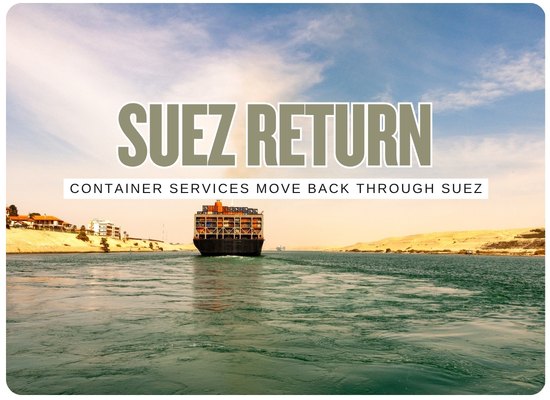
Maersk is expanding its return to Suez and Red Sea routing with a fresh set of service changes that move more container traffic away from the longer Cape of Good Hope diversion. The latest shift brings the AE15 Gemini service, operated with Hapag-Lloyd, back onto the trans-Suez route, with Majestic Maersk identified as the first sailing under the change. Maersk is also restoring trans-Suez routing for its MECL service between the Middle East, India, and the U.S. East Coast, a move the company says can reduce westbound transit times by about seven days and eastbound transit times by up to fourteen days. The return is still framed as selective and security-assessed, not a blanket reopening of every Red Sea-linked string.
Suez Routing Returns to the Container Planning Desk
Maersk’s expanded trans-Suez return gives shippers faster schedules, but Red Sea security confidence still controls the pace of wider network restoration.
Transit Time Reduction
MECL routing through Suez can cut estimated transit times by about 7 days westbound and up to 14 days eastbound versus Cape routing.
AE15 Gemini Shift
The AE15 service is moving from the Cape of Good Hope route to trans-Suez routing, adding another major Asia-Europe signal.
Security Assessment
The return is selective and risk-assessed, so operators should not treat it as a full Red Sea normalization across all services.
Rate and Capacity Pressure
Shorter routes can release vessel capacity back into the network, which may influence freight-rate negotiations if more strings return.
Bunker and Emissions Impact
Using Suez instead of the Cape can reduce sailing distance, fuel burn, emissions exposure, and voyage cost on affected services.
Operator Readout
The immediate signal is a stepwise container-network reset. Maersk is adding more Suez-linked routing, but the return remains tied to security conditions, service-level decisions, customer advisories, and schedule execution. Shippers should watch transit-time changes, booking cutoffs, freight quotes, surcharge treatment, and whether other carriers follow with similar route changes.
Suez Return Watch
Maersk is adding more trans-Suez routing, with schedule savings and market effects now moving back into focus.
The latest update adds two clear service signals. AE15 is shifting to trans-Suez routing under the Gemini cooperation, while MECL is returning to the route between the Middle East, India, and the U.S. East Coast. For cargo owners, the main operational value is shorter transit time. For carriers and freight markets, the larger question is whether more Suez routing releases enough vessel capacity to soften the tightness created by Cape diversions.
Estimated westbound MECL transit-time reduction from the trans-Suez return.
Estimated eastbound MECL transit-time reduction from the route change.
Gemini service now scheduled to shift from Cape routing to trans-Suez routing.
Route Return Planning Table
| Route Signal | Latest Readout | Commercial Meaning | Stakeholders Affected | Watch Level |
|---|---|---|---|---|
| AE15 Gemini service | Shifting from Cape of Good Hope to trans-Suez routing | Asia-Europe schedule speed improves on this service, with network capacity effects to monitor. | Shippers, forwarders, ports, carriers, BCOs | High |
| MECL service | Returning to Suez for Middle East, India, and U.S. East Coast lanes | Shorter routing may improve lead times and reduce fuel exposure on affected sailings. | U.S. importers, Middle East exporters, India trade desks | High |
| Transit-time change | About 7 days westbound and up to 14 days eastbound on MECL | Inventory timing, booking windows, and delivery estimates may need updating. | BCOs, 3PLs, freight planners, retailers, manufacturers | Positive |
| Security condition | Return remains selective and risk-assessed | Full network restoration still depends on Red Sea stability and carrier confidence. | Insurers, operators, crews, cargo owners | Watch |
| Freight-rate pressure | Shorter routes can release effective vessel capacity | Rates may face pressure if more services return and available capacity expands. | Carriers, shippers, brokers, contract desks | Medium |
| Bunker exposure | Suez routing can reduce distance versus Cape diversions | Fuel burn, emissions cost, and voyage duration may improve on affected strings. | Carriers, fuel buyers, sustainability teams, charterers | Medium |
Planning note: The important distinction is service-level return versus full corridor normalization. AE15 and MECL are meaningful signals, but other services may still depend on security reviews and regional stability before changing route.
Suez Return Savings Estimator
Estimate schedule, fuel, emissions, and cost differences when a container service shifts from Cape routing back to Suez.
Estimated transit-time reduction from returning to the Suez route.
Estimated bunker savings from fewer sailing days.
Estimated fuel and vessel-time savings after security cost.
Estimated net savings per loaded FEU or cargo unit.
The modeled Suez return creates a meaningful schedule and cost advantage after security cost.
Track service reliabilityThis tool is for editorial and planning sensitivity only. It does not replace live carrier schedules, insurance quotes, bunker prices, security advisories, charterparty terms, emissions accounting, port rotation changes, or professional voyage planning.
We welcome your feedback, suggestions, corrections, and ideas for enhancements.
Please click here to get in touch