Naval M&A Is Heating Up: 7 Technologies Big Defense Firms Are Buying Before the Next Sea Conflict
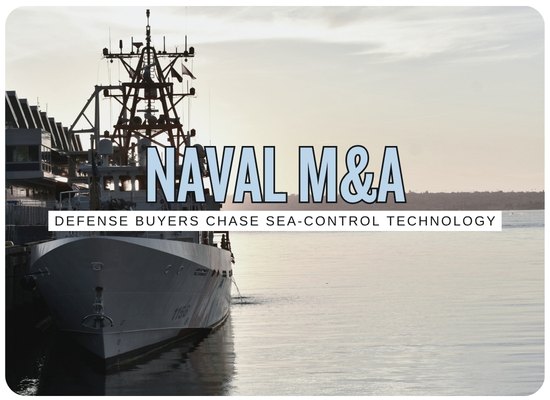
Defense dealmaking is moving toward the maritime layers that make fleets harder to blind, harder to surprise, and faster to regenerate. The buyers are not only chasing ships. They are buying sensing, autonomy, undersea networks, cyber resilience, propulsion, repair capacity, and the data systems that connect all of it.
The naval deal cycle has a new center of gravity
Naval M&A is heating up because the next maritime conflict would not be fought by ship count alone. The side that detects submarines sooner, clears mines faster, protects seabed infrastructure, repairs damaged vessels, navigates through jamming, and controls unmanned systems at scale may hold the advantage before the first missile is fired.
That is the strategic logic behind the latest deal activity. Lockheed Martin is moving deeper into undersea warfare through Ultra Maritime. Thales is moving toward Exail’s maritime robotics and inertial navigation stack. Fincantieri is building an underwater portfolio across drones, subsea communications, survey, and defense activities. These are not random bolt-ons. They are moves toward the naval systems that become scarce during a crisis.
Deal signal board
Undersea warfare
Sonar, sonobuoys, torpedo defense, UUVs, and underwater sensing are moving from niche naval assets to acquisition priorities.
Autonomy and mission control
Defense primes want the software and navigation layers that allow unmanned surface, undersea, and aerial systems to operate as part of a fleet.
Seabed awareness
Subsea cables, pipelines, and offshore energy assets are pushing governments toward persistent underwater monitoring and data fusion.
Shipyard and repair capacity
Maintenance, dry docks, specialty trades, and repair technology are becoming strategic because readiness depends on ships returning to service quickly.
7 technologies big defense firms are buying
The naval acquisition pattern is easier to understand when the technologies are viewed as layers of a future sea fight. Each one solves a different fleet problem, and each one can become a buy-or-build decision for large defense firms.
- Undersea warfare Sonar, sonobuoys, torpedo defense, and acoustic dominance Anti-submarine warfare is back at the center of naval planning. The ocean is crowded with submarines, undersea drones, seabed sensors, and infrastructure targets. Big defense firms want companies that can detect, classify, track, and defeat undersea threats. The attraction is not only hardware. It is the full chain: acoustic sensors, sonobuoy production, signal processing, torpedo countermeasures, autonomous sensing platforms, and data links into combat systems.
- Maritime robotics Unmanned underwater and surface systems Mine countermeasures, seabed mapping, surveillance, harbor defense, decoy operations, logistics, and distributed sensing are pulling unmanned vessels into mainstream naval procurement. The strongest targets are not just drone hull builders. They are companies with vehicles, payload integration, launch and recovery knowledge, autonomy software, support models, and naval testing evidence.
- Seabed security Underwater communications and infrastructure monitoring Subsea cables, pipelines, offshore platforms, energy export routes, and seabed sensors have become strategic infrastructure. This makes underwater communications, seabed survey, acoustic networking, subsea robotics, and anomaly detection more valuable. Large shipbuilders and defense firms are buying into this space because the same technology can serve defense, energy, telecom, and national-security missions.
- Resilient navigation Inertial systems, timing, and GNSS-denied operations Naval forces cannot assume GPS will remain trustworthy in a serious conflict. Ships, drones, missiles, submarines, and autonomous systems need backup positioning and timing. That pushes value toward inertial navigation, fiber-optic gyros, acoustic positioning, anti-jam systems, timing resilience, and navigation software that can operate through spoofing, jamming, and underwater conditions.
- Electronic fight Cyber, electronic warfare, and counter-drone defense Sea control increasingly depends on who can protect networks, jam drones, deceive sensors, defend shipboard systems, and keep command links alive. Naval cyber and electronic warfare firms are attractive because they support both offense and defense. The target companies may include compact EW payload makers, shipboard cyber specialists, RF sensing firms, optical tracking companies, and counter-UAS integrators.
- Combat software AI-enabled data fusion and mission command Modern fleets generate too much sensor data for manual processing alone. Defense buyers are looking for software that can fuse sonar, radar, optical, satellite, acoustic, AIS, electronic intelligence, and drone feeds into faster decisions. The most valuable businesses will not simply label themselves AI companies. They will connect data to operational workflows, command systems, targeting, maintenance, and human oversight.
- Readiness stack Ship repair technology, propulsion support, and sustainment A navy can buy advanced systems and still lose readiness if ships spend too long in maintenance. That makes dry dock capacity, specialty repair, propulsion controls, power systems, additive manufacturing, parts forecasting, coatings, corrosion management, and digital maintenance tools more strategic. Defense firms and infrastructure-backed buyers may seek companies that shorten repair cycles and reduce fleet downtime.
Technology heat map for acquisition targets
Each naval technology lane has a different acquisition profile. Some are already active. Others are promising but harder to underwrite because the procurement path, doctrine, or integration burden remains uncertain.
| Technology lane | Deal heat | Best acquisition targets | Main diligence risk |
|---|---|---|---|
| Undersea warfare systems | Very high | Sonar, sonobuoys, torpedo defense, acoustic processing, autonomous sensing | Classified performance, production capacity, long qualification cycles |
| Maritime robotics | Very high | UUVs, USVs, mine warfare drones, autonomy stacks, payload integration | Fleet adoption may lag demonstration success |
| Seabed security | High | Underwater communications, subsea survey, anomaly detection, infrastructure monitoring | Blending commercial and defense demand without losing focus |
| Resilient navigation | High | Inertial navigation, timing, anti-jam, acoustic positioning, spoofing detection | Component commoditization and platform-specific integration |
| Cyber and electronic warfare | High | Shipboard cyber, EW payloads, counter-drone systems, RF sensing, secure comms | Fast threat evolution and proof of operational effectiveness |
| Combat software and data fusion | Rising fast | Sensor fusion, AI decision support, mission planning, autonomy control | Data access, explainability, cyber accreditation, customer integration |
| Readiness and sustainment tech | Rising | Repair tech, parts forecasting, propulsion support, additive manufacturing, digital maintenance | Margins can be hidden inside labor, material, and contract execution risk |
The M&A pressure gauge
The fastest acquisition interest is clustering around technologies that give navies more awareness, more endurance, and more ability to fight through disruption.
The buyer logic behind the rush
Large defense firms are not only buying revenue. They are buying time. Building naval-grade technology internally can take years of hiring, testing, qualification, customer trust, and export review. A focused acquisition can speed that timeline if the target already has naval users, proven hardware, software credibility, and a support model.
| Buyer type | Likely target | Strategic reason | Value creation path |
|---|---|---|---|
| Large defense prime | Sonar, autonomy, EW, cyber, mission software | Fill gaps inside integrated naval systems | Bundle target capability into existing combat-system and fleet contracts |
| Shipbuilder | Underwater robotics, launch and recovery, repair technology | Make new ships and refits more valuable | Integrate drones, payloads, and sustainment into ship programs |
| Defense technology platform | AI data fusion, autonomy software, cyber tools | Capture software layer of naval operations | Scale across multiple domains and allied customers |
| Infrastructure-backed investor | Ship repair, dry docks, subsea infrastructure monitoring | Own scarce assets tied to national-security demand | Improve utilization, professionalize operations, add recurring services |
| Industrial supplier | Power, propulsion, cooling, navigation, sensors | Move up the defense value chain | Pair component depth with higher-value systems integration |
Three acquisition lanes to watch
The undersea consolidation lane
This is the clearest lane right now. It includes sonar, sonobuoys, torpedo defense, underwater robotics, seabed security, and subsea communications.
- Best fit for large defense firms and shipbuilders that want a deeper underwater portfolio.
- Strong pull from anti-submarine warfare, mine countermeasures, and infrastructure protection.
- Target quality depends on testing evidence, production readiness, and naval customer trust.
The autonomy and software lane
This lane covers mission planning, multi-drone control, sensor fusion, AI decision support, cyber resilience, and human-machine teaming.
- Most attractive when software is already embedded in real naval workflows.
- Potentially higher margins than hardware-heavy assets.
- Harder diligence because demo performance may not equal fleet adoption.
The readiness and repair lane
This lane focuses on the industrial base: dry dock access, specialty trades, propulsion support, additive manufacturing, repair analytics, and parts forecasting.
- Less glamorous than autonomy, but tied directly to fleet availability.
- Potentially attractive for infrastructure and industrial buyers.
- Requires close review of labor quality, contract terms, and project execution risk.
Red flags inside naval acquisition targets
Naval demand can make almost every defense-tech pitch sound attractive. The stronger diligence question is whether the company owns a real bottleneck, has a funded customer path, and can survive the operational burden of naval adoption.
| Red flag | Problem underneath | Diligence question |
|---|---|---|
| Prototype-heavy revenue | Demos may not convert into fleet contracts | Is there repeat procurement, not only trial funding? |
| One-program dependency | A budget change can damage the entire thesis | Does the company serve multiple ship classes, navies, or missions? |
| Weak production maturity | Great technology may not scale under wartime demand | Can the company manufacture, test, and support at required volume? |
| Thin cyber story | Connected naval systems create attack surfaces | Is cybersecurity built into the product, update process, and support model? |
| No sustainment economics | Fleet adoption depends on training, spares, repair, and upgrades | Is there recurring revenue after initial delivery? |
| Unclear data rights | Integration can stall if data, models, or interfaces are restricted | Who owns the data, software interfaces, and technical packages? |
| Overbroad AI claims | Naval buyers need explainable, testable, reliable decisions | Can the system explain confidence, uncertainty, and operator handoff? |
Investor scorecard for naval M&A targets
- Mission pull Clear fleet problem beats broad defense buzz The best targets solve an urgent naval problem such as submarine detection, mine clearance, drone defense, GPS denial, ship repair delays, or seabed monitoring.
- Bottleneck ownership Scarce capability supports pricing power Attractive companies often control a narrow but necessary layer: acoustic processing, inertial navigation, secure underwater comms, payload integration, launch and recovery, or repair analytics.
- Fleet evidence Naval use matters more than pitch polish Real exercises, customer trials, repeat orders, fielded systems, and sailor feedback should carry more weight than conference videos.
- Integration depth Standalone tools are easier to replace A target becomes more valuable when it connects to combat systems, shipboard workflows, mission planning, secure communications, and sustainment chains.
- Production path Scale is part of the defense value In a crisis, buyers need more than prototypes. They need suppliers that can manufacture, certify, deliver, repair, and update systems under pressure.
- Allied market fit Exportability expands the buyer universe Technologies that fit multiple allied navies can justify stronger valuations, provided export controls and sovereignty rules are manageable.
- Sustainment upside Installed base can become recurring revenue Spares, training, software updates, depot repair, calibration, batteries, sensors, and lifecycle support can make a naval tech target more durable than hardware margins suggest.
Naval M&A Target Heat Check
Use this tool to quickly score whether a naval technology company looks like a strong acquisition target or a speculative defense-tech story.
This tool is a practical screening aid, not investment advice. Real diligence should include contracts, customer concentration, backlog quality, export controls, cybersecurity, production capacity, sustainment economics, and normalized earnings.
Bottom line for naval dealmakers
Naval M&A is heating up because the maritime battlefield is becoming more sensor-heavy, software-driven, undersea-focused, and unmanned. The technologies being bought now are the ones large defense firms may not have time to build later: acoustic dominance, robotic systems, resilient navigation, seabed security, cyber and electronic warfare, AI-enabled command software, and readiness technology.
The smartest acquisition logic follows the bottlenecks. A company that helps fleets detect submarines, operate without GPS, protect cables, manage drone swarms, defend against electronic attack, or return damaged ships to service faster may become strategically important before it becomes widely known. In naval M&A, the race is not only for scale. It is for control of the capabilities that become scarce when sea conflict moves from theory to operations.
We welcome your feedback, suggestions, corrections, and ideas for enhancements.
Please click here to get in touch