AD Ports and Dajin Heavy Link Up as Abu Dhabi Pushes Deeper Into Offshore Wind Logistics
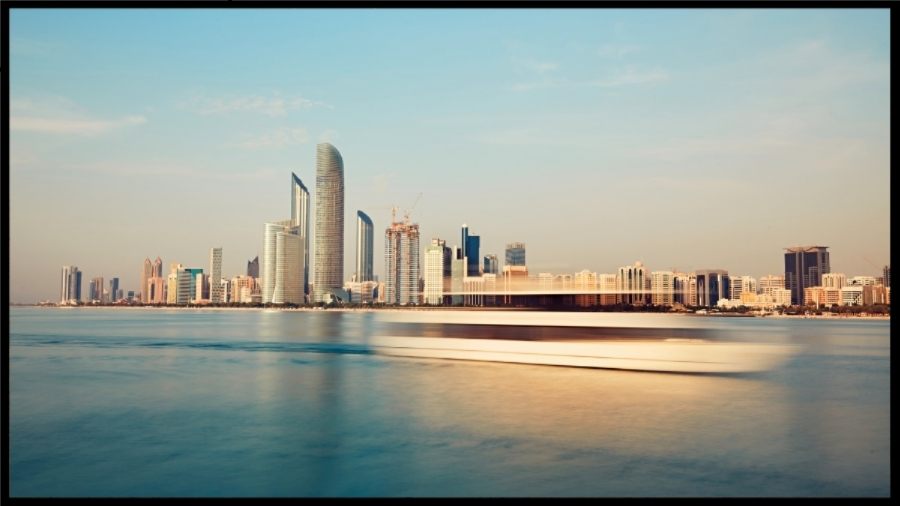
AD Ports Group has taken another step in building an offshore wind platform by signing a strategic agreement with Dajin Heavy Industry to explore opportunities in offshore wind and the wider maritime sector. The newest agreement arrives at a point when AD Ports is already extending its offshore wind footprint through earlier partnerships and asset purchases, including its offshore wind project agreement with Masdar and its acquisition of Spain’s Balenciaga Shipyard through SAFEEN Drydocks. On the other side of the partnership, Dajin is no longer just a component supplier. The Chinese group has been expanding from offshore wind foundations into transport, marshalling and installation-related capabilities aimed particularly at Europe. Taken together, the latest move shows AD Ports is trying to connect port, maritime and fabrication capability with an industrial partner that is building a more complete offshore wind supply-chain offering.
This is not an immediate freight-rate story, but it points to a larger offshore wind logistics network that could shape future heavy-lift, project cargo and marshalling demand.
The agreement itself is not an insurance shock, though execution in offshore wind still carries the usual project, construction and marine-operations risk profile.
Fuel is not the central issue here, although integrated offshore logistics and purpose-built vessels can improve operating efficiency over time.
The bigger route effect is strategic rather than disruptive, with more future focus on marshalling, transport and fabrication corridors tied to offshore wind.
This partnership supports the idea that port groups and maritime operators are trying to secure higher-value positions in offshore wind rather than staying limited to traditional port roles.
The agreement lands inside two very clear expansion stories
AD Ports has been building offshore wind capability from the maritime and infrastructure side, while Dajin has been expanding from component manufacturing toward a fuller offshore wind service model.
| Development lane | Current position | Importance | Commercial effect | Next signal to watch |
|---|---|---|---|---|
| Fresh AD Ports–Dajin agreement | AD Ports Group and Dajin Heavy Industry have signed a strategic agreement to explore opportunities in offshore wind and the maritime sector. The announcement shows AD Ports is still widening its offshore wind partner network rather than relying on one single relationship. New strategic tie-up | This is the newest direct signal that AD Ports wants to be more active in offshore wind execution and supply-chain positioning. | It opens the door to joint work around offshore wind logistics, marine services, fabrication support or vessel-related cooperation. | Whether the partnership moves quickly into a named project, yard plan, fabrication scope or vessel programme. |
| AD Ports offshore wind buildout | AD Ports had already signed an offshore wind partnership with Masdar and then bought Balenciaga Shipyard in Spain through SAFEEN Drydocks. Those earlier moves linked the group to project delivery, substations, subsea services, logistics and SOV-capable shipbuilding. Existing strategy now deepening | The Dajin link does not start the story. It extends a strategy AD Ports has already been building for months. | AD Ports is trying to move higher in offshore wind value creation, not just provide generic port services. | Whether more of the group’s maritime and industrial assets get directly aligned with offshore wind execution. |
| Dajin’s current trajectory | Dajin is expanding beyond foundations and towers into transport, marshalling and installation-linked capability. The company has publicly described a “Manufacturing + Transportation + Marshaling + Installation Vessel” model for Europe. Supplier moving up the stack | Dajin is no longer presenting itself as only a steelwork manufacturer. | That makes it a more useful strategic partner for a port and maritime group trying to assemble broader offshore wind capabilities. | Whether Dajin pushes more deeply into installation vessels, European assembly, or project execution partnerships. |
| European offshore wind angle | Both companies already have visible European relevance. AD Ports now owns a Spanish yard with offshore wind vessel capability, while Dajin has been supplying European projects and targeting installation bottlenecks. Europe remains the likely center of gravity | The most commercially active offshore wind markets still sit in Europe, so platform credibility there matters. | A partnership gains more weight if it can plug into real European fabrication, port, transport or vessel gaps. | Whether the cooperation is aimed at Europe first or also includes Middle East and other emerging offshore wind markets. |
| Industrial and maritime fit | AD Ports brings ports, shipyard access, maritime services and logistics infrastructure, while Dajin brings manufacturing and offshore wind supply-chain depth. That mix is potentially stronger than a simple financial or paper alliance because both sides have physical execution assets. Operational fit is plausible | Offshore wind bottlenecks are usually physical and logistical, not only financial. | The partnership could become relevant if it solves real constraints in marshalling, transport, fabrication or marine support. | Whether the first concrete use case centers on port services, offshore structures, vessels or integrated logistics. |
| Timing | The agreement comes as Dajin is raising capital and positioning itself more aggressively in deep-sea wind services and European expansion. At the same time, AD Ports continues broad international expansion while attaching more of its maritime cluster to energy transition themes. The timing is not random | Both partners are entering this cooperation while actively scaling adjacent capabilities. | The deal looks more like a growth-platform move than a symbolic memorandum. | Whether capital deployment and asset announcements start to align with the partnership in the next few quarters. |
The most useful way to read this deal is not as a stand-alone MoU. It is a link between one company building maritime and industrial offshore wind capability and another trying to evolve from manufacturing into a fuller offshore wind supply-chain and installation player.
The partnership matters most if it turns into a physical offshore wind platform
Port groups can sign many clean-energy agreements. The real value appears when fabrication, vessel access, marshalling space, transport capacity and project demand begin to line up in one operating model.
The strongest commercial reading is that AD Ports is trying to avoid being trapped in a low-margin support role as offshore wind supply chains mature. The Masdar agreement pushed the group toward project delivery support, the Balenciaga acquisition added specialised shipbuilding and offshore-wind vessel relevance in Spain, and the new Dajin agreement can be read as a way to add heavier industrial content and supply-chain depth. That sequencing is important because offshore wind bottlenecks are increasingly concentrated in large structures, marine coordination, installation-vessel availability and marshalling capacity rather than in simple port access alone.
Dajin fits this logic because the company is also moving beyond a narrower role. It has been building European-standard jacket capability, targeting installation-vessel shortages, commissioning purpose-built transport assets and raising capital for deeper offshore wind services and a European assembly presence. In that context, the AD Ports–Dajin link looks less like a generic memorandum and more like a test of whether ports, shipyards, offshore manufacturing and marine logistics can be tied together into a stronger offshore wind execution chain.
AD Ports is assembling offshore wind pieces across several assets
The strategy now spans project partnerships, shipyard capacity, maritime services and industrial cooperation instead of one isolated move.
Dajin is trying to become more than a foundation supplier
Its current direction suggests an ambition to cover more of the offshore wind chain from structures to transport and eventually installation support.
Europe looks like the most credible first arena
That is where both companies already have the strongest visible offshore wind logic, whether through shipbuilding, fabrication or project-facing capability.
The real proof will be physical deployment
The market will care less about the wording of the agreement and more about whether it produces vessels, structures, port services, fabrication plans or named offshore wind scopes.
This model is built to show when an offshore wind partnership starts to look commercially credible. It weighs infrastructure, fabrication, vessel support, project visibility and execution risk together instead of treating the agreement as a headline alone.
We welcome your feedback, suggestions, corrections, and ideas for enhancements. Please click here to get in touch.