
SHIPUNIVERSE
Maritime Intelligence, Tools & Live Industry Radars

One place for live maritime intelligence, practical decision tools, industry events and focused reporting.

15Live Radars 263Maritime Tools
24/7Intelligence Focus
GlobalIndustry Coverage
NEW RADARS

Explore our latest intelligence radars

RADARS
TOOLS
All Tools
Latest 20
Open to load latest items…
NEWS
All News
Latest 20
Open to load latest items…
REPORTS
All Reports
Latest 20
Open to load latest items…
TECH
All Tech
Latest 20
Open to load latest items…
CRUISE
All Cruise
Latest 20
Open to load latest items…
NAVAL
All Naval
Latest 20
Open to load latest items…
SHIPUNIVERSE REPORTING

Reports, news and industry coverage

Full analysis in the ShipUniverse intelligence layout.

← Back to latest posts ShipUniverse / NEWS

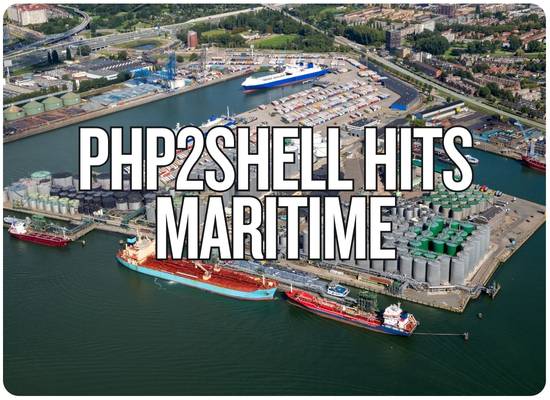
PHP2Shell Hits Maritime: Port of Rotterdam Goes Offline as Mass Exploitation Begins

🔔 Subscribe to ShipUniverse Weekly →

Two critical vulnerabilities in the PHP web runtime triggered an international cybersecurity emergency on October 21, with attackers now attempting exploitation at large scale and the Port of Rotterdam taking its public-facing website offline as a precaution. The flaws, CVE-2026-109618 and CVE-2026-109619, are both rated 9.2 Critical and can allow an unauthenticated attacker to execute code on vulnerable web servers. PHP released emergency fixes Wednesday, but Amazon says it detected an exploitation attempt as early as October 17, four days before public disclosure, and now describes PHP2Shell as being broadly exploited in the wild. Cloudflare separately reported attack volumes escalating from thousands of attempts before disclosure to millions after the vulnerabilities became public. There is no evidence that Rotterdam's operational port systems were compromised; its website shutdown was preventive. For maritime companies, the immediate concern is any internet-facing PHP system, including websites, customer portals, agent systems, booking interfaces and third-party products that quietly embed PHP.

PHP2Shell · Maritime Cyber Alert · October 22, 2026

A Public Website Bug Can Become a Maritime Operations Problem

PHP2Shell targets the server runtime beneath websites and web applications. The vulnerability does not need a stolen password, and exploitation can occur before normal application logic has a chance to stop the request.

Severity 9.2 Critical
Both vulnerabilities carry PHP's critical CVSS v4.0 rating.
Authentication Needed None
Successful exploitation can occur without a valid account.
Earliest Observed Attempt Oct. 17
Amazon observed suspicious exploitation activity four days before disclosure.
Attack Volume Millions
Exploit attempts accelerated rapidly following public disclosure.
Direct Maritime Impact Port of Rotterdam Website Taken Offline
Europe's largest port was among Dutch organizations that temporarily disabled public-facing services as a precaution while the PHP risk was addressed. No compromise of Rotterdam port operations was reported.
Maritime Exposure The Risk Is Bigger Than Corporate Websites
PHP can sit underneath customer portals, booking systems, document workflows, ship-agency tools, procurement sites, APIs, vendor interfaces and third-party appliances. The first job is finding every installation, including systems that do not obviously advertise that they use PHP.
How a Web Vulnerability Can Reach Deeper Into a Maritime Business
1 Internet Request

Attacker reaches an exposed PHP-backed website or application.

2 Remote Code Execution

Malicious code executes with the privileges of the PHP or web-server process.

3 Secrets & Data

Databases, application credentials, API keys or configuration files may become reachable.

4 Internal Pivot

Poor network segmentation can turn a compromised web server into a route toward additional corporate systems.

5 Maritime Disruption

Booking, documentation, customer access, cargo workflows or connected operational services can then be affected.

Important distinction: PHP2Shell does not directly attack a ship's engine, ECDIS, radar or propulsion system. The maritime risk arises when a vulnerable web-facing system contains operational information, shares credentials or networks with deeper systems, exposes APIs, or provides a foothold from which an attacker can move elsewhere.
Ports · Terminals · Ship Managers · Agents · Vendors · Vessel Systems

Maritime PHP2Shell Exposure Board

PHP2Shell becomes more serious when an exposed web server is trusted by other systems. The highest-priority targets are therefore not necessarily the biggest websites, but the systems with valuable credentials, sensitive data or network access behind them.

Scroll sideways for the full maritime exposure board ← →
Maritime System Potential Exposure If PHP2Shell Succeeds What Security Teams Should Watch Immediate Priority Possible Operational Consequence
Port / Authority Public Websites HIGH IF INTERNET-FACING Public PHP Runtime Web server takeover, data theft, defacement, malware deployment or theft of credentials stored by the application. Large or malformed POST requests, repeated memory-limit errors, PHP worker crashes, unfamiliar files and unexpected child processes. Identify runtime version immediately. Patch to a fixed PHP release or remove the affected service from public access until it can be secured. Public information outages, customer-service disruption and a possible foothold into additional networks if segmentation is weak.
Maritime Single Window / Port Community Interface CRITICAL IF PHP-BACKED Ship-Port Data Exchange Access to vessel calls, declarations, credentials, uploaded documents or API connections may become possible depending on system architecture. Abnormal uploads, failed imports, unexplained API authentication events, data changes and suspicious server-to-server connections. Determine whether PHP exists anywhere in the application stack or supporting appliances, not just in the visible front end. Delayed vessel clearance, document-processing problems, customs or authority workflow interruption and loss of trust in submitted data.
Terminal / Gate / Appointment Portals OPERATIONS LINK Truck + Cargo Workflows Compromise could expose account data or disrupt web services used to schedule containers, vehicles or terminal interactions. New administrator accounts, modified application files, abnormal database queries, unusual scheduled tasks and authentication anomalies. Separate internet-facing portal servers from terminal operating systems and other OT networks. Validate the firewall path in both directions. Gate congestion, truck queues, manual processing, delayed container release or interruption of customer-facing workflows.
Ship Manager / Agent / Crew Portals DATA + CREDENTIAL RISK Operational Accounts Attackers could potentially steal application secrets, credentials, personal information or documents accessible to the compromised service account. New login locations, changed forwarding rules, unauthorized downloads, altered bank or supplier details and unexplained API activity. Patch the runtime, review secrets held by the application and rotate credentials if compromise is suspected. Fraud, crew-data exposure, false instructions, invoice manipulation or disruption of voyage-support workflows.
Marine Vendor / Procurement / Service Portals SUPPLY-CHAIN PATH Trusted Third Party A compromised vendor server may expose customer credentials, technical documents, API tokens or trusted communications. Unexpected file downloads, changed payment instructions, new software packages, unusual support requests and vendor-originated login anomalies. Ask critical vendors whether they run affected PHP versions and whether embedded products or hosted services have been patched. An apparently small vendor compromise can propagate risk to multiple fleets, yards, terminals or equipment operators.
Firewalls / Appliances / Embedded Web Interfaces EASILY MISSED Bundled PHP PHP may exist inside a commercial appliance even when the organization did not intentionally deploy a PHP application. Vendor security advisories, unexpected management-interface traffic and versions identified through software inventories or SBOM data. Do not stop at web-server inventories. Check edge products, management consoles and vendor appliances separately. Compromise of an infrastructure appliance can create a much more valuable network foothold than compromise of a brochure website.
Shipboard Administrative Web Systems DEPENDS ON CONNECTIVITY Shore-to-Ship Risk Risk exists if an affected PHP service is reachable from shore, satellite links, remote-support networks or crew networks. Unexpected connections across VLANs, web-server processes launching commands, changed configuration files and remote-access anomalies. Verify that crew, business and vendor-access networks cannot reach navigation, propulsion, machinery or safety networks except through explicitly controlled gateways. The vulnerability does not directly target navigation or machinery, but poor segmentation could allow an IT compromise to develop into a broader vessel cyber incident.
Scroll sideways from either bar ← →
Four Signals Worth Hunting Immediately
Multipart POST Activity

Investigate unusual or oversized multipart requests, particularly those containing PHP_SESSION_UPLOAD_PROGRESS.

Memory / Worker Failures

Look for bursts of PHP memory-exhaustion errors, abnormal PHP-FPM exits or Apache worker crashes.

Unexpected Execution

Investigate web-server processes launching shells, interpreters, download tools or other unusual child processes.

New Persistence

Search for newly modified PHP files, web shells, cron jobs, scheduled tasks, plugins, users or other unexplained persistence.

SHIPUNIVERSE · PHP2SHELL RESPONSE CONSOLE
Active Exploitation

Should This Maritime System Come Offline?

Use the switches below for one PHP-backed system at a time. The console prioritizes patching, isolation and retrospective compromise hunting based on the system's exposure.

System Exposure
Internet-facing PHP? Website, API, portal or management interface reachable from the public internet.
Still running an affected version? Anything below the fixed releases for its supported PHP branch.
Apache mod_php? PHP identifies this configuration as the highest demonstrated risk.
PHP 8.1 or older? Legacy branches no longer receive normal upstream security releases.
Stores secrets or sensitive data? Database credentials, API keys, customer data, crew data or operational documents.
Can reach internal or OT systems? Directly or through trusted APIs, management networks or shared credentials.
Suspicious activity since Oct. 17? Odd POSTs, crashes, new files, child processes, scheduled tasks or unexplained account activity.
WAF protection active? Useful defense in depth, but not a replacement for patching.
Response Priority
Current Assessment CRITICAL
Internet-facing and unpatched PHP should be treated as an immediate remediation priority.
Action Queue
Fixed PHP Releases
8.5.12
8.4.27
8.3.36
8.2.35
Hunt window: Amazon recommends investigating potentially exposed systems back to at least October 17, 2026. Patching closes the vulnerability but does not remove malware, web shells, stolen credentials or persistence created before the update.
Feedback Welcome

We welcome your feedback, suggestions, corrections, and ideas for enhancements.

Please click here to get in touch
By the ShipUniverse Editorial Team — About Us | Contact


← Browse more ShipUniverse posts
MARITIME DECISION TOOLS

Practical tools for real vessel and commercial decisions

Browse the latest 24 tools or instantly search every published ShipUniverse maritime tool.

24 latest toolsView all 263 →
TOOL

Crew Change, Relief Logistics, Port Coordination & Cost Tool

🔔 Subscribe to ShipUniverse Weekly → Fleet Crewing • Seafarer Repatriation…

Open →
TOOL

Marine Insurance Hull, P&I, Deductible & Claim Reserve Tool

🔔 Subscribe to ShipUniverse Weekly → Marine Claims • Hull &…

Open →
TOOL

Shipbuilding Milestone, Change Order, Yard Delay & Payment Exposure Tool

🔔 Subscribe to ShipUniverse Weekly → Newbuilding Contract Control • Yard…

Open →
TOOL

Project Cargo Sea Fastening, Deck Load & Transport Planning Tool

🔔 Subscribe to ShipUniverse Weekly → Project Cargo • Deck Strength…

Open →
TOOL

Maritime Emissions Data Verification, MRV & FuelEU Audit Readiness Tool

🔔 Subscribe to ShipUniverse Weekly → Emissions Assurance • Fuel Traceability…

Open →
TOOL

Tanker Terminal Acceptance, Berth Compatibility & Pre-Arrival Readiness Tool

🔔 Subscribe to ShipUniverse Weekly → Tankers • Marine Terminals •…

Open →
TOOL

Cruise Itinerary Disruption, Port Substitution & Revenue Impact Tool

🔔 Subscribe to ShipUniverse Weekly → Cruise Operations • Port Diversions…

Open →
TOOL

Port Dredging Production, Sediment Disposal & Project Cost Tool

🔔 Subscribe to ShipUniverse Weekly → Ports / Dredging / Material…

Open →
TOOL

Offshore ROV/AUV Survey Productivity, Weather Window & Spread Cost Tool

🔔 Subscribe to ShipUniverse Weekly → Offshore Survey · ROV/AUV Operations…

Open →
TOOL

Freight Contract, Surcharge & Shipping Invoice Verification Tool

🔔 Subscribe to ShipUniverse Weekly → Freight Procurement • Carrier Contracts…

Open →
TOOL

Marine Cargo Damage, Shortage, Survey & Claims Recovery Tool

🔔 Subscribe to ShipUniverse Weekly → Marine Cargo • Shortage Reconciliation…

Open →
TOOL

Container Terminal Yard Capacity, Dwell Time & Truck Gate Congestion Tool

🔔 Subscribe to ShipUniverse Weekly → Port Logistics • Yard Density…

Open →
TOOL

Fleet Class Survey, Statutory Certificate & Expiry Planning Tool

🔔 Subscribe to ShipUniverse Weekly → Fleet Compliance • Class /…

Open →
TOOL

Drydock Project Critical Path, Work Package & Schedule Overrun Tool

🔔 Subscribe to ShipUniverse Weekly → Drydock • Work Packages •…

Open →
TOOL

Container Demurrage, Detention, Free Time & Storage Cost Tool

🔔 Subscribe to ShipUniverse Weekly → Container Logistics • Free Time…

Open →
TOOL

Naval Fleet Replenishment, Fuel Endurance & Sustainment Planning Tool

🔔 Subscribe to ShipUniverse Weekly → Naval Logistics • Fuel /…

Open →
TOOL

Cruise Tender Operations, Passenger Throughput & Excursion Revenue Tool

🔔 Subscribe to ShipUniverse Weekly → Cruise Port Calls • Tender…

Open →
TOOL

Ship Recycling IHM, Survey & Yard Readiness Tool

🔔 Subscribe to ShipUniverse Weekly → Ship Recycling • IHM Part…

Open →
TOOL

Port Berth Productivity, Crane Deployment & Vessel Turnaround Tool

🔔 Subscribe to ShipUniverse Weekly → Container Terminals • Berth Occupation…

Open →
TOOL

Offshore DP Capability, Thruster Failure & Station-Keeping Margin Tool

🔔 Subscribe to ShipUniverse Weekly → Offshore DP Operations • Directional…

Open →
TOOL

Ship-to-Ship Transfer Fender, Mooring, Hose & Transfer Planning Tool

🔔 Subscribe to ShipUniverse Weekly → Marine Operations • Fender Energy…

Open →
TOOL

Vessel Sanctions, AIS Anomaly & Counterparty Due Diligence Tool

🔔 Subscribe to ShipUniverse Weekly → Sanctions • AIS Integrity •…

Open →
TOOL

Marine Biofuel Compatibility, Fuel Changeover & Engine Readiness Tool

🔔 Subscribe to ShipUniverse Weekly → Biofuel Grades • FAME /…

Open →
TOOL

Charterparty Speed, Consumption, Weather & Performance Claim Tool

🔔 Subscribe to ShipUniverse Weekly → Time Charter • Speed Warranty…

Open →