Panama Canal Transit Costs Explode as Bidding Wars Push Priority Slots to New Highs
🔔 Subscribe to ShipUniverse Weekly →
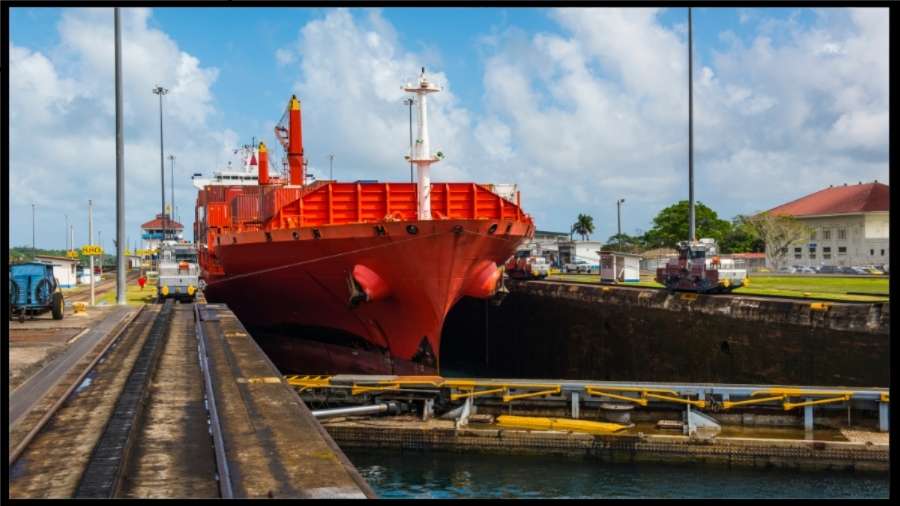
The Panama Canal’s auction market for last-minute transit access has hit a new extreme, with one crossing slot reaching $4 million, according to current reporting on the canal’s recent traffic surge. The spike comes as vessels reroute around the Hormuz crisis and compete for faster movement between the U.S. Gulf and Asian markets. The Panama Canal Authority has said the extraordinary bids reflect temporary market conditions, freight urgency, and global supply-demand shifts rather than a new standard canal fee. It also said auctions remain optional, with most ships still booking normally in advance, but recent demand has been strong enough to send average auction prices far above earlier levels.
| Fast reader take | Current signal | Operational meaning | Commercial consequence | Shows up first | Closest stakeholders |
|---|---|---|---|---|---|
| Priority access has become exceptionally expensive |
Recent reporting says one Panama Canal slot auction reached $4 million.
$4m peak
record high
urgent access
|
The marginal value of avoiding delay has become extreme for some cargoes and voyages. | Transit certainty is now expensive enough to materially alter voyage economics. | Higher all-in transport costs on urgent shipments. | Tanker owners, LPG carriers, charterers, traders, cargo buyers. |
| The auction channel is a pressure valve, not the default system |
The canal authority says auctions are optional and most ships still secure slots in advance.
optional auctions
advance bookings
|
The headline price reflects stress in the urgent-access segment rather than the cost of all canal transits. | Spot urgency and schedule failure now carry a much larger penalty than before. | Late-booking risk becomes much more expensive. | Operators with weak schedule flexibility, cargo planners, brokers. |
| Average auction prices have still jumped sharply |
Current reporting says recent averages climbed from about $135,000 to $140,000 up to around $385,000.
$135k-$140k base area
$385k recent average
|
The broader auction market has become materially more expensive even outside the record outlier. | Higher routine urgency costs can bleed into freight quotes and customer surcharges. | Bunker-plus-transit discussions and contract repricing. | Container lines, LPG owners, dry bulk operators, shippers. |
| Middle East disruption is feeding canal demand |
Reporting links the surge to rerouting and rising movement from the U.S. to Asia during the Iran war and Hormuz disruption.
Hormuz spillover
US-to-Asia pull
energy rerouting
|
The canal is benefiting from being an alternative artery for trades displaced by security risk elsewhere. | Geopolitical disruption is directly inflating access values at another chokepoint. | Energy-linked and Asia-bound cargo competition. | Oil traders, LPG shippers, Pacific buyers, canal planners. |
| Traffic is stronger, but the system is not broken |
Peak daily transits have exceeded 40, and the canal authority says operations remain reliable despite auction spikes.
40+ peak daily transits
operations reliable
|
The problem is not system collapse. It is scarcity in premium timing and booking flexibility. | Operators pay more not because the canal is shut, but because timing certainty is scarce. | Premiums on speed and guaranteed slot access. | Canal users across liner, tanker, LPG, and bulk segments. |
| The booking queue still matters |
Mid-April figures cited by current reporting showed 102 vessels with reservations and 25 waiting without slots.
102 reserved
25 waiting
queue pressure
|
Even with functioning operations, a modest waiting pool can sharply increase the value of last-minute priority access. | Small imbalances in slot allocation can produce outsized pricing reactions. | Auction volatility and tactical route switching. | Dispatch teams, chartering desks, voyage planners. |
The most important takeaway is not the single $4 million figure by itself. It is that the Panama Canal has become a live pricing barometer for global shipping stress, where geopolitical disruption elsewhere can suddenly make guaranteed passage through Panama worth far more than normal.
Panama Slot Pressure Tool
This built-in tool measures how extreme the current canal-access market looks. It turns urgency, queue pressure, rerouting demand, and premium-access value into one live stress score.
Live access inputs
Adjust the sliders to estimate how much today’s canal pricing reflects temporary urgency, broader route disruption, and the value of guaranteed passage.
Live readout
This section turns the current auction environment into one access-pressure score so the article can show how far Panama has moved from a normal booking market.
The Panama Canal auction market now looks like a genuine chokepoint-pricing event rather than a routine administrative surcharge system.
Auctions exist, but premium passage still behaves like a manageable operating cost rather than a strategic freight shock.
Timing certainty is getting more expensive, though the effect remains mostly limited to specific urgent cargoes.
Canal access is being repriced sharply enough that urgent passage becomes a material voyage-economics issue.
The canal is functioning, but premium access has become so valuable that it behaves like a global stress signal across multiple trades.
The $4 million headline matters because it reveals how valuable a guaranteed canal window can become when global route disruption raises the price of delay. In that sense, the Panama Canal is not only moving ships right now. It is pricing global shipping stress in real time.
We welcome your feedback, suggestions, corrections, and ideas for enhancements. Please click here to get in touch.