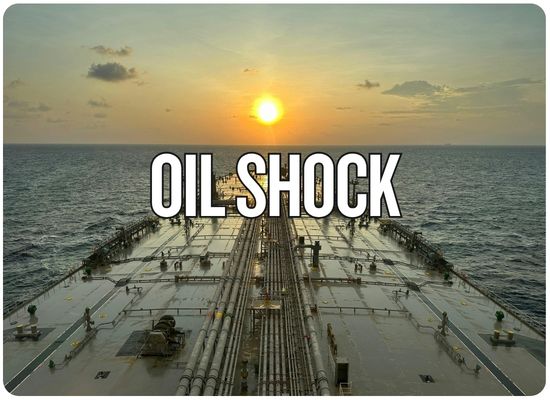
Oil prices plunged more than 7% on November 2, 2026, as renewed diplomatic efforts involving Iran, Qatar and the United States raised expectations that the Middle East war could move toward a negotiated settlement. Brent crude futures settled at $104.77 a barrel, down $8.66 or 7.63%, while U.S. West Texas Intermediate fell $7.66 or 7.36% to $96.46. Iranian President Masoud Pezeshkian said the country's supreme leader had granted the government limited authority to pursue peace negotiations, and Qatari mediators traveled to Tehran for further discussions. No peace agreement or general restoration of commercial navigation through the Strait of Hormuz has been announced. The crude selloff comes after renewed tanker attacks, leaving shipowners and cargo traders facing sharply lower oil futures but continuing maritime-security uncertainty.
ShipUniverse | November 2 energy shock
Oil Prices Fell. The Shipping Risk Did Not Disappear.
Brent and WTI posted sharp daily declines on renewed diplomatic expectations. Tanker voyages still depend on safe passage, marine insurance and working cargo infrastructure.
$1,008.50/mtDown $4.50/mt, or 0.44%, from October 30
Brent declined 7.63%, but this Singapore marine-fuel quote moved much less. Bunker prices also reflect refining, supply availability, delivery logistics and regional premiums. The quotes are not interchangeable with crude futures.
Three separate steps to restored shipping
01 / Diplomacy
Negotiations underway
Qatar-mediated contacts continue. No final agreement was reported at the November 2 settlement.
02 / Maritime security
Threats remain
Recent attacks and warnings have not been superseded by a verified general safety clearance.
03 / Vessel traffic
Normal access not restored
Reopening would require sustained, verifiable vessel movements and acceptable operating conditions.
Data discipline: Oil prices are November 2 settlements. The VLSFO figure is a separate November 2 port-price indication, not a ship-specific bunker quotation. Brent's December contract expired October 30; all daily percentage changes above use the relevant continuing contracts.
ShipUniverse / Maritime market evidence board
One Oil Selloff. Several Different Shipping Realities.
Futures reacted immediately to possible peace talks. Vessel movements, crude exports, insurance premiums and delivered marine fuel prices tell separate parts of the story.
−7.63%Brent futuresConfirmed November 2 settlement change
−0.44%Singapore VLSFOBunker Index November 2 daily change
No dealPeace agreement statusNo finalized settlement or general shipping reopening announced
Evidence versus commercial consequence
Different units, dates and detection methods matter. Scroll horizontally to see the complete comparison.
Market / indicator
Observation
What is established
What it does not establish
Operational indicator to monitor
Crude futures
Confirmed settlementBrent $104.77WTI $96.46 on November 2.
Both benchmarks fell by more than 7% in the same trading session.
That physical crude cargoes are already flowing freely or all marine fuel grades have repriced.
Forward curves, physical differentials and new cargo-sale quotations.
Marine bunker costs
Published indicationSingapore VLSFO $1,008.50/mtDown $4.50/mt on November 2.
One port-price assessment changed much less than the Brent futures benchmark.
That every vessel can purchase fuel at this price or that bunker prices move one-for-one with crude.
Actual stem quotes, grade availability, spreads and supplier credit terms.
Tracked tanker movements
Delayed AIS dataset1 tanker transit on October 25IMF PortWatch-derived figure.
Visible tanker movements were extremely restricted in that observation.
A definitive November 1–2 transit count or total movements including AIS-dark vessels.
New dated observations and independently reconstructed crossings.
Physical crude exports
Industry estimate~8.7m bpdHormuz oil export flows for week to October 29, according to FT reporting.
Material export volumes continued through the broader crisis, despite reduced normal traffic.
Full prewar supply restoration or equivalence with an AIS-only vessel count.
Loaded cargoes, confirmed departures, dark transits and delivery destinations.
Shipping security
Active threatOctober 29–30 attacksUKMTO incident reports and limpet-mine coverage.
Recent commercial-vessel attacks and related warnings were documented.
That a subsequent fall in oil futures removes the physical attack risk.
New incidents, security warnings, crew safety and actual route permissions.
Peace framework
Under negotiationQatar-mediated contactsDiscussed by Iranian, U.S. and mediator representatives.
Talks and government statements occurred; diplomatic options remain under discussion.
A signed ceasefire, withdrawal of blockades or open access to every transit corridor.
Joint text, implementation dates and observable changes at sea.
Marine war-risk insurance
Case-specificAdditional premiumsPreviously rose sharply during the conflict.
Insurers re-rate vessels by hull value, route and risk characteristics.
A universal November 2 war-risk rate or an immediate premium reduction tied to Brent.
Binding quotes, underwriter conditions, cover duration and route exclusions.
CONTINUED TABLE / HORIZONTAL SCROLL
What must change for a sustained normalization?
01 / AGREEMENT
Enforceable security arrangements
A negotiated political framework needs a clear and workable implementation process.
02 / INSURABILITY
Acceptable operational cover
Shipowners need workable protection, premiums, routing terms and confidence in crew safety.
03 / TRADE RECOVERY
Repeated commercial transits
Sustained loaded tanker movements, terminal operations and completed cargo deliveries matter more than a single price settlement.
Methodology: Public AIS counts may miss vessels operating with transmissions disabled. Kpler's analyst-validated reconstructed crossings and physical cargo estimates can therefore differ greatly from PortWatch's visible counts. Shipping status cannot be inferred from crude prices. No single dated observation is presented as today's complete vessel traffic.