
🔔 Subscribe to ShipUniverse Weekly →
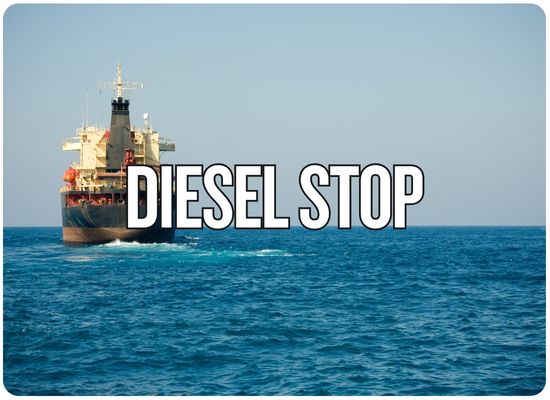
New Jersey Governor Mikie Sherrill warned port and fuel-terminal operators on November 2, 2026, not to receive Russian-origin diesel, arguing that unloading the cargo would violate a federal import ban enacted in 2022. The warning challenges the Trump administration's October 9 authorization permitting certain Russian diesel transactions through April 7, 2027. Russian officials have said three tankers were dispatched toward the United States, while shipping data identified the approximately 40,000-tonne diesel cargo aboard Agioi Fanendes, which initially signaled New York before switching its destination to “for orders.” At least one shipment may approach the New Jersey coast, but no confirmed New Jersey discharge destination or enforceable state prohibition has been established.
Washington Says Authorized.
New Jersey Says Turn Away.
AGIOI FANENDES
Loaded at Primorsk, Russia, on October 22–23.
Initially indicated New York; subsequently changed to "for orders."
October 22–23
Now reporting "for orders"
General License 135
OFAC authorizes certain transactions involving the sale, delivery, offloading and import of Russian-origin diesel under two specified Russia-related sanctions regulations.
Reject Russian Cargoes
Governor Sherrill argues that the 2022 statutory ban remains enforceable and that the Treasury license cannot override it without required legal procedures.
Neither a confirmed New Jersey unloading appointment nor a court ruling resolving the conflicting interpretations was established in the reporting reviewed.
The License, the Law,
and the Unloading Decision
| Document / issue | What is established | Governor's position | Federal or competing position | Unresolved question |
|---|---|---|---|---|
| PRIMARY LAW 2022 Russian Oil Act | Public Law 117-109 bans imports of Russian-origin products classified under Chapter 27 of the U.S. tariff schedule. | The statutory ban remains in force, and an OFAC regulatory license cannot independently terminate it. | Section 2 refers to implementation actions under Executive Order 14066. How this language interacts with Treasury licensing powers is disputed. | Does the license legally authorize imports despite the separate statutory ban? |
| FEDERAL LICENSE General License 135 | Issued October 9. Covers specified Russian-diesel transactions under 31 CFR parts 587 and 589 until April 7, 2027. | The document does not override the congressional statute and therefore cannot resolve import legality on its own. | OFAC explicitly authorizes Russian diesel offloading and importation under the named regulations; Treasury says the action is lawful. | What legal effect does the license have when the statutory ban is considered separately? |
| STATUTORY PROCESS Oil Act §3 | Provides a pathway to terminate the ban through presidential certification to Congress and a 90-day review process. | No qualifying certification has been made, so the ban cannot have been terminated through that mechanism. | The federal action is framed as a temporary license, not an announced termination of the entire statutory ban. | Must a temporary product-specific authorization satisfy the statute's termination conditions? |
| CONGRESSIONAL REVIEW 22 USC §9511 | Subjects certain major Russia sanctions changes, including qualifying significant licensing actions, to congressional procedures. | General License 135 significantly alters foreign policy and requires review that she says was not undertaken. | The statute distinguishes qualifying significant actions from routine licenses; applicability to GL 135 is disputed. | Is this licensing action subject to the specified congressional review requirements? |
| CUSTOMS LIABILITY 19 USC §1595a(b) | Provides a value-based penalty for persons involved in importation activity that is unlawful under the applicable law. | Terminals and commercial participants may face penalties equal to cargo value if imports are unlawful. | Any such liability depends on a legally established violation and applicable enforcement procedures. | Would an identified import actually satisfy the statutory elements for a penalty? |
| STATE AUTHORITY November 2 letter | Sherrill warned operators and pledged to use available New Jersey legal and regulatory tools. | Terminal operators should refuse Russian-origin diesel even with the Treasury license. | No published judicial ruling or executed statewide physical unloading ban was identified in the reviewed reports. | What specific state authority could block an identified cargo at a particular terminal? |
Three distinct commercial exposures
Uncertain discharge instructions could extend voyage duration, generate additional bunker costs and create disputes over hire or demurrage.
Operators must assess cargo documentation, licensing coverage, customs requirements, insurance conditions and potential enforcement disputes.
Buyers and banks face document, payment, credit and sanctions-compliance questions even before cargo reaches a berth.
Assuming $800 per tonne. The governor cites a federal provision involving a potential value-based penalty if unlawful importation is established. This is not a fine levied on any identified operator or a prediction of legal liability.
We welcome your feedback, suggestions, corrections, and ideas for enhancements.
Please click here to get in touch