
SHIPUNIVERSE
Maritime Intelligence, Tools & Live Industry Radars

One place for live maritime intelligence, practical decision tools, industry events and focused reporting.

17Live Radars 292Maritime Tools
24/7Intelligence Focus
GlobalIndustry Coverage
RADARS
TOOLS
All Tools
Latest 20
Open to load latest items…
NEWS
All News
Latest 20
Open to load latest items…
REPORTS
All Reports
Latest 20
Open to load latest items…
TECH
All Tech
Latest 20
Open to load latest items…
CRUISE
All Cruise
Latest 20
Open to load latest items…
NAVAL
All Naval
Latest 20
Open to load latest items…
SHIPUNIVERSE REPORTING

Reports, news and industry coverage

Full analysis in the ShipUniverse intelligence layout.

← Back to latest posts ShipUniverse / NEWS

Ships Turning Off AIS May No Longer Be Invisible: Windward Buys Camera-Based Tracking Specialist

🔔 Subscribe to ShipUniverse Weekly →

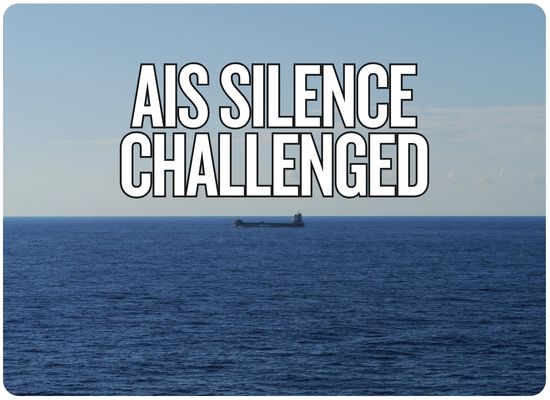
Maritime intelligence company Windward announced the acquisition of Azimut.ai on November 3, 2026, adding shore-based and shipborne camera technology capable of detecting, visually recognizing and tracking vessels even when they are not transmitting AIS signals. Azimut reports that an earlier pilot at Israel's Port of Ashdod detected and documented 464 targets, with vessel detection at distances of up to 7,000 meters using standard daylight cameras. Windward plans to combine optical observations with its existing vessel ownership, sanctions, cargo and behavioral intelligence. Financial terms were not disclosed. The technology offers an additional way to verify vessel movements at monitored ports and chokepoints, although camera visibility and reliable vessel identification remain distinct technical challenges.

ShipUniverse | Maritime AI Intelligence | 03 Nov 2026

Turning Off AIS No Longer Guarantees a Ship Goes Unseen

Windward's Azimut.ai acquisition adds fixed-camera and shipborne observations to vessel tracking. The system aims to identify physical ships and connect sightings with movement history, ownership and sanctions records.

Ashdod Pilot 464

Targets detected and documented, supplier-reported

Maximum Reported Range 7 km

Vessel detection with standard daylight cameras

Reported Nuisance Alerts <2/h

False alarms after filtering in the pilot

Acquisition Price Undisclosed

No transaction valuation or global camera count released

A Vessel Can Stop Broadcasting. It Cannot Stop Being Physical.
Conceptual view of a monitored coastal passage. The scene is not a map of Ashdod or an existing Windward camera deployment.
SHORE-BASED CAMERA SITE | OPTICAL OBSERVATION
VISUAL SENSOR Camera + AI Recognition

Records vessel appearance and movement inside its field of view, independently of an AIS transmission.

Physical Vessel Present

Hull and movement may still be observed.

AIS SIGNAL ABSENT
Up to 7 km is a vendor-reported maximum detection distance in a specific pilot, not a guaranteed identification radius or continuous ocean coverage.
From a Camera Sighting to a Compliance Case
Every stage adds information. A visual detection alone does not establish a ship's legal identity or prove unlawful activity.
01 / OBSERVE Detect a Hull

Recognize a vessel in the camera's usable field of view.

02 / TRACK Follow Movement

Estimate position, direction and speed from video observations.

03 / MATCH Compare Identity

Check visual features against available vessel records.

04 / CORRELATE Add Other Signals

Combine AIS, satellite, RF and movement history where available.

05 / REVIEW Screen the Risk

Evaluate ownership, sanctions and relevant behavior with context.

What the Acquisition Adds

Direct optical observations at monitored locations, a further source of vessel movement evidence, and technology that can integrate with existing cameras.

What Has Not Been Demonstrated

Global continuous tracking, universal identification of AIS-silent vessels, independently audited accuracy across diverse ports, or a disclosed network rollout schedule.

ShipUniverse | Vessel Verification Intelligence

Five Data Layers. One Vessel Identity Problem.

A ship's presence, movement, claimed identity and legal ownership are separate questions. Adding visual recognition can help reconcile them, but each source still has blind spots.

The Maritime Sensor Comparison
Compare how five sources contribute to vessel detection and verification. Scroll horizontally for the full operating characteristics.
Source Evidence Produced Strongest Use Main Limitation Identity Value Availability
AISShipboard transponder Broadcast identity, position, course, speed and navigational status. Continuous cooperative vessel tracking and traffic monitoring. May be switched off, spoofed, jammed or inaccurately configured. A reported identity requiring corroboration when suspicious. Established
SAR SatelliteRadar imagery Vessel-shaped radar returns at observed coordinates and times. Detecting non-cooperative vessels in darkness and through cloud. Satellite revisit intervals, imaging resolution and ambiguous target association. Confirms physical presence more readily than exact IMO identity. Established
Satellite EOOptical imagery Visible ship appearance, location and surrounding activity. Examining hull characteristics, port calls and vessel proximity. Clouds, illumination, resolution, tasking and revisit limitations. Visual comparison when sufficient detail is available. Established
RF MonitoringRadio-frequency signals Signal detections and estimated emitter locations. Adding evidence when other cooperative reporting is absent. Requires detectable emissions; an emitter may not uniquely identify a ship. Corroborates activity, with identity dependent on context. Established
Coastal Visual AIAzimut camera layer Visible vessel, appearance, locally estimated position, course and speed. Repeated observation of physical ships at monitored approaches, ports and chokepoints. Camera coverage, weather, darkness, occlusion, matching errors and site permissions. Potentially links hull appearance to a vessel record even with AIS off. Newly Acquired
Source performance is conditional on sensor configuration and operating conditions. Detection of a vessel, recognition of its type and confirmation of its legal identity should be scored separately.
Four Cases That Produce Very Different Risk Decisions
The same optical observation can support different conclusions depending on corroborating evidence.
CASE 01 / DARK TRANSIT Vessel Present, AIS Absent

A camera records a ship crossing a monitored entrance without a corresponding AIS signal. Analysts can investigate the gap, but absence alone does not prove evasion.

CASE 02 / POSSIBLE SPOOFING Visual Appearance Conflicts With AIS

A transmitted track appears inconsistent with physical observation. Investigators compare time, position, vessel features and independent sensor data.

CASE 03 / LEGITIMATE SAFETY ACTION Protective AIS Deactivation

A ship limits transmissions in a high-threat area for safety. Camera evidence may help verify movement without treating the captain's decision as misconduct.

CASE 04 / WRONG MATCH Similar-Looking Vessel

Two ships share hull proportions or visual markings. The system suggests a match, but analysts need independent identity evidence before taking adverse action.

The Ashdod Pilot: What the Figures Actually Establish
All three figures are published by Azimut.ai. Independent evaluation methodology and denominators are not publicly disclosed.
Documented Targets 464

Targets detected during the trial. Not necessarily 464 unique ships, confirmed IMO identities or AIS-dark vessels.

Maximum Detection Range 7,000 m

Reported using standard daylight cameras. Does not establish identical recognition accuracy at the maximum distance.

Supplier Accuracy Statement 100%

Azimut claims correct identification of innocent vessels during evaluation. This is not an audited overall vessel-identification success rate.

Commercial Case for the Camera Network

Existing port cameras may provide infrastructure for additional analytics. The acquired platform could help customers reconcile port entries, vessel movements, sanctions screening and historical tracking gaps.

Site Access and Governance Still Matter

Camera placement needs suitable access, ownership transparency and permissions. Windward says customers receive vessel analytics rather than raw images or video. Data-use practices and identity disputes still require clear operating procedures.

ShipUniverse Interactive Intelligence Tool

How Many Dark Vessels Could a Camera Network Identify?

Model the portion of AIS-silent traffic that cameras might detect, how many observations receive a tentative vessel identity, and the analyst workload required to review them.

Important: The Ashdod pilot did not disclose the real-world capture and identification rates used below. Every scenario is hypothetical, not a Windward or Azimut.ai performance forecast.
1. Define the Vessel Traffic
Start with total daily vessel movements and the share that lacks usable AIS reports at the monitoring point. A non-transmitting vessel is not necessarily acting unlawfully.
Illustrative daily traffic, not an actual port count
Includes any reason for missing transmissions
Site-specific field-of-view coverage of unique movements
Assumes vessel passages are evenly distributed over 24 hours
Accounts for conditions preventing usable visual observations
Hypothetical vessel detection sensitivity
Share of detected AIS-dark ships assigned a candidate identity
What Happens to AIS-Silent Vessels?

The full bar represents all modeled AIS-silent passages. Green observations receive a tentative identity; blue are seen but not matched; red remain outside successful visual detection.

Tentatively Matched / Day 5.7
Seen, Identity Unresolved / Day 2.4
Not Visually Detected / Day 21.9
2. Set the Review Workload and Operating Costs
Estimate how many potential alerts must be reviewed and what a monitoring service might cost. These expenses are hypothetical; Windward has not published acquisition or service prices.
Affects cost and false alerts; change coverage separately
Assumption, not an audited Azimut-specific rate
Assumes every detected ship and false alert is reviewed
Illustrative personnel cost
Assumed recurring cost, excluding new installation capex
Station cost prorated using a 30-day month
AIS-Silent Passages per Day 30.0

Baseline number of movements needing other evidence.

Visually Detected per Day 8.1

Detected with or without an exact candidate identity.

Tentative Identity Matches / Period 170.1

Potential matching leads, not legally verified identities.

False Alerts per Day 14.4

Spurious alerts from the assumed station network.

Total Alerts Requiring Review / Day 22.5

Matched observations, unresolved sightings and false alerts.

Analyst Workload per Day 1.9 h

Staff time assuming the selected review time per alert.

Modeled Operating Cost / Period $6,356

Station operating charges plus analyst review time.

Operating Cost per Tentative Match $37.37

Not the price of a verified sanctions finding.

Share of Dark Passages Without a Match 81.1%

Includes unseen passages and unresolved visual sightings.

Camera Coverage Creates Useful Leads, Not Full Visibility

Adjust the assumptions to see how the system performs and what limits identification coverage.

Calculation methodology: Daily AIS-silent passages equal total daily passages multiplied by the AIS-silent percentage. Successful visual detections equal AIS-silent passages multiplied by coverage share, operational hours divided by 24, usable-visibility share and detection success. Tentative identity matches equal detections multiplied by the assumed match rate. Unresolved sightings are the remaining detections. Undetected movements are all AIS-silent passages less successful visual detections. False alerts per day equal camera stations multiplied by operational hours and the assumed false-alert rate per station-hour. Daily review items equal all successful vessel detections plus false alerts. Analyst hours equal review items multiplied by minutes per review, divided by 60. Total cost equals analyst hours over the selected period multiplied by hourly cost, plus monthly station costs prorated to a 30-day month. The cost per matched sighting is total modeled operating cost divided by all tentative matches over the period. It is shown as N/A where no matches occur. Important assumptions and limits: Passages are assumed evenly distributed throughout the day. Each ship is counted once at the monitored point. Camera coverage is independently entered and does not automatically increase when stations are added, avoiding double counting overlapping cameras. The model assumes alert review is required for all detections, even when a system could automatically clear some events. It does not model missed fraudulent identities, incorrect identity matches, human verification accuracy, sanctions-list errors, installation capex, network hosting, data licensing, cyber controls or evidentiary retention costs. The Ashdod pilot's maximum 7 km detection distance is not used as a guaranteed coverage radius. Site geometry, optical visibility and vessel identification performance require separate field testing. A vessel being AIS-silent is not evidence of illegal conduct. A matched camera sighting is a lead for further review, not proof of sanctions evasion. All financial values are USD.
Feedback Welcome

We welcome your feedback, suggestions, corrections, and ideas for enhancements.

Please click here to get in touch
By the ShipUniverse Editorial Team — About Us | Contact


← Browse more ShipUniverse posts
MARITIME DECISION TOOLS

Practical tools for real vessel and commercial decisions

Browse the latest 24 tools or instantly search every published ShipUniverse maritime tool.

24 latest toolsView all 292 →
TOOL

Maritime Counterparty Credit, Charter Hire Default, Payment Security & Recovery Exposure Tool

🔔 Subscribe to ShipUniverse Weekly → Charter Risk · Receivables ·…

Open →
TOOL

Cruise Ship Elevator Capacity, Passenger Flow, Outage Risk & Modernization ROI Tool

🔔 Subscribe to ShipUniverse Weekly → Cruise Operations · Hotel Engineering…

Open →
TOOL

Ship Lay-Up, Preservation, Reactivation & Return-to-Service Economics Tool

🔔 Subscribe to ShipUniverse Weekly → Shipowner Strategy · Vessel Preservation…

Open →
TOOL

Maritime Cyber Incident Recovery, OT Downtime, Business Interruption & Restoration Cost Tool

🔔 Subscribe to ShipUniverse Weekly → Maritime Cyber Resilience · Vessel…

Open →
TOOL

Vessel Technical Management Contract Tender, Fleet OPEX, Fees & SLA Comparison Tool

🔔 Subscribe to ShipUniverse Weekly → Ship Management · Fleet OPEX…

Open →
TOOL

Shipbuilding Refund Guarantee, Yard Credit Risk, Progress Payments & Delivery Default Tool

🔔 Subscribe to ShipUniverse Weekly → Shipbuilding Finance · Newbuilding Security…

Open →
TOOL

Port Waste Reception, MARPOL Delivery Notice, Disposal Logistics & Charge Verification Tool

🔔 Subscribe to ShipUniverse Weekly → Port Operations · MARPOL Waste…

Open →
TOOL

Maritime Crew Recruitment, Retention, Manning Agency Fees & Attrition Cost Tool

🔔 Subscribe to ShipUniverse Weekly → ShipUniverse · Fleet Crewing Economics…

Open →
TOOL

Container Rail Intermodal Connection, Terminal Dwell & Train Slot Tool

🔔 Subscribe to ShipUniverse Weekly → Ship-to-Rail · Intermodal Terminal ·…

Open →
TOOL

Bulk Grain Cargo Quality, Fumigation, Hold Readiness & Rejection Exposure Tool

🔔 Subscribe to ShipUniverse Weekly → Cargo quality · Hold inspection…

Open →
TOOL

Marine Equipment OEM Warranty, Service SLA & Repair Claim Tool

🔔 Subscribe to ShipUniverse Weekly → Equipment Reliability · OEM Claims…

Open →
TOOL

Freight Forwarder Shipment Quotation, Buy/Sell Rates, Routing & Margin Tool

🔔 Subscribe to ShipUniverse Weekly → Freight forwarding · NVOCC pricing…

Open →
TOOL

Ro-Ro Vehicle Terminal Yard Capacity, PDI & Vessel Loading Flow Tool

🔔 Subscribe to ShipUniverse Weekly → Vehicle terminals · PCTC &…

Open →
TOOL

Marine Hull & P&I Renewal, Premium Quote, Deductible & Coverage Comparison Tool

🔔 Subscribe to ShipUniverse Weekly → Marine Insurance · Renewal Tender…

Open →
TOOL

Offshore Support Vessel Charter Bid, Utilization & Campaign Profitability Tool

🔔 Subscribe to ShipUniverse Weekly → Offshore commercial operations · PSV…

Open →
TOOL

Marine Repair Tender, Shipyard Bid Comparison & Contract Cost Risk Tool

🔔 Subscribe to ShipUniverse Weekly → Ship Repair Procurement · Yard…

Open →
TOOL

Container Transshipment, Missed Connection, Rollover & Recovery Cost Tool

🔔 Subscribe to ShipUniverse Weekly → Container Liner Networks · Feeder-to-Mother…

Open →
TOOL

Vessel Pre-Purchase Technical Survey, Defect Valuation & Acquisition CAPEX Tool

🔔 Subscribe to ShipUniverse Weekly → Vessel S&P · Technical Due…

Open →
TOOL

Contract of Affreightment, Cargo Nomination, Fleet Allocation & Fulfilment Risk Tool

🔔 Subscribe to ShipUniverse Weekly → Dry Bulk Contracts · Cargo…

Open →
TOOL

Port Pilotage, Tug Dispatch, Berth Window & Marine Services Coordination Tool

🔔 Subscribe to ShipUniverse Weekly → Harbor Operations · Pilotage ·…

Open →
TOOL

Offshore Heavy Lift, Crane Spread, Weather Window & Installation Cost Tool

🔔 Subscribe to ShipUniverse Weekly → Offshore Construction · Heavy Lifts…

Open →
TOOL

Cruise Embarkation, Terminal Security, Gangway Queue & Passenger Processing Tool

🔔 Subscribe to ShipUniverse Weekly → Cruise Operations · Terminal Security…

Open →
TOOL

Dangerous Goods Declaration, Booking Acceptance & Documentation Readiness Tool

🔔 Subscribe to ShipUniverse Weekly → IMDG Documentation · Dangerous Goods…

Open →
TOOL

Marine Salvage, Wreck Removal, Pollution Response & Casualty Cost Tool

🔔 Subscribe to ShipUniverse Weekly → Marine Casualty · Emergency Salvage…

Open →