
🔔 Subscribe to ShipUniverse Weekly →
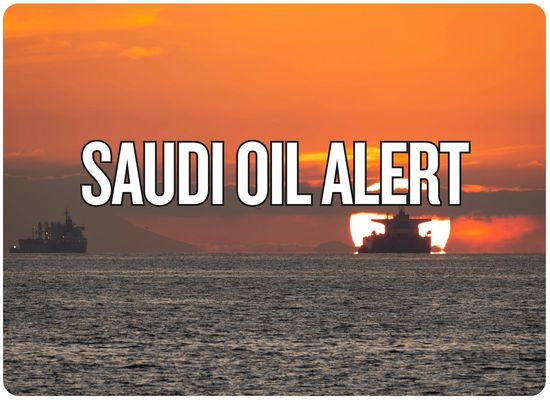
Yemen's Houthi forces claimed on October 27 that a ballistic missile struck Saudi Arabia's Ras Tanura refinery, one of the kingdom's largest oil-processing facilities, while separate reporting confirmed that a fire had been contained near the adjoining crude export terminal. Saudi authorities had not independently confirmed the claimed refinery strike, and the cause and extent of the reported fire remained unclear. The maritime exposure is considerably larger than the refinery's 550,000-barrel-per-day processing capacity: the wider Ras Tanura port complex has an estimated 6.4 million barrels per day of crude-loading capacity, according to U.S. Energy Information Administration reference data. No verified suspension of tanker loading or reduction in crude exports has been established from the October 27 incident.
A 550,000-Barrel Refinery Inside a 6.4-Million-Barrel Export Gateway
Houthi forces claim a missile hit the refinery. A separate report places a contained fire near the terminal. Neither the precise impact location nor any loss of crude-loading capacity has been publicly established.
Two Industrial Systems. Very Different Exposure.
The processing plant and the crude export facilities share an industrial location but have different functions. A disruption at one does not automatically establish a shutdown of the other.
Ras Tanura refinery converts crude feedstock into fuel and other petroleum products. The Houthis identify this as the target of their claimed strike.
Strike claim not independently verifiedThe port complex serves crude carriers through Ras Tanura's terminal facilities and the Juaymah offshore loading system.
No verified October 27 loading haltWhere the 6.4 Million-Barrel Figure Comes From
Historical EIA handling-capacity estimate, including the peninsula's tanker export facilities.
Historical EIA handling-capacity estimate. Aramco documents six offshore single-point mooring positions.
Capacity figures come from EIA's Saudi Arabia background reference, not from measured October 2026 throughput. The Juaymah LPG facility is a distinct terminal. The two crude figures should not be confused with refinery processing or Saudi national exports.
What the October 27 Reporting Actually Establishes
Houthi spokesman Yahya Saree said a missile struck the refinery and started major fires. Saudi authorities did not independently confirm the claimed impact.
Bloomberg and Argus reported a fire near the Ras Tanura terminal, relying on people familiar with the incident. Damage extent and cause were not established.
No confirmed October 27 terminal closure, tanker-loading suspension, number of affected ships or quantified crude export loss was established.
From Refinery Fire to Tanker Loading: Six Separate Systems to Examine
The extent of any October 27 damage has not been established. This board maps the different industrial and marine assets that would determine whether an incident affects products, crude exports or merely security procedures.
Three Very Different Commercial Outcomes
The same headline can lead to significantly different tanker and energy-market consequences depending on which assets, if any, were actually affected.
A contained incident with no impaired loading, storage or marine access could leave cargo schedules intact while owners review security and insurance exposure.
Requires evidence that terminal operations continue normally.Temporary limits at certain berths, areas or systems could delay nominated cargoes while unaffected facilities remain available.
Requires berth-level restrictions and actual delay evidence.A broader shutdown could defer scheduled loading and increase reliance on storage and alternative export routes, constrained by spare capacity and regional security.
Not established by the October 27 reports.Four Milestones Behind the Current Export Risk
Saudi Arabia reported limited refinery damage from intercepted drone debris, with a contained fire and precautionary unit shutdowns.
Shipping data showed crude loading resuming at Ras Tanura after a near-four-month Gulf export interruption.
Houthis claimed a refinery strike; a separate source reported a contained fire near the export terminal.
Oil and equity markets continued reacting to regional supply risks; a new export shutdown had not been independently established.
What Would a Ras Tanura Loading Disruption Cost the Tanker Trade?
Build a hypothetical terminal-restriction scenario using loading volumes, duration, alternative export capacity and tanker waiting costs. All disruption percentages are modeling inputs: an October 27 export shutdown has not been independently verified.
Scenario Inputs
Modeled Crude Export Exposure
Crude loading postponed under the selected scenario. These barrels are not necessarily destroyed, permanently lost or removed from the market.
How Much Crude Is Actually Deferred?
All bars use the total originally scheduled export volume over the modeled period as the denominator. Alternative exports and deferred exports together equal gross interrupted loading.
Additional Vessel Expense
The number of vessels and added waiting days are independent inputs. They do not imply that any actual tanker has been delayed at Ras Tanura.
Refinery processing exposure is calculated from its 550,000 b/d capacity and the selected outage percentage. It is intentionally excluded from the crude export-deferral total.
How the Duration Changes the Export Backlog
Hold all other inputs constant and compare how net deferred crude accumulates over five possible restriction durations.
| Restriction | Gross Interrupted | Alternative Routing | Net Deferred | VLCC Equivalents |
|---|
We welcome your feedback, suggestions, corrections, and ideas for enhancements.
Please click here to get in touch