
SHIPUNIVERSE
Maritime Intelligence, Tools & Live Industry Radars

One place for live maritime intelligence, practical decision tools, industry events and focused reporting.

15Live Radars 263Maritime Tools
24/7Intelligence Focus
GlobalIndustry Coverage
NEW · THE LIGHTER SIDE OF SHIPUNIVERSE The Ship Universe FUNZONE is open! Maritime Games · Funnies · Crossword · Pic Puzzles — Your next break starts here.
RADARS
TOOLS
All Tools
Latest 20
Open to load latest items…
NEWS
All News
Latest 20
Open to load latest items…
REPORTS
All Reports
Latest 20
Open to load latest items…
TECH
All Tech
Latest 20
Open to load latest items…
CRUISE
All Cruise
Latest 20
Open to load latest items…
NAVAL
All Naval
Latest 20
Open to load latest items…
SHIPUNIVERSE REPORTING

Reports, news and industry coverage

Full analysis in the ShipUniverse intelligence layout.

← Back to latest posts ShipUniverse / NEWS

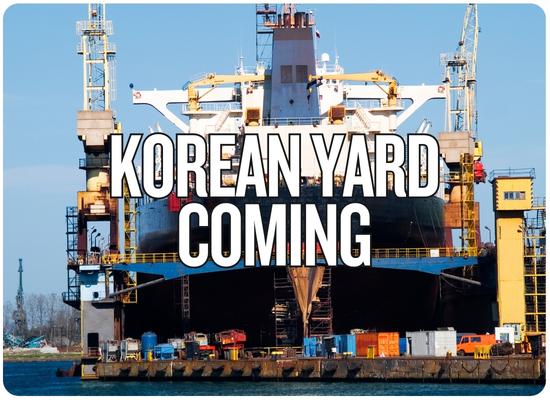
Korea Is Coming to Build Ships in America: Hyundai Plans New U.S. Shipyard

🔔 Subscribe to ShipUniverse Weekly →

South Korea’s HD Hyundai and U.S. engineering and construction group Kiewit have agreed to form HD Kiewit Shipbuilding, a joint venture that plans to begin construction of a new advanced U.S. shipyard in 2027 and reach full-scale operations in 2029, with roughly 3,000 American jobs at capacity. The yard is intended to pursue commercial vessels, U.S. Navy logistics and support ships, and the fabrication of large ship blocks and modules for other American shipbuilders. Unlike Hanwha’s acquisition of the existing Philadelphia shipyard, HD Hyundai is proposing a new production facility designed around its own digital and automated shipbuilding system. The exact site, total capital cost and first vessel order have not yet been publicly announced. The project sits within the much larger U.S.-South Korean shipbuilding framework that calls for $150 billion of Korean investment in the U.S. shipbuilding sector, but that $150 billion is not the budget for this individual yard.

HD Hyundai + Kiewit · U.S. Shipbuilding

This Is Planned as a New Production System, Not Just Another Yard Upgrade

HD Hyundai intends to transfer shipbuilding production methods developed inside one of the world's largest shipbuilding groups into a newly configured American facility instead of retrofitting every process around an inherited yard layout.

Proposed Joint Venture HD Kiewit Shipbuilding
HD Hyundai brings ship design, production engineering, yard operations and automation. Kiewit contributes U.S. construction, fabrication, engineering and large-project execution capability.
Construction Target 2027
Groundbreaking is planned for next year.
Full Operations 2029
Target for full-scale yard operations.
Employment ~3,000
Expected U.S. jobs once the yard reaches full capacity.
Site Not Yet Named
A deepwater industrial property is planned, but the final location has not been publicly announced.
From Partnership to Production
July 2026 Partnership
HD Hyundai and Kiewit agree to cooperate on U.S. shipbuilding, initially emphasizing blocks, modules and domestic fabrication.
→
October 2026 Joint Venture
Agreement signed in Houston to create HD Kiewit Shipbuilding and move toward a complete U.S. production facility.
→
2027 Construction
Yard construction and installation of advanced manufacturing, digital-production and fabrication systems are planned to begin.
→
2029 Full Operations
Target for the new yard to enter full-scale commercial and government production.
Four Revenue Paths Are Already Being Considered
Navy Logistics Ships
Auxiliary and support vessels offer a potential entry point into U.S. government shipbuilding.
Commercial Ships
Domestic commercial construction creates a route into Jones Act and U.S.-flag fleet renewal.
Blocks & Modules
Large prefabricated sections could be supplied to existing American shipyards rather than waiting for complete-ship orders.
Port Infrastructure
The partners also plan to explore adjacent maritime-infrastructure projects.
Already Confirmed
Joint venture agreement · new U.S. shipyard · 2027 construction target · 2029 operating target · approximately 3,000 jobs · commercial and naval-support opportunities · blocks and modules · smart-yard technology.
Still Open
Exact yard location · final acreage · capital investment · ownership split · dry-dock dimensions · annual ship capacity · first vessel type · first customer · construction contract value.
Can Korean Shipbuilding Economics Transfer to America?

Automation Helps. Production Architecture Matters More.

Korea's advantage is not one welding robot or one software package. It is the combination of mature design, serial production, enormous blocks, tightly synchronized suppliers, high yard utilization and production systems designed around repeatable flow.

HD Hyundai FOS 2030 Target +30% Productivity
HD Hyundai also targets roughly 30% shorter lead times when its full Future of Shipyard system is implemented. Those are corporate smart-yard targets, not promised results for the new U.S. facility.
U.S. Commercial Cost Gap ~4× World Price
CRS uses roughly four times world-market prices as an illustrative starting point for U.S.-built commercial ships.
U.S. Navy Yard Position Delivery Goals Missed
GAO says infrastructure, workforce and acquisition problems continue across major Navy programs.
Korean Industrial Scale 27% Global Completions
Korea represented about 27% of global CGT completions in 2024.
Korean Supply Base Thousands of Suppliers
Dense domestic supplier networks allow parts and labor to move into Korean yards rapidly.
Korean method → U.S. transfer test ← →
Production Lever Typical U.S. Constraint HD Hyundai Method Potential U.S. Benefit Transfer Barrier Metric to Watch at HD Kiewit
Digital Production One data backbone Design, planning, supply and shop-floor information can live in disconnected systems, increasing rework and slowing changes. FOS connects design, production planning, material flow, welding, piping and electrical information through digital twins and integrated models. Earlier detection of production conflicts, less manual data transfer, better work sequencing and more predictable block completion. Existing U.S. Navy systems, cybersecurity requirements, government configuration control and legacy supplier data may limit integration. Rework hours, planning-cycle time, design-change incorporation time and percentage of production instructions generated digitally.
Mega-Block Construction Build large sections separately Prime yards can become bottlenecks when too much fabrication, outfitting and final integration competes for the same footprint. Korean yards extensively prefabricate and outfit large blocks before final erection, moving work into parallel production streams. HD Kiewit could fabricate complete modules for both its own ships and existing U.S. yards, expanding capacity without duplicating every facility. Transport dimensions, Navy certification, interfaces between yards and precision requirements become critical. Percentage of outfitting completed before block erection, outsourced production hours and block-delivery schedule adherence.
Serial Production Repeat the same design Small production runs and repeated redesign reduce learning-curve benefits. Korean commercial yards favor multi-ship series with mature designs, bulk material buying and repeat production. Commercial vessels and standardized Navy auxiliaries could achieve lower unit costs with each follow-on hull. U.S. procurement can change requirements between hulls or fund ships irregularly, interrupting production rhythm. Labor hours per hull, cost change from Hull 1 to Hull 2, schedule change across a vessel series and annual yard utilization.
Automation Robots supplement scarce trades U.S. yards report persistent shortages of welders, pipefitters, machinists and experienced supervisors. Robotic and mechanized welding, automated steel processing, digitally generated work packages and optimized material movement. More output per skilled employee and less reliance on adding workers in exact proportion to production. Automation still requires trained operators, maintenance technicians, welding qualification and stable production geometry. Weld inches per labor hour, robot utilization, first-pass quality, training duration and employee turnover.
Supplier Density Parts close to the yard U.S. shipbuilders depend on thinner and geographically dispersed supply chains, with some components having very few qualified sources. Korean yards operate inside dense marine-equipment clusters with thousands of companies supplying engines, piping, electrical gear and outfitting. A new U.S. yard could attract suppliers around it and standardize procurement across commercial and government programs. A Korean supply ecosystem cannot simply be recreated in Texas or California by opening a shipyard. Localization takes years and sustained order volume. Domestic-content percentage, supplier lead times, sole-source components and number of qualified local vendors.
Design Maturity Build after engineering stabilizes GAO repeatedly identifies construction starting before designs are mature as a cause of U.S. naval cost and schedule problems. High-volume commercial production depends on freezing designs and pushing manufacturing information to the yard before steel work advances. Korean production methods could sharply reduce avoidable rework when paired with stable vessel requirements. No manufacturing system can eliminate the cost of late government requirement changes, immature combat systems or incomplete engineering. Design completion at construction start, engineering-change count, rework percentage and configuration changes after block fabrication.
Korean method → U.S. transfer test ← →
Best Initial Fit
Repetitive commercial ships, fleet oilers, logistics ships, sealift vessels and standardized modules are closest to the production environment where Korean serial-building methods have their strongest advantage.
Hardest Transfer
Nuclear submarines, aircraft carriers and highly customized surface combatants have dense military systems, specialized steels, survivability requirements and low production quantities that prevent a simple one-for-one transfer of commercial Korean shipbuilding economics.
Ship Universe U.S. Shipyard Tool

Korean Productivity Transfer Analyzer

Test how much of HD Hyundai's targeted smart-yard productivity and lead-time improvement would need to survive the move into the U.S. industrial environment before it materially changes vessel economics.

$M
%
User assumption for the portion of cost that responds directly to labor productivity.
%
Default reflects HD Hyundai's long-term FOS corporate target.
%
Percentage of the Korean smart-yard improvement assumed to survive U.S. constraints.
months
%
ships
%
Illustrative reduction applied to each follow-on vessel after Hull 1.
Effective Productivity Gain 18% FOS target × entered U.S. transfer efficiency
Modeled Hull 1 Cost $278.4M productivity savings applied only to labor-sensitive cost
Modeled Hull 1 Saving $21.6M difference from entered baseline vessel cost
Effective Schedule Gain 18% lead-time target × U.S. transfer efficiency
Modeled Delivery Duration 39.4 mo baseline duration after modeled schedule improvement
Series Program Saving $128M productivity plus entered follow-on learning across the series
Baseline vs. Transfer Scenario
This model intentionally does not assume that a 30% productivity improvement produces a 30% reduction in total ship cost.
Baseline Cost
$300M
Modeled Cost
$278.4M
Delivery Duration
39.4 mo
Transfer Interpretation Meaningful Gain
Capturing 60% of the entered Korean productivity target produces a material improvement, but it does not erase the broader U.S. cost structure.
Series 4 ships
Transfer 60%
Labor Share 40%
Learning 3%
Scenario model only: HD Hyundai's 30% productivity and lead-time figures are corporate FOS targets, not forecasts for HD Kiewit Shipbuilding. Actual U.S. results will depend on design maturity, wages, supplier localization, vessel type, domestic-content rules, workforce experience, yard utilization, government requirements and the ability to build repeated ships from stable designs.
Feedback Welcome

We welcome your feedback, suggestions, corrections, and ideas for enhancements.

Please click here to get in touch
By the ShipUniverse Editorial Team — About Us | Contact


← Browse more ShipUniverse posts
MARITIME DECISION TOOLS

Practical tools for real vessel and commercial decisions

Browse the latest 24 tools or instantly search every published ShipUniverse maritime tool.

24 latest toolsView all 263 →
TOOL

Crew Change, Relief Logistics, Port Coordination & Cost Tool

🔔 Subscribe to ShipUniverse Weekly → Fleet Crewing • Seafarer Repatriation…

Open →
TOOL

Marine Insurance Hull, P&I, Deductible & Claim Reserve Tool

🔔 Subscribe to ShipUniverse Weekly → Marine Claims • Hull &…

Open →
TOOL

Shipbuilding Milestone, Change Order, Yard Delay & Payment Exposure Tool

🔔 Subscribe to ShipUniverse Weekly → Newbuilding Contract Control • Yard…

Open →
TOOL

Project Cargo Sea Fastening, Deck Load & Transport Planning Tool

🔔 Subscribe to ShipUniverse Weekly → Project Cargo • Deck Strength…

Open →
TOOL

Maritime Emissions Data Verification, MRV & FuelEU Audit Readiness Tool

🔔 Subscribe to ShipUniverse Weekly → Emissions Assurance • Fuel Traceability…

Open →
TOOL

Tanker Terminal Acceptance, Berth Compatibility & Pre-Arrival Readiness Tool

🔔 Subscribe to ShipUniverse Weekly → Tankers • Marine Terminals •…

Open →
TOOL

Cruise Itinerary Disruption, Port Substitution & Revenue Impact Tool

🔔 Subscribe to ShipUniverse Weekly → Cruise Operations • Port Diversions…

Open →
TOOL

Port Dredging Production, Sediment Disposal & Project Cost Tool

🔔 Subscribe to ShipUniverse Weekly → Ports / Dredging / Material…

Open →
TOOL

Offshore ROV/AUV Survey Productivity, Weather Window & Spread Cost Tool

🔔 Subscribe to ShipUniverse Weekly → Offshore Survey · ROV/AUV Operations…

Open →
TOOL

Freight Contract, Surcharge & Shipping Invoice Verification Tool

🔔 Subscribe to ShipUniverse Weekly → Freight Procurement • Carrier Contracts…

Open →
TOOL

Marine Cargo Damage, Shortage, Survey & Claims Recovery Tool

🔔 Subscribe to ShipUniverse Weekly → Marine Cargo • Shortage Reconciliation…

Open →
TOOL

Container Terminal Yard Capacity, Dwell Time & Truck Gate Congestion Tool

🔔 Subscribe to ShipUniverse Weekly → Port Logistics • Yard Density…

Open →
TOOL

Fleet Class Survey, Statutory Certificate & Expiry Planning Tool

🔔 Subscribe to ShipUniverse Weekly → Fleet Compliance • Class /…

Open →
TOOL

Drydock Project Critical Path, Work Package & Schedule Overrun Tool

🔔 Subscribe to ShipUniverse Weekly → Drydock • Work Packages •…

Open →
TOOL

Container Demurrage, Detention, Free Time & Storage Cost Tool

🔔 Subscribe to ShipUniverse Weekly → Container Logistics • Free Time…

Open →
TOOL

Naval Fleet Replenishment, Fuel Endurance & Sustainment Planning Tool

🔔 Subscribe to ShipUniverse Weekly → Naval Logistics • Fuel /…

Open →
TOOL

Cruise Tender Operations, Passenger Throughput & Excursion Revenue Tool

🔔 Subscribe to ShipUniverse Weekly → Cruise Port Calls • Tender…

Open →
TOOL

Ship Recycling IHM, Survey & Yard Readiness Tool

🔔 Subscribe to ShipUniverse Weekly → Ship Recycling • IHM Part…

Open →
TOOL

Port Berth Productivity, Crane Deployment & Vessel Turnaround Tool

🔔 Subscribe to ShipUniverse Weekly → Container Terminals • Berth Occupation…

Open →
TOOL

Offshore DP Capability, Thruster Failure & Station-Keeping Margin Tool

🔔 Subscribe to ShipUniverse Weekly → Offshore DP Operations • Directional…

Open →
TOOL

Ship-to-Ship Transfer Fender, Mooring, Hose & Transfer Planning Tool

🔔 Subscribe to ShipUniverse Weekly → Marine Operations • Fender Energy…

Open →
TOOL

Vessel Sanctions, AIS Anomaly & Counterparty Due Diligence Tool

🔔 Subscribe to ShipUniverse Weekly → Sanctions • AIS Integrity •…

Open →
TOOL

Marine Biofuel Compatibility, Fuel Changeover & Engine Readiness Tool

🔔 Subscribe to ShipUniverse Weekly → Biofuel Grades • FAME /…

Open →
TOOL

Charterparty Speed, Consumption, Weather & Performance Claim Tool

🔔 Subscribe to ShipUniverse Weekly → Time Charter • Speed Warranty…

Open →