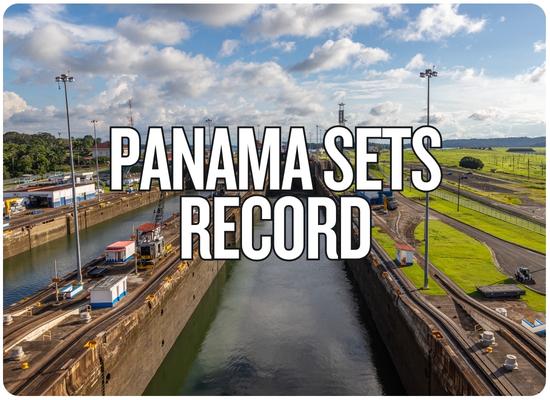
The Panama Canal closed fiscal 2026 with 13,951 vessel transits, 521 million CP/SUAB tons and preliminary revenue of B/.6.6 billion, marking a sharp recovery from the drought-constrained years. Transits increased 4.1% from fiscal 2025, measured tonnage rose 6.5% and revenue climbed 16.6%. The 521-million-ton result also appears to set a new annual Canal tonnage record, edging above the previous 518.8-million-ton high reached in fiscal 2022. Neopanamax vessels generated 52.2% of total tonnage, while improved rainfall and water-saving measures have allowed the Canal to immediately restore its Last-Minute Reservation service for the Panamax locks. The rebound is substantial, but not permanent: Panama is still operating with a watershed deficit and its fiscal 2027 budget assumes significantly more difficult water conditions.
Panama Canal · Fiscal 2026
The Drought-Era Collapse Has Been Almost Completely Reversed
Higher traffic, larger ships and stronger energy and container movements pushed measured Canal tonnage beyond the previous annual record while revenue grew much faster than vessel count.
FY2026 Transits13,951+4.1% YoY
547 more vessel crossings than fiscal 2025.
PC/SUAB Tonnage521M+6.5% YoY
Approximately 31.8 million additional Canal measurement tons.
Preliminary Revenue$6.6B+16.6% YoY
Total fiscal-year revenue. Figures remain unaudited.
From drought constraint to new tonnage high
FY2024 · Drought Low
423.1M tonsPC/SUAB tonnage
11,240 transitsComparable annual traffic figure
$4.986BTotal revenue
FY2025 · Recovery
489.2M tons+15.6% from FY2024
13,404 transitsTraffic rebounds sharply
$5.705BTotal revenue
FY2026 · New High
521M tonsAbove the 518.8M FY2022 record
13,951 transitsAnother 4.1% annual increase
$6.6BPreliminary revenue
Tonnage vs FY2024+23.1%
Approximately 97.9 million additional PC/SUAB tons in two years.
Transits vs FY2024+24.1%
Roughly 2,700 additional annual crossings.
Revenue vs FY2024+32%
Revenue has recovered even faster than traffic volume.
Record check: Panama recorded 518.8 million PC/SUAB tons in FY2022, the highest figure shown in the Canal's published 2019-2025 series. FY2026's preliminary 521 million tons is about 2.2 million tons higher.
What Drove FY2026?
Neopanamax Ships Generate Most of the Tonnage With Only a Quarter of the Transits
The expanded locks handled far fewer ships than the original Panamax locks, but those larger vessels represented more than half of all measured Canal tonnage.
Panamax Locks10,394
74.5% of FY2026 transits
The original locks still handle most vessel crossings by count and are the locks now covered by the restored Last-Minute Reservation service.
Neopanamax Locks3,557
25.5% of transits · 52.2% of tonnage
Larger vessels using the expanded locks generated more than half of total Canal tonnage. Neopanamax tonnage increased 8.2% year over year.
FY2026 Traffic by Major Vessel Segment
Segment
FY2026 Transits
Annual Change
Physical Cargo
Cargo Change
Operating Signal
Containerships
2,921
+1.0%
74.5M long tons
+11.2%
More cargo moved despite only modest growth in ship count.
Chemical Tankers
2,578
+16.2%
51.7M long tons
+12.2%
Largest absolute increase in vessel transits.
LPG Carriers
1,950
+8.0%
41.4M long tons
+7.7%
Energy traffic remained a major recovery driver.
Crude / Product Tankers
517
+16.4%
—
—
Strong increase amid changing global energy flows.
LNG Carriers
118
+93.4%
4.3M long tons
+141.1%
Traffic nearly doubled after an unusually weak FY2025.
Dry Bulk
2,137
-4.2%
81.4M long tons
-2.8%
Still the largest physical cargo segment despite fewer transits.
Largest Canal Trade RouteU.S. East Coast ↔ Asia
The corridor remains the Canal's dominant trade connection and accounted for more than 200 million PC/SUAB tons during FY2026.
Measured Tonnage203.2M
PC/SUAB tons, up 2.3% from FY2025.
Physical Cargo104.5M
Long tons of cargo, up 7.6% year over year.
Panamax Last-Minute Reservation Checker
Walk through the main published eligibility conditions for the Canal's restored Last-Minute Reservation service. This does not guarantee a slot: Panama decides whether unused capacity is offered.
Service Restored
Current Total Slots33 / day
Current combined Panamax and Neopanamax operating level.
Neopanamax10 / day
Raised from nine beginning October 15.
Panamax23 / day
Current remainder of the 33-slot total.
Current Neo Draft49 ft
Current maximum authorized Neopanamax draft, until further notice.
Check the vessel situation
Potential Candidate
The vessel matches the main published Panamax conditions
A Panamax vessel without a reservation that is already in Canal waters, ready to transit and has attempted normal reservation channels may be considered for a Last-Minute Reservation if ACP chooses to make an unused slot available.
1 · Wait for ACP offerThe service depends on Canal capacity, vessel mix and an available transit slot.
2 · Submit booking requestOnce offered, the vessel must submit through the Transit Reservation system.
3 · Meet lock arrivalThe published rules require arrival at the first locks by 23:59 on the booking date.
Why the Service Is BackRainfall Near Average
Panama says recent precipitation and water-saving measures have improved enough to restore last-minute flexibility for Panamax users.
But FY2027 Is Budgeted Conservatively457.3M Tons
Panama's FY2027 budget assumes challenging water conditions and the possibility of a strong El Niño. Budgeted revenue is B/.5.555 billion, well below FY2026's preliminary B/.6.6 billion.
Eligibility does not create a right to a Last-Minute slot. ACP retains discretion over whether available capacity is offered. Published 2026 rules allow Last-Minute slots when capacity becomes available close to the intended transit date, including less than two days beforehand under the April 2026 modifications.
Feedback Welcome
We welcome your feedback, suggestions, corrections, and ideas for enhancements.