🔔 Subscribe to ShipUniverse Weekly →
Old engine, new destroyer
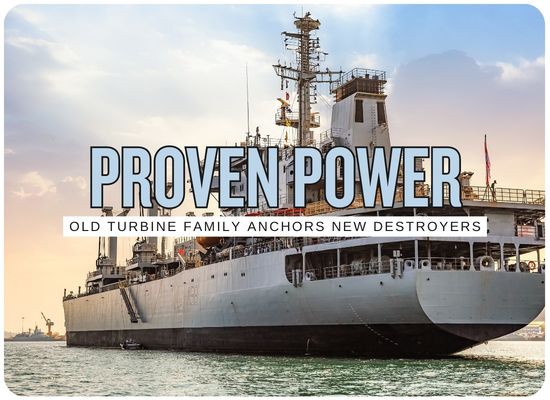
The surprise is not that a next-generation destroyer still needs a gas turbine. The surprise is how often the safest futuristic ship begins with a proven engine. KDDX may carry integrated electric propulsion, stealth radar and land-attack missiles, but South Korea still picked the LM2500+G4 at the center of the power plant.
The decision in 30 seconds
GE Aerospace will supply twelve LM2500+G4 marine gas turbines for six Republic of Korea Navy next-generation KDDX destroyers.
KDDX is South Korea’s next-generation destroyer program, now moving through detailed design and lead-ship construction.
The LM2500+G4 selection is tied to KDDX’s full-electric propulsion configuration and future power growth.
The LM2500 family is marketed as serving 39 navies with more than 16 million naval operating hours.
Procurement read: The engine is not old in the way an obsolete radar is old. It is old in the way a trusted gearbox, pump or combat-system baseline is old: known failure modes, known fuel curves, known training, known spares and a known industrial support base.
KDDX shows the modern formula
7 reasons navies keep buying proven gas turbines
A destroyer program already carries radar, combat-system, missile, cyber, survivability and shipyard risk. Reusing a known gas-turbine family lets the navy spend its risk budget somewhere else.
A gas turbine is not just the engine. It is blades, hot-section parts, sensors, controls, filters, enclosures, fuel-system components, test equipment and depot capacity. Mature fleets have that ecosystem.
Training pipelines matter because ships are crewed by people, not procurement slides. A familiar turbine shortens the learning curve for operators, depot teams and shipyard mechanics.
Warships need maintenance at sea, alongside and in depot. A proven turbine family comes with overhaul practices, tooling, shop procedures, inspection criteria and contractor familiarity.
Navies do not buy brochure efficiency. They buy range, endurance, tanker demand, generator loading and mission flexibility. Known fuel curves make wargaming and logistics planning more credible.
Proven does not mean frozen. Mature turbine families can gain new controls, hot-section improvements, packaging changes, digital monitoring, emissions work and integration with hybrid or electric architectures.
A new destroyer already depends on radar, missiles, software, electric distribution, cyber certification and shipyard execution. A familiar turbine lowers the chance that propulsion becomes the long pole.
Commercial opportunity map
| Supplier lane | High-value spend | Buyer question | Hidden risk |
|---|---|---|---|
| Gas turbines | LM2500-family engines, modules, enclosures, upgrades, test support. | Does the engine meet future power demand without becoming a new-development risk? | Lead times, hot-section parts and certified support capacity. |
| Gearboxes | Reduction gears, clutches, couplings and alignment work where mechanical drive is used. | Can the transmission survive shock, sprint demand and maintenance intervals? | Propulsion architecture changes reduce commonality. |
| Intake and exhaust | Air intakes, filtration, silencers, exhaust ducts, IR suppression and uptake integration. | Can the ship feed and exhaust the turbine without hurting signature or maintainability? | Topside design conflicts with stealth and cooling. |
| Controls | FADEC, machinery control, power-management software, sensors and condition monitoring. | Can the plant coordinate propulsion, ship-service power and future combat loads? | Controls become the interface bottleneck. |
| Electrical integration | Generators, converters, switchboards, motors, drives, protection and power quality. | Can the gas turbine support electric propulsion and future directed-energy-style loads? | Power quality, cooling and protection are underpriced. |
| MRO and spares | Depot overhaul, component repair, exchange modules, tooling, diagnostics and field service. | Can the navy repair the plant at wartime tempo? | Engine selected before the support base is scaled. |
| Training | Simulators, digital procedures, maintenance trainers, crew certification and refresher courses. | Can sailors operate the new plant without a contractor shadow crew? | Reduced crew claims collapse under real watchstanding. |
| Local industrialization | Licensed assembly, component manufacturing, test cells, depot setup and supplier localization. | Can the buyer reduce foreign support dependence without lowering quality? | Workshare adds cost without true sovereign sustainment. |
Three buying lanes
Best when the navy wants to spend risk on radar, missiles, software and electric architecture instead of the prime mover.
Best when future power growth, quiet operation and flexible ship-service loads matter, but engine risk must stay low.
Best for prototypes, auxiliaries or future blocks when the fuel, emissions or power-density gain is large enough to justify risk.
Procurement screen: proven turbine vs new engine
| Decision factor | Proven gas turbine advantage | New-engine temptation | Buyer discipline |
|---|---|---|---|
| Schedule | Known interfaces, known testing, known parts and known support. | Better paper performance or emissions profile. | Do not trade a ship schedule for a propulsion experiment unless the gain is decisive. |
| Fleet commonality | Crews, depots and suppliers already know the engine family. | New fleet baseline with future growth potential. | Price the cost of becoming a one-class support island. |
| Fuel use | Real operating data supports voyage, tanker and patrol planning. | Better modeled efficiency at selected points. | Compare mission-profile fuel burn, not brochure points. |
| Electric power | Known turbine can feed a modern electric architecture. | Purpose-built generator plant could optimize future loads. | Model transients, redundancy, power quality and cooling. |
| Maintenance | Tooling, procedures and depot lessons already exist. | Modern engine may promise longer intervals. | Demand evidence from naval duty cycles, not commercial duty alone. |
| Industrial base | Established production and support network can scale faster. | New domestic workshare may be politically attractive. | Separate real sovereign support from assembly-only workshare. |
Where supplier pressure is highest
Red flags before changing the engine family
| Red flag | Problem underneath | Buyer check |
|---|---|---|
| New engine chosen for brochure efficiency | The gain may disappear across real naval duty cycles. | Compare mission-profile fuel burn and maintenance burden. |
| Depot support comes later | The ship reaches service before overhaul, tooling and spares are mature. | Fund depot readiness with the engine buy. |
| Electric plant hides turbine risk | The turbine, generator, switchboard and power-management software still act as one system. | Test transients, redundancy, faults and combat loads together. |
| Local workshare is vague | Assembly does not equal sovereign sustainment. | Define component repair, test-cell capacity, data rights and wartime spares. |
| Crew reduction is overpromised | Automation does not erase watchstanding, damage control or casualty response. | Validate manning with drills, not staffing targets. |
| Upgrade path is assumed | Controls, hot-section parts, emissions and digital monitoring may need funding later. | Price a 30-year turbine improvement plan. |
Naval Gas Turbine Procurement Fit Checker
Use this quick screen to judge whether a navy should favor a proven gas turbine family, a proven turbine with electric architecture, or a higher-risk new-engine path.
Generated by ShipUniverse.com. This is a practical screening aid, not engineering or procurement advice. Real decisions require classified performance data, shipfit studies, fuel curves, acoustic analysis, shock qualification, EMI/EMC review, combat-load testing, depot planning, cyber review and lifecycle-cost modeling.
Procurement read
KDDX is a useful signal because it separates “next-generation ship” from “clean-sheet everything.” A navy can choose a new destroyer architecture, a new radar suite, a new combat system and a new electric plant while still protecting the program with a turbine family that already has naval operating history.
That is the commercial angle. The opportunity is not only the gas turbine. It is the package around it: intake and exhaust design, electric integration, controls, digital monitoring, MRO, spares, training, local assembly, test cells and 30-year support.
More information: GE Aerospace, Naval News, Yonhap, NAVAIR, Hanwha Systems.