
🔔 Subscribe to ShipUniverse Weekly →
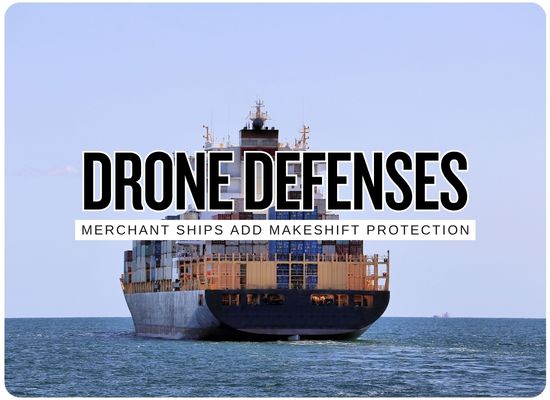
Commercial ships moving through the Bosphorus from the Black Sea are now being seen with improvised anti-drone protection fitted to hulls, stern areas and superstructures. The measures include nets, tires and water-filled containers, with maritime security specialists saying the devices may help against some smaller explosive drones but may offer little protection against larger airborne drones or fast naval drones carrying heavier warheads. The change follows a sharp increase in attacks on ships and port infrastructure across the Black Sea and Sea of Azov, including strikes tied to Russian and Ukrainian export routes. The burned-out Omskiy-107 drifting onto the Turkish coast and the sight of damaged ships passing Istanbul under escort have made the risk visible far beyond the war zone itself.
Ship Universe Black Sea Watch
Operator Impact Snapshot
Merchant vessels are adding improvised protection as drone and unmanned-vehicle risk moves closer to daily commercial operations.
Drone risk reaches the hull
Tankers and cargo ships are fitting visible barriers because attacks on commercial tonnage and port infrastructure have increased.
Makeshift defenses spread
Nets, tires and water-filled containers are appearing on vessels moving through the Bosphorus after Black Sea exposure.
Limited protection window
Security specialists say these measures may help against smaller drones but may not stop larger military drones or fast naval drones.
Damaged ships are visible
Omskiy-107 drifted to the Turkish coast with its command deck burned out, while damaged vessels have moved near Istanbul under escort.
Turkey raises objections
Ankara summoned Ukraine’s ambassador after attacks on Turkish-operated vessels near Tuapse and called for protection of navigation.
Grain cargo shifts
Asian buyers are replacing delayed Black Sea cargoes with Australian and Argentine wheat as port and vessel attacks disrupt loadings.
Black Sea Situation Board
Makeshift Protection, Damaged Ships and Cargo Disruption
The latest reports show commercial ships adding low-tech defenses while attacks continue to hit ports, vessels and grain flows.
Nets, tires and water-filled containers are being used on tankers and cargo ships exposed to Black Sea drone risk.
Turkey summoned Ukraine’s ambassador after attacks on two Turkish-operated vessels near the Russian port of Tuapse.
A shipper reported a queue of about 80 vessels waiting to enter the Danube route to Ukraine’s river ports.
Trade sources said buyers purchased at least half a million metric tons of Australian and Argentine wheat to replace delayed Black Sea cargoes.
| Development | Latest Detail | Commercial Signal | Stakeholder Exposure | Pressure Meter |
|---|---|---|---|---|
| Nets and Cope CagesSuperstructure protection | Netting is being placed around exposed areas to disrupt explosive drones before direct impact. | Merchant ships are adopting military-style field improvisation rather than waiting for purpose-built systems. | Owners may need class, flag, insurer and charterer review before fitting anything that affects visibility, access or firefighting. | High |
| Water TanksStern and machinery shielding | Caruzo was reported with water tanks around the stern, apparently to reduce damage near machinery spaces. | The engine room is a high-value target because propulsion loss can quickly become abandonment, salvage or grounding risk. | Marine engineers, H&M insurers and naval architects may be drawn into emergency hardening decisions. | High |
| Tires Over Hull SidesLow-cost blast spacing | Khrizopraz was reported passing with tires hanging over the hull. | The method is cheap and fast, but its value depends on drone size, impact angle and explosive load. | Crews face practical issues around securing, fire risk, port acceptance and maintenance while underway. | Medium High |
| Omskiy-107Abandoned vessel drift | The Russian-flagged cargo ship drifted to the Turkish coast with its command deck burned out. | A disabled merchant ship can become a navigation hazard outside the original attack area. | Coastal states, salvors, P&I clubs and insurers face wider exposure when damaged ships drift toward busy approaches. | Severe |
| Damaged Vessels Near BosphorusEscorted movements | Damaged vessels including Anna S and Great Ocean were reported moving through or toward the Bosphorus under escort. | Damage control, escort availability and Turkish strait traffic management now matter to voyage continuity. | Ports, pilots, coast guards and agents may face more emergency coordination around arriving damaged ships. | High |
| Turkish Vessel IncidentsTuapse area | Turkey objected after attacks on Turkish-operated vessels near Tuapse, including Lider Bordo Mavi and Lider Kocatepe. | Neutral commercial operators are increasingly exposed when serving Russian Black Sea ports. | Flag, ownership, cargo destination and port call history can all influence risk perception. | High |
| Russian Grain and Oil RoutesExport infrastructure exposure | Ukraine has increased attacks on ships and infrastructure supporting Russian oil and grain exports since July. | Export ports, anchorage areas, loading windows and departure routes are now part of the target set. | Commodity traders may seek alternate load ports, different origins, stronger force-majeure language and higher freight allowances. | Severe |
| Ukrainian Export RoutesOdesa, Chornomorsk, Pivdennyi, Danube | Russia has intensified missile and drone strikes on Ukrainian grain export hubs and port infrastructure. | Danube routes are being used as a pressure valve, but vessel queues and lower capacity limit relief. | Buyers face delayed cargoes, substitute origins, higher delivered pricing and more containerized grain stopgaps. | Severe |
| Grain Deal TalksSafe-passage diplomacy | Turkey said it prepared a plan to restore safe grain passage, while Russia said it saw no grounds to resume the earlier deal. | Without a credible maritime corridor, commercial protection stays vessel-by-vessel and voyage-by-voyage. | Insurers, shippers and charterers are likely to demand more route-specific risk controls. | High |
| Official Advisory StatusBlack Sea and Sea of Azov | MARAD warns of projectiles, explosions, drones, unmanned vehicles, drifting mines and misidentification risk. | The official risk environment remains active, not historical. | Security plans, reporting, AIS decisions, insurance warranties and voyage approvals need current review. | Severe |
Black Sea Anti-Drone Protection and Voyage Risk Tool
Estimate voyage exposure from drone threat, vessel value, cargo value, improvised protection, delay risk and insurance cost.
War-Risk Premium
$418,000
Modeled additional premium using selected vessel value and war-risk rate.
Protection and Delay Cost
$432,000
Improvised hardening, security and expected delay cost combined.
Total Added Voyage Cost
$850,000
War-risk premium plus protection, security and delay exposure.
Risk-Adjusted Exposure
$6.3M
Planning exposure based on vessel value, cargo value and the modeled Black Sea risk score.
Voyage Signal
The model shows severe exposure. Improvised protection may reduce some small-drone risk, but route, mine, projectile and cargo-delay pressure remain high.
We welcome your feedback, suggestions, corrections, and ideas for enhancements.
Please click here to get in touch