Hormuz Weekend Exit Wave Signals Cautious Return for Gulf Shipping
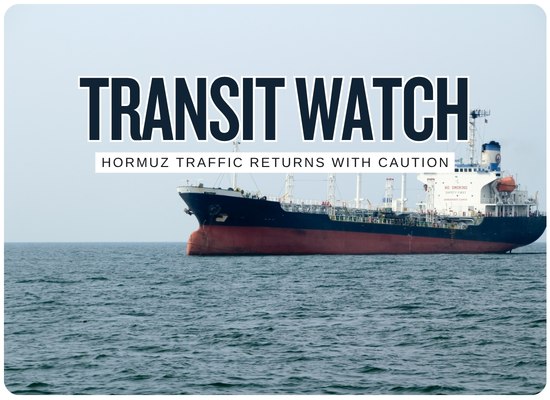
The weekend Hormuz update brought a visible shift in Gulf shipping activity as a group of Japan-linked vessels began moving out of the Strait of Hormuz after being trapped inside the Gulf during the Iran war disruption. Shipping data showed 10 Japan-linked vessels exiting the waterway, including six very large crude carriers loaded with around 12 million barrels of Middle Eastern crude, along with chemical tankers, a vehicle carrier, and a container ship. A supertanker carrying Saudi crude for South Korea also departed over the weekend, adding to signs that some charterers, owners, and cargo interests are testing the corridor again after weeks of extreme caution. Traffic is not back to a normal, risk-free pattern, and ship operators are still dealing with security ambiguity, radio instructions, insurance reviews, Omani coastal routing concerns, and the possibility of vessels reversing course. The commercial signal is that Hormuz is reopening in practice, but the return is controlled, selective, and still heavily dependent on security confidence.
Hormuz Traffic Is Moving Again, But Caution Still Controls the Corridor
The exit of Japan-linked ships and a South Korea-bound supertanker signals progress, while security ambiguity, insurance treatment, and route confidence remain active voyage issues.
Japan-Linked Exit Wave
Ten Japan-linked vessels began exiting Hormuz, including six loaded VLCCs carrying about 12 million barrels of Middle Eastern crude.
Traffic Recovery Signal
Reported daily crossings have stabilized in a cautious range, showing improvement from the sharp slowdown but not yet a fully normalized passage environment.
Omani Route Uncertainty
Some vessels have reportedly reversed course while attempting southern or Omani-side routing, keeping transit procedures and authority questions on the desk.
Energy Cargo Exposure
Crude, LNG, refined products, and chemical cargoes remain sensitive to any renewed disruption, especially for Asia-bound supply programs.
War-Risk Review
Underwriters, owners, and charterers still need clear language on route approval, delay, deviation, premiums, crew terms, and incident notification.
Operator Readout
The weekend movement is a positive transit signal, not a clean return to routine Gulf navigation. Owners and charterers should treat the corridor as selectively reopening, with real cargo moving but voyage risk still requiring senior review. The immediate checklist is updated security guidance, war-risk terms, crew consent where applicable, port and terminal timing, route instructions, naval reporting, and contingency planning if a vessel is ordered to wait, reverse course, or deviate.
Weekend Hormuz Shipping Report
Japan-linked vessels, Saudi crude cargoes, and recovering daily crossings point to movement, but not full confidence.
Japan-Linked Ships Begin Leaving the Gulf
The clearest weekend development was the movement of 10 Japan-linked vessels out through the Strait of Hormuz. The group reportedly included six VLCCs loaded with around 12 million barrels of crude from Saudi Arabia, the UAE, and Qatar, along with two chemical tankers, a vehicle carrier, and a container ship. For Japan-linked cargo interests, that is a material step after a long period of disrupted Gulf exposure. For tanker markets, the size of the crude volume makes the movement more than a symbolic passage.
A separate supertanker carrying Saudi crude for South Korea also departed over the weekend, adding another signal that some Asia-bound crude flows are being released from the backlog. South Korean-linked exposure remains a live watch item because at least one damaged cargo vessel has still been working through repairs before an expected exit window. The broader pattern suggests that vessel departures are happening in waves, with owners and cargo interests waiting for a combination of clearance, security confidence, insurance comfort, and practical routing.
Japan-linked vessels reported exiting Hormuz after being stranded inside the Gulf during the Iran war disruption.
Approximate crude volume carried by the six loaded VLCCs inside the Japan-linked exit group.
Reported range of daily Hormuz crossings as traffic stabilizes into a cautious post-disruption pattern.
Traffic Is Recovering, But Procedure Risk Remains
Ship-tracking reports show traffic through Hormuz has improved from the severe disruption phase, with daily crossings now described as stabilizing inside a lower but active range. That is important for crude, LNG, product, chemical, and container operators because the strait remains one of the world’s most sensitive maritime corridors. A recovery in daily crossings suggests that masters, owners, insurers, and cargo interests are gradually accepting the corridor again, but the recovery is not evenly distributed across every vessel type or nationality link.
The remaining concern is procedure risk. Operators still need clarity on radio instructions, naval coordination, coastal routing, security guarantees, and whether any party is attempting to control or delay passage. Reports that some ships turned back while attempting the Omani-side route show that the operational environment remains unsettled. Even when the physical waterway is passable, uncertainty around approval, communications, and authority can disrupt ETAs, charter terms, and terminal planning.
Commercial signal: Hormuz is moving into a cautious reopening phase. The cargo is moving, but every transit still carries added operational review around route selection, insurance, crew readiness, terminal timing, and emergency fallback planning.
Crude and LNG Markets Are Watching the Exit Pace
Energy markets are reading the weekend movement through two lenses. First, every loaded tanker that leaves the Gulf helps reduce trapped cargo and improves buyer confidence. Second, the pace of exits still matters because Gulf producers, refiners, and traders need predictable flow, not occasional escape windows. Crude prices have eased as OPEC+ supply decisions and recovering Hormuz flows reduce some immediate fear, but shipping risk has not disappeared from the freight and insurance equation.
LNG remains another sensitive category. Qatar-linked LNG flows depend heavily on the same chokepoint, and any renewed ambiguity could quickly affect buyer behavior, spot LNG sentiment, and carrier scheduling. Even if crude tankers move first, LNG operators, product tankers, chemical tankers, and container lines will all look for a sustained pattern before assuming the corridor is commercially stable again.
Transit Checks for Owners and Charterers
- 01Route approval: Confirm the latest company, flag, insurer, and naval guidance before committing to a Hormuz transit window.
- 02War-risk language: Recheck premium allocation, deviation rights, delay treatment, off-hire exposure, and cargo-owner notification rules.
- 03Security reporting: Keep bridge teams aligned on naval reporting, radio response, suspicious craft escalation, and emergency contact procedures.
- 04Crew readiness: Review crew consent, hardship terms, muster procedures, access control, safe spaces, and fatigue after extended waiting periods.
- 05Terminal timing: Coordinate discharge windows, loading slots, demurrage exposure, port congestion, and berth availability as delayed cargoes restart.
- 06Fallback plan: Prepare a clear decision point for waiting, reversing course, diverting, or proceeding if conditions change while approaching the strait.
Hormuz Weekend Watch Table
| Signal | Current Readout | Commercial Meaning | Stakeholders Affected | Watch Level |
|---|---|---|---|---|
| Japan-linked vessel exits | 10 vessels leaving the Gulf through Hormuz | Shows a meaningful release of trapped cargo and a stronger confidence test for Asia-linked shipping. | Japanese cargo interests, tanker owners, insurers, charterers | Positive |
| Loaded crude movement | Six VLCCs carrying about 12 million barrels | Large crude volumes are moving again, supporting physical supply confidence. | Asian refiners, crude traders, VLCC owners, brokers | High |
| South Korea-bound tanker | Saudi crude supertanker exited over the weekend | Another Asia-bound crude cargo cleared the corridor, but damaged-vessel cases remain on watch. | Korean refiners, tanker operators, insurers, cargo owners | Medium |
| Daily crossing recovery | Traffic stabilizing around 30 to 60 daily crossings | The waterway is functioning again, but at a cautious operating level rather than routine normality. | All vessel operators, ports, brokers, energy markets | Medium |
| Route ambiguity | Some vessels reportedly reversed course on attempted southern routing | Transit authority, routing instructions, and perceived security remain unresolved issues. | Masters, CSOs, insurers, naval liaison teams | Watch |
| Insurance and charter terms | War-risk and delay exposure remain active | Cost allocation and voyage instructions should be settled before the vessel reaches the corridor. | Owners, charterers, P&I clubs, cargo interests | High |
Risk note: A visible increase in transits does not remove voyage risk. Operators should base decisions on live alerts, flag-state direction, insurer approval, company security plans, naval guidance, crew status, and charterparty language rather than headline traffic recovery alone.
Hormuz Transit Exposure Calculator
Estimate added voyage exposure from waiting time, war-risk premiums, deviation planning, bunker cost, and cargo delay value.
Estimated added premium from vessel value and selected war-risk rate.
Estimated waiting or delay cost before cargo-specific penalties.
Estimated bunker exposure from added nautical miles.
Combined modeled exposure from premium, delay, and deviation fuel.
The modeled transit needs commercial review before the vessel enters the corridor.
Review fixture termsThis tool is for editorial and commercial sensitivity only. It does not replace insurer quotes, charterparty review, legal advice, flag-state guidance, naval instructions, company security plans, demurrage calculations, cargo claims analysis, or master’s authority.
We welcome your feedback, suggestions, corrections, and ideas for enhancements. Please click here to get in touch.