Short Cruises Big Margins
🔔 Subscribe to ShipUniverse Weekly →
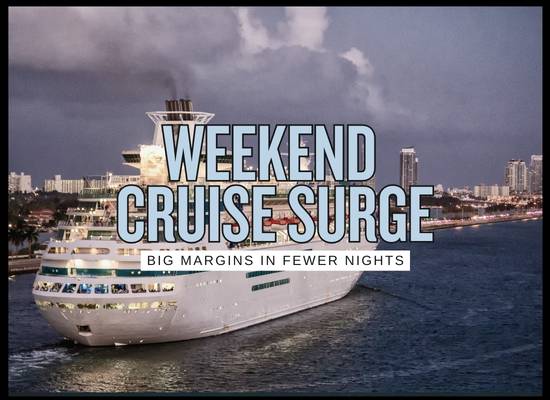
Three- to five-night sailings are back in focus because they now solve several cruise-industry problems at once. They fit travelers with less vacation time, they create a lower-friction entry point for first-time cruisers, they work especially well with private-destination strategies in the Bahamas and nearby warm-water markets, and they let operators keep ships closer to big drive-to homeports while selling high-energy, high-spend experiences over a shorter booking window. The renewed push is visible in current deployment decisions, not just marketing language: Royal Caribbean has expanded short-getaway programs in the Caribbean and elsewhere, Disney continues to lean on 3- and 4-night Bahamas sailings from Florida, MSC is actively merchandising 3- and 4-night Bahamas trips with Ocean Cay, and Norwegian says itineraries of five days or fewer make up 16% of its 2026 sailings in direct response to guest and travel partner demand.
Short sailings are becoming a sharper commercial tool
The return of 3- to 5-night cruising is not only about convenience. It is increasingly about yield mix, first-cruise conversion, private-destination economics, faster ship turns, and keeping premium hardware working in high-demand near-home markets.
How many entries this list should have
The strongest version of this report is an 8-entry listicle. That is enough room to separate the real commercial drivers from the superficial ones. This first half covers entries 1 through 4, which are the most important structural reasons short cruises are back in focus.
| # | Short-cruise signal | In the market | Supports margins | Current proof points | Strategic read-through |
|---|---|---|---|---|---|
1 |
The big brands are clearly expanding short-cruise deployment, not treating it as filler inventory
This matters because deployment decisions are harder evidence than generic consumer-trend commentary.
|
Royal Caribbean has built a visible short-getaway strategy around 3-, 4-, and 5-night Caribbean programs, including 2026-27 short vacations from Florida and Tampa. Disney continues to market 3- and 4-night Bahamas tropical getaways from Port Canaveral and Miami/Fort Lauderdale. MSC is actively selling 3- and 4-night Bahamas itineraries from Port Canaveral centered on Nassau and Ocean Cay. Norwegian told Travel Weekly that cruises of five days or fewer make up 16% of its 2026 sailings because guests and travel advisors wanted more short getaways. | When major lines dedicate real inventory to short sailings, it suggests they believe the product can do more than fill empty berths. Short cruises can turn ships through high-demand ports faster, keep ships in strong drive markets, and open more selling cycles across the year rather than depending only on longer-vacation customers. |
Royal Caribbean
2026-27 short Caribbean lineup includes 4- and 5-night Radiance sailings from Tampa and additional 3- to 5-night short-getaway programs.
Norwegian
Five days or fewer account for 16% of 2026 sailings, according to company commentary reported by Travel Weekly.
|
Deployment shift Repeatable model Revenue density |
2 |
Private islands and exclusive destinations make short itineraries easier to sell and easier to control
This is one of the strongest reasons short cruises are back in focus now rather than a few years ago.
|
The modern short-cruise playbook increasingly revolves around private destinations. Royal Caribbean’s short-getaway marketing leans heavily on Perfect Day at CocoCay. MSC does the same with Ocean Cay. Disney’s Bahamas short-cruise proposition centers on Castaway Cay and Lookout Cay. Carnival has made Celebration Key a core strategic asset, and Carnival has said it will be its closest destination in the portfolio, with expected fuel savings and lower emissions as part of the rationale. | Exclusive destinations can support margins because they reduce dependence on third-party port experiences, improve control over the guest day, and create more onboard and on-island spend opportunities. They also make a 3- or 4-night cruise feel more complete, which helps defend price even when total sailing length is shorter. |
Carnival
Celebration Key was described by Carnival as its largest and closest destination, with fuel savings expected as part of the strategy.
MSC and Disney
Both are actively packaging 3- and 4-night Bahamas sailings around their private-island proposition.
|
Controlled experience Private destination pull Fuel and spend logic |
3 |
Short cruises are becoming a deliberate first-timer and younger-traveler entry funnel
This is a growth logic point, not just a vacation-length point.
|
Cruise remains focused on winning new-to-cruise travelers. CLIA said in 2025 that 68% of international travelers are considering taking their first cruise, while earlier CLIA reporting showed 27% of cruisers over the prior two years were new to cruise. Travel Weekly’s 2026 reporting on short-cruise growth also pointed to advisor and guest demand for more quick-getaway options. Shorter sailings are a lower-commitment test product for travelers who may not be ready to jump straight into a 7-night sailing. | The margin value is not only the first booking. It is the customer-acquisition value. If a 3- or 4-night sailing converts a first-time cruiser into a repeat cruiser, the economics can look much better than the ticket price alone suggests. Short cruises can function like an onboarding product for the broader brand ecosystem. |
CLIA demand backdrop
International intent-to-cruise remains strong, including first-time interest.
Advisor feedback
Norwegian said it grew sub-6-night supply in direct response to guest and travel partner demand.
|
New-to-cruise funnel Repeat-value potential Lower commitment sell |
4 |
Larger and newer ships are increasingly being trusted on short itineraries
That is a strong signal that short sailings are being treated as a premium commercial lane, not a secondary one.
|
Cruise Industry News reported in August 2025 that more cruise lines were deploying larger ships on short cruises. It cited Royal Caribbean’s short-cruise use of large Oasis-class hardware and Carnival’s decision to place Mardi Gras into 4- and 5-night Bahamas sailings starting in 2027. Royal Caribbean’s Wonder of the Seas has also been sailing year-round 3- and 4-night cruises from Miami, showing that even very large ships can be used to maximize short-getaway demand. | Newer ships typically carry stronger onboard spending power, more compelling private-destination tie-ins, and more visible pricing authority than older filler tonnage. If operators are willing to use major ships in short cruise rotations, it signals that the yield profile is attractive enough to justify premium hardware on a shorter itinerary. |
Royal Caribbean
Wonder of the Seas has been deployed on year-round 3- and 4-night Miami short cruises.
Carnival
Mardi Gras is set to move into 4- and 5-night Bahamas sailings in 2027, highlighted by Celebration Key.
|
Competitive escalation Premium hardware Higher onboard spend |
Short versus long cruise margin comparison
This tool compares the commercial profile of 3- to 5-night sailings against longer voyages. Adjust the market conditions below and watch the model estimate which format currently has the stronger margin logic, pricing support, and growth fit.
Set the market conditions
Higher values strengthen that factor in today’s market. The model is designed to capture the main short-cruise forces now in play, including private destinations, first-timer conversion, close-in demand, and premium hardware deployment on short itineraries.
Higher values mean private islands and exclusive destinations are doing more work in the sales story.
Higher values mean shorter sailings are attracting more new-to-cruise and lower-commitment buyers.
Higher values mean bars, specialty dining, private destination spend, and short-break behavior are producing dense revenue.
Higher values mean 6-plus-night sailings still have strong pricing power and itinerary value.
Higher values mean near-home departures and time-efficient travel are strongly supporting short cruise demand.
Higher values mean lines are trusting newer and stronger ships on short itineraries.
We welcome your feedback, suggestions, corrections, and ideas for enhancements. Please click here to get in touch.