The Naval Cyber Gap: Blind Spots at Sea
🔔 Subscribe to ShipUniverse Weekly →
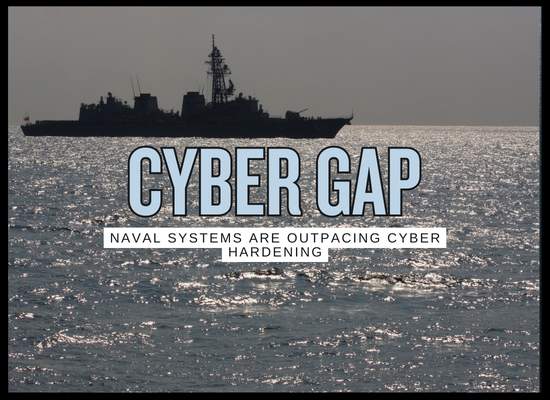
Naval cyber risk is no longer a niche IT problem sitting somewhere below missiles, propulsion, or ship design. The gap now is between how fast navies, shipyards, suppliers, and maritime operators are digitizing and how unevenly they are securing the systems that actually make fleets move, navigate, fight, communicate, and sustain themselves. That gap shows up in shipboard operational technology, spoofed navigation, fragile supplier networks, unmanned systems, and crews who are expected to operate more connected platforms in a harsher electronic environment. In 2026, the naval cyber question is not whether cyber matters. It is whether maritime organizations are hardening fast enough to keep pace with the way sea power is now built and used.
The naval cyber gap is not one gap
It is a stack of mismatches. Fleets are adding software, autonomy, connectivity, and data dependence faster than many organizations are hardening shipboard systems, training crews, cleaning supplier risk, or building navigation resilience for a disrupted electronic environment.
The practical problem is easy to miss because naval cyber does not always arrive like a dramatic breach headline. It often appears as a weaker operating picture, a vendor with poor controls, delayed patching on mission systems, uncertain segmentation between business IT and shipboard OT, or a crew that can operate sophisticated equipment but has only shallow preparation for degraded digital conditions. The naval cyber gap is therefore less about whether cyber exists and more about whether maritime organizations are closing the difference between digital dependence and operational resilience.
Shipboard OT is becoming more connected than many teams are comfortable admitting
Modern naval and maritime platforms increasingly rely on software-managed control systems, remote support, integrated sensors, connected logistics, and data-rich maintenance environments. That improves efficiency and visibility, but it also creates more pathways for disruption if segmentation, patch discipline, access control, and incident response are weak. The core gap here is not awareness. It is execution at the platform and fleet level.
Navigation trust is now part of cyber resilience
When GNSS and related position data are unreliable, the cyber problem turns physical very quickly. Spoofing, signal degradation, and AIS anomalies do not need a dramatic platform compromise to create operational risk. If fleets cannot trust the data picture, maneuver, deconfliction, safety, and even routine transit become harder. In a more electronically contested maritime environment, navigation resilience belongs in the cyber conversation, not outside it.
Supplier cyber weakness can outweigh fleet cyber ambition
Navies can invest heavily in architecture and policy and still inherit weakness through yards, integrators, software vendors, maintenance partners, and lower-tier subcontractors. The supply chain has become one of the most important pressure points in naval cyber because sensitive design data, controlled information, remote support, and lifecycle sustainment often move through organizations with very uneven maturity. A digital fleet is only as resilient as the industrial web keeping it alive.
Unmanned growth creates a larger attack surface than many force-design debates acknowledge
As maritime autonomy expands, the cyber question expands with it. Unmanned vessels, remote operation links, autonomous decision support, and offboard control chains all widen the system boundary that must be secured. The gap here is that unmanned capability often gets discussed as a force multiplier first and a cyber maintenance problem second. In reality, secure connectivity, software assurance, and control integrity are part of the platform, not an add-on.
Training often lags behind the complexity of the systems crews now use
The final break is human. Cyber readiness is not just an IT team issue or a compliance file. Maritime and naval personnel increasingly interact with connected systems, OT environments, incident reporting requirements, and degraded-data situations. If the training model stays shallow while the operating environment becomes more digital and more hostile, the crew becomes part of the gap rather than part of the closure.
| # | Gap lane | Showing up now | Bottom-line effect | Operator Alternatives | Pressure tags |
|---|---|---|---|---|---|
| 1 |
Shipboard OT and mission-system exposure
The main issue is not just hacking risk. It is the operational consequence of weak segmentation and inconsistent control discipline.
|
The gap becomes visible when platforms depend on software-managed controls and connected support flows, but governance still treats cyber as if it sits mainly in office IT. That leaves too much variation in patching, access privilege, configuration control, and response planning for mission-critical systems. | The result is not only breach risk. It is more downtime, more uncertainty during maintenance, slower recovery after anomalies, and weaker confidence in the digital systems crews depend on during pressure. | Better operators treat shipboard OT as its own resilience discipline, with tighter segmentation, stronger access control, cleaner asset visibility, tested response procedures, and maintenance pathways that do not quietly widen exposure. | OT Segmentation Maintenance risk |
| 2 |
Navigation and electronic-picture trust
Cyber risk and navigation risk are converging much more than many maritime organizations used to assume.
|
The gap appears when crews still lean heavily on digital position and tracking data even in areas where spoofing, interference, or AIS anomalies are persistent. The technology picture may still function, but the trustworthiness of the data becomes the real problem. | That can distort routing, collision avoidance, escort coordination, traffic interpretation, and confidence in the operating picture. In a contested environment, a compromised or degraded picture can produce costly mistakes without any dramatic network breach. | Stronger operators build navigation resilience into normal seamanship and combat-system thinking. They use procedural cross-checks, degraded-mode competence, and higher suspicion of digital inputs in stressed environments instead of assuming the picture is clean until proven otherwise. | GNSS AIS anomalies Picture trust |
| 3 |
Supplier and yard cyber maturity
The cyber gap often widens outside the fleet long before it becomes visible inside it.
|
Digital shipbuilding and sustainment depend on a broad industrial chain handling sensitive data, software, remote support, components, and maintenance information. Maturity across that chain remains uneven, especially deeper in the supplier base. | Weak supplier cyber posture can slow programs, expose design and sustainment data, complicate contract eligibility, and create inherited risk that fleets only discover once systems are already fielded or in overhaul. | Stronger organizations map cyber-critical suppliers, reduce blind trust in lower tiers, demand better evidence of control maturity, and treat supplier resilience as a readiness issue rather than a procurement footnote. | Supply chain Compliance Inherited risk |
| 4 |
Autonomy and remote-control pathways
Unmanned and software-defined capability can scale faster than the security model around it.
|
The gap shows up when organizations focus on the tactical upside of autonomous systems but underweight secure control links, software integrity, remote updates, authentication, fail-safe behavior, and recovery from degraded communications. | That turns promising force multipliers into reliability questions. Even when systems are not compromised directly, weak cyber architecture can limit trust, deployment confidence, and real operational usefulness. | Better teams treat control integrity, software assurance, and degraded-link behavior as core requirements from the start. They do not wait to “bolt on” cyber after the autonomy concept already looks attractive. | USV Remote control Link integrity |
| 5 |
Crew training and incident response depth
Awareness alone is not the same as readiness.
|
Many organizations now accept the importance of cyber, but training depth can still lag the complexity of connected systems. That creates a gap between policy awareness and actual onboard or operational response capability. | The practical cost is slower recognition, poorer reporting, weaker degraded-mode performance, and a tendency to over-rely on specialists rather than embedding resilience into ordinary operating behavior. | Stronger operators go beyond annual awareness slides. They use recurring drills, role-specific instruction, incident reporting discipline, and exercises that force crews to work through partial data loss or cyber-linked disruption. | Training Drills Response lag |
| 6 |
Policy ambition versus fleet execution
Many maritime organizations now have better cyber language than cyber closure.
|
Strategies, zero-trust roadmaps, and cyber guidance can look strong on paper while platform-level hardening, supplier verification, and operator behavior remain inconsistent. The gap is not in publishing intent. It is in pushing that intent through real systems and real people. | This creates a false sense of maturity. The organization appears cyber-forward while the actual fleet stack remains patchy, uneven, and dependent on workarounds. | The better model is to make readiness measurable at the platform, contractor, and crew level, not only at headquarters or policy level. | Zero trust Execution gap False confidence |
U.S. marine-transport cyber rules are now live and getting more operational
For regulated U.S.-flag vessels and MTSA-covered facilities, cybersecurity is not just guidance anymore. Planning, officer designation, reporting, training, and Coast Guard scrutiny create a much firmer operating baseline than before.
International maritime cyber guidance is still evolving toward deeper standards
At the IMO level, the conversation is moving beyond basic cyber recognition toward next-step standards for ships and port facilities. That means the floor is likely to keep rising rather than settle where it is.
Defense supply chains face a stricter cyber gate than before
Cyber compliance is now more directly tied to eligibility and confidence within the defense industrial base. That places more pressure on smaller and mid-tier suppliers who may be critical to naval readiness but weaker in cyber maturity.
Electronic disruption is turning cyber readiness into navigation readiness
Severe interference and spoofing in stressed waterways reinforce a wider lesson: cyber resilience at sea is no longer separable from safe maneuver, credible escorting, and an accurate operating picture.
Start with asset truth, not policy confidence
The first question is still basic and often uncomfortable: which connected systems, control pathways, remote interfaces, software dependencies, and vendor touchpoints are actually in the environment? A weak inventory makes every later control weaker.
Treat OT segmentation as a readiness investment
Shipboard and industrial-control environments need tighter boundaries, cleaner privilege management, and maintenance methods that do not quietly erase the separation between sensitive systems and convenience access.
Build navigation resilience into drills
Crews should practice under degraded data conditions, including suspicious position information, inconsistent traffic pictures, or intermittent signal integrity. If the electronic picture cannot be trusted, the response should not be improvised for the first time underway.
Pull suppliers into the real cyber conversation early
Cyber-critical vendors, yards, integrators, and software partners should be treated as extensions of operational risk, not only contract administration. Requirements are more useful when paired with verification, evidence, and a realistic understanding of lower-tier weakness.
Make cyber training role-specific and recurring
Generic awareness has value, but the real improvement comes when engineers, bridge teams, maintainers, operations staff, and program managers each train for the kinds of cyber-linked failures they could actually face.
This scorecard is designed to help readers think through the problem more concretely. Raise the sliders where digital dependency is high and resilience maturity is low, and the gap score widens. Increase training depth, supplier confidence, and navigation resilience, and the gap starts to narrow.
Which lanes are driving the gap
Reader interpretation
- The biggest warning sign is not high digital dependency by itself. It is high dependency paired with weak OT hardening or shallow degraded-mode readiness.
- If supplier confidence remains low, fleet resilience can still be fragile even when headquarters cyber strategy looks strong.
- Navigation resilience deserves more attention whenever interference or spoofing is likely to contaminate the operating picture.
This report treats cyber as an operational readiness issue, not just a compliance issue. The point is not that fleets should stop digitizing. It is that every new layer of software dependence, autonomy, connectivity, and industrial interdependence raises the cost of weak cyber closure.
We welcome your feedback, suggestions, corrections, and ideas for enhancements. Please click here to get in touch.