
🔔 Subscribe to ShipUniverse Weekly →
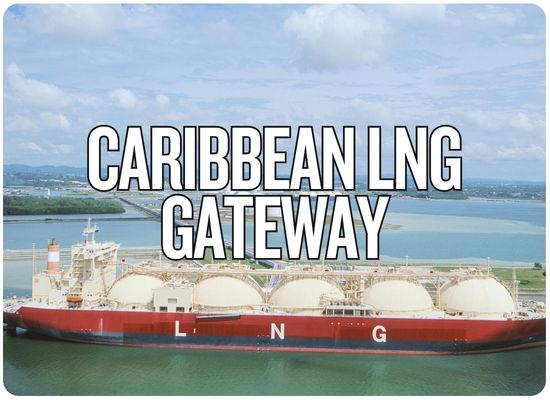
An 11-year LNG supply agreement announced November 5, 2026, could establish Grand Bahama as a new distribution and marine-bunkering center for the Caribbean. U.S.-based Excelerate Energy will supply up to 16 trillion British thermal units of LNG annually to AxDo Bahamas, a joint venture between Swiss energy trader Axpo and Bahamian maritime-logistics company Domicisle LNG. Initial deliveries are targeted for the first quarter of 2027 using Excelerate's existing Jamaica infrastructure, followed by a proposed floating storage unit (FSU) near Grand Bahama in the second half of 2028. The offshore facility remains subject to permits, construction and contractual conditions.
Sixteen Trillion BTU a Year Could Anchor a New Bahamas Marine-Fuel Hub
Excelerate Energy and AxDo Bahamas have established a long-term LNG supply relationship. Their two-phase strategy uses Jamaica first, then a proposed floating storage unit near Grand Bahama to expand regional distribution and bunkering opportunities.
Three Milestones, Three Different Levels of Certainty
The commercial agreement is signed. Operational deliveries and construction remain forward-looking milestones.
Excelerate signs an 11-year LNG supply agreement with AxDo, a joint venture formed in October 2026 by Axpo and Domicisle LNG.
Agreement announcedInitial LNG deliveries are expected using Excelerate's existing LNG supply, FSRU and distribution logistics in Jamaica. The dedicated Grand Bahama FSU is not yet required for this phase.
Target, not operatingExcelerate plans to acquire and convert an LNG carrier into a floating storage unit supporting marine bunkering, power generation and regional distribution.
Permitting / project conditionalWho Controls Which Part of the Supply Chain?
Long-term LNG supplier, owner of the Jamaica platform and developer of the proposed offshore LNG storage and distribution infrastructure.
New joint venture intended to support small-scale LNG, maritime fuel and Caribbean downstream customers. It is the direct anchor customer under the supply agreement.
Axpo contributes international LNG trading expertise. Domicisle brings Bahamian energy and maritime logistics knowledge and local distribution relationships.
What Does the 16 TBtu Ceiling Represent?
Annual LNG mass at the upper supply ceiling, assuming 52 MMBtu per metric tonne. Actual mass depends on composition and heating value.
The contracted LNG may supply power generation, regional distribution or marine fuel customers. No binding cruise-bunkering allocation or named receiving vessel has been disclosed.
Ten Questions That Will Decide Whether Grand Bahama Becomes a Real Fuel Hub
The anchor agreement provides a commercial foundation. Reaching cruise operators and regional energy customers will depend on logistics, facilities, approvals, transfer equipment and actual demand.
How the Proposed Caribbean Supply Chain Fits Together
The phases below represent the partners' publicly described distribution strategy, not an already functioning inter-island route.
Old Harbour and Montego Bay supply and logistics assets are intended to support first deliveries from early 2027.
Anchor buyer combining Axpo's trading capabilities with Domicisle's local distribution expertise.
Potential cruise bunkering, commercial marine fuel, electricity generation and other downstream uses.
The September 2026 Regulatory Distinction
Qualifying LNG brought solely for vessel bunkering or ship-to-ship lightering, without remaining in The Bahamas for domestic consumption, can fall within URCA's transit-import exemption. LNG transfer-operation regulations still apply.
The exemption does not itself authorize an FSU, regasification, pipeline delivery, retail gas supply or domestic consumption. Those require their own legal, technical and environmental assessment.
Three Announcements That Would Make This a Bigger Story
A signed carrier acquisition or conversion contract would turn the $85–95M investment estimate into a traceable asset program.
A named vessel, delivery method, LNG quantity and fueling location would substantiate the cruise-market opportunity.
Project-specific permits and transfer authorizations would clarify where and how the offshore hub can operate.
How Many LNG Bunker Deliveries Could a Grand Bahama Hub Support?
Convert the announced LNG supply ceiling into physical fuel volumes and possible vessel deliveries. Then stress-test a converted floating storage unit using Excelerate's stated investment range and future EBITDA expectations.
Volume & Investment Inputs
Physical LNG Supply & Bunkering
Conversion from the selected TBtu ceiling and utilization assumptions. This is not a measured annual offtake or vessel bunkering forecast.
Where Does the LNG Go?
Model allocation of delivered LNG between marine bunkering and other regional uses. Neither percentage has been publicly fixed by the signed supply announcement.
Illustrative FSU Capital Economics
The financial model begins with the dedicated FSU investment. It deliberately excludes the $6M EBITDA that Excelerate expects in 2027 from its Jamaica-supported launch, because that earnings contribution precedes the planned Bahamas storage-unit deployment.
Discounted modeled operating cash flow plus the assumed residual value, less the upfront FSU capital outlay. Taxes, financing and wider terminal investments are excluded.
These are Excelerate management's EBITDA expectations for the AxDo agreement. The $90M capital assumption is the midpoint of its $85–95M FSU estimate. The financial outputs above are independent modeling scenarios, not company guidance.
How Sensitive Is the FSU Investment to Annual EBITDA?
Vary stabilized annual EBITDA while holding FSU capital cost, first-year ramp, sustaining investment, discount rate and disposal value constant. Blue bars indicate positive modeled NPV; amber bars indicate negative NPV. Bar heights show absolute magnitude and are not a shared zero-axis financial plot.
| Annual EBITDA | Stabilized Cash Proxy | Investment NPV | Modeled IRR | Cash Payback |
|---|
FSU Operating-Year Cash Flow
Year 1 represents the first partial FSU operating year if the facility proceeds. The model treats FSU acquisition and conversion CAPEX as an upfront investment, followed by annual EBITDA less sustaining CAPEX. It is not a forecast of exact project-calendar cash flows.
| Operating Year | EBITDA | Sustaining CAPEX | Cash Flow + Exit | Cumulative After Initial CAPEX | Discounted Cash Flow |
|---|
Technical Glossary & Modeling Notes
LNG volume, fuel distribution and ship bunkering terminology
Investment returns, cash flow and scenario limitations
Physical distribution results and FSU financial results intentionally remain separate. The announced 16 TBtu annual ceiling does not automatically generate $15M of EBITDA at any specific distribution percentage, and Excelerate has not published a complete project-level fuel-pricing formula.
We welcome your feedback, suggestions, corrections, and ideas for enhancements.
Please click here to get in touch