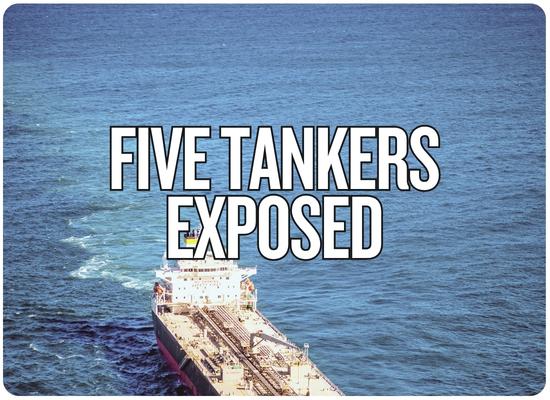
The United States expanded its Cuba sanctions framework on November 5, 2026, explicitly making the marine sector of Cuba's economy a basis for potential sanctions against foreign companies. In the accompanying action, the U.S. Treasury's Office of Foreign Assets Control (OFAC) newly listed two tankers, EMILIA and GLORIA C, while amending the existing sanctions records of three others: MARIA CRISTINA, ESPERANZA and LOURDES. The changes expose a network of shipping companies with connections to Cuba, Panama and Cyprus, including vessel-name changes, flag changes and additional Cuba-related sanctions authorities. For shipowners, charterers, bunker suppliers, agents and insurers, the immediate challenge is identifying the actual parties behind a voyage rather than relying on a ship's current name or flag.
ShipUniverse | Sanctions Intelligence | November 6, 2026
Five Tankers. One New Marine-Sector Sanctions Authority.
OFAC's November 5 records reveal two newly listed ships, three amended blocked-vessel entries and changes to shipping companies that connect Cuba with international maritime services.
New Vessel Listings2
EMILIA and GLORIA C
Existing Vessel Records Updated3
Additional identity or authority details
Newly Listed Shipping Companies3
Plus one previously listed company amended
New Sector DeterminationNov 5
Marine-sector designation eligibility effective
What Actually Changed
Foreign entities determined to operate or have operated in the marine sector of Cuba's economy may now be designated under Executive Order 14404. The five named vessels are recorded as blocked property.
What This Does Not Mean
Every ship, agent, bunker supplier or foreign company dealing with Cuba has not automatically become an SDN. The actual legal position depends on designations, blocked ownership, transaction details and applicable licenses.
The Five Vessels in the Official November 5 Action
IMO numbers are the principal identifiers for this comparison. Each record should be checked against the current OFAC list before an actual transaction.
Vessel
IMO
November 5 Record
Vessel Type / Flag
OFAC Linked Party
Identity or Authority Change
EMILIACall sign CLBS
9242209
NEW LISTING
LPG tanker, Cuban flag, built 2002.
Petróleos Marítimos del Caribe SA (Petromarca).
Newly included as blocked vessel property under CUBA-EO14404.
GLORIA CCall sign CLBR
9540273
NEW LISTING
Chemical/products tanker, Cuban flag, built 2010.
Caroil Transport Marine Ltd.
Newly included as blocked vessel property under CUBA-EO14404.
MARIA CRISTINAFormerly CARLOTA C
9502453
AMENDED LISTING
Chemical/products tanker. Flag updated from Panama to Cuba.
Caroil Transport Marine Ltd.
Existing Venezuela listing updated with new name, flag and CUBA-EO14404 authority.
ESPERANZAFormerly NEDAS
9289166
AMENDED LISTING
Crude tanker, Cuban flag, built 2005.
Caroil Transport Marine Ltd.
Previously blocked under Venezuela authority; Cuba authority added.
LOURDESFormerly GIRALT
9259692
AMENDED LISTING
Crude tanker. Flag updated from Panama to Cuba.
Petromarca; older OFAC entry linked BLUELANE OVERSEAS SA.
Name, flag, linked entity and Cuba authority updated.
Source: OFAC's November 5, 2026 SDN additions and amendments. A changed linked-party field does not, by itself, prove a completed ownership transfer. All five ships are blocked in the published records, but only two were newly added on November 5.
The International Company Trail
These are separately identified entities in the OFAC action. Their inclusion does not establish that they are all subsidiaries of one another.
Cuba | New SDN
Internacional Marítima SA
Havana-based sea and coastal freight transportation business. IMO company identifier 6100721.
NEW ENTITY LISTING
Cuba | New SDN
Petromarca SA
Also listed as Petróleos Marítimos del Caribe SA. Linked by OFAC to EMILIA and LOURDES. IMO company identifier 6140351.
NEW ENTITY LISTING
Panama | New SDN
Tentacool Commercial Inc.
Panama City maritime transport entity, registered April 2017. IMO company identifier 5998471.
NEW ENTITY LISTING
Cyprus / Cuba | Earlier SDN Updated
Caroil Transport Marine Ltd.
Existing 2019 Venezuela-related listing gains Cuba authority, Havana address and FRISIAN FAITH SHIPPING COMPANY LIMITED as an alternate name. IMO company identifier 1869514.
EXISTING ENTRY AMENDED
The overlooked intelligence: MARIA CRISTINA and LOURDES demonstrate why today's vessel name and flag are not enough. The stable IMO number connects current identity records with earlier sanctions listings. The Caroil alias and address additions also show why company screening must include alternate legal names and historical identifiers.
ShipUniverse | Sanctions Risk and Voyage Due Diligence
10 Checks Before Your Next Cuba-Linked Voyage
The critical questions involve vessel identity, contracting parties, cargo, payments, port services and legal authority. A clean ship-name screen alone is not a sufficient voyage review.
What the New Determination Does
It adds the Cuban marine sector to the criteria under which U.S. authorities may determine that a foreign person is subject to designation. Existing blocked vessels and entities remain restricted unless an applicable authorization permits a transaction.
What It Does Not Automatically Do
It does not designate every maritime business trading with Cuba. Screening must also account for separate Cuban Assets Control Regulations, blocked-party ownership, other sanctions authorities and transaction-specific licenses.
The 10-Point Sanctions Review
Designed for a fixture, bunker stem, port service, vessel purchase or cargo transaction. This is a due-diligence framework, not a replacement for professional sanctions advice.
01 / VESSEL IDENTITYScreen the IMO Number, Not Just the Name
Compare the current vessel name, past names, IMO identifier, MMSI and flag. Investigate identity changes before accepting a ship or authorizing a service.
OFAC example: CARLOTA C became MARIA CRISTINA, but IMO 9502453 did not change.
02 / OWNERSHIPIdentify the Registered and Beneficial Owners
Establish the corporate ownership chain, including aggregate direct and indirect ownership by blocked persons. Check the OFAC 50 Percent Rule and other applicable blocking criteria.
A company can be blocked through ownership even when its name does not appear separately on the SDN List.
03 / COMMERCIAL CONTROLCheck the Manager, Charterer and Operator
Screen the technical manager, commercial manager, disponent owner, bareboat charterer and signatories, and reconcile contradictory vessel-registry information.
An OFAC linked-party field is useful intelligence, but it is not a complete beneficial-ownership certificate.
04 / PORT COUNTERPARTIESInvestigate the Agent, Terminal and Service Providers
Identify the parties providing berthing, towage, pilotage, agency, cargo handling and other maritime services, including entities owned by sanctioned organizations.
Cuba's GEMAR maritime and port holding group was already sanctioned in July 2026.
05 / CARGO CHAINTrace the Seller, Buyer, Receiver and Cargo Owner
Screen contractual and beneficial cargo interests, commodity origin, consignor, consignee and entities receiving economic benefit from the trade.
A vessel match and a cargo-party match are different risk questions. Both can matter.
06 / FINANCIAL ROUTINGCheck Banks, Payees and Payment Instructions
Screen the beneficiary, collection agents, intermediaries, invoicing entities and banks. Escalate last-minute bank or payee changes rather than routing around a rejected transaction.
OFAC separately designated BICSA in October; a limited foreign-party wind-down posture expires November 14.
07 / BUNKERS AND SUPPLIESReview the Actual Fuel and Service Transaction
Determine who sells the fuel, who purchases it, who receives payment and which parties provide delivery. Evaluate technical spares, repairs and other supplier contracts separately.
A Cuba-related service creates a diligence question; it does not automatically make every supplier an SDN.
08 / INSURANCEConfirm P&I and Other Relevant Cover
Obtain insurer and club guidance on sanctions exclusions, payment restrictions, claims handling, contractual limits and any required notifications before committing the vessel.
Do not infer insurance validity merely because the vessel holds a certificate or has traded previously.
09 / CONTRACTS AND LICENSESTest the Charterparty Against Applicable Authorizations
Review sanctions clauses, refusal or suspension rights, nomination provisions, cancellation exposure and whether a general or specific license genuinely covers each transaction.
OFAC General License 1 preserves specified CACR-authorized activity; it is not an unrestricted Cuba-trade license.
10 / DOCUMENTATION AND MONITORINGRescreen Before Payment, Loading and Departure
Retain dated screening results, ownership evidence, legal assessments and approval records. Trigger a new review after name, flag, manager, ownership, bank or sanctions-list changes.
A clear check performed months before a fixture does not establish today's sanctions position.
A Four-Stage Voyage Approval Sequence
Pause and escalate identified legal concerns. The sequence does not create an authorization to transact.
STAGE 01Identify
Resolve IMO, aliases, owners, managers and commercial parties.
STAGE 02Screen
Check current sanctions records, blocked ownership and transaction parties.
STAGE 03Verify
Confirm jurisdiction, licenses, insurer position and contract terms.
STAGE 04Document
Record authorized decisions and monitor changes during performance.
Two Earlier Sanctions Events Affect the Same Maritime Ecosystem
These are separate from the November 5 vessel additions and amendments.
July 13, 2026
GEMAR Designated
Grupo Empresarial de Transporte Marítimo Portuario was added under E.O. 14404. The subsequent non-U.S. wind-down non-targeting period referenced by OFAC ended August 12.
November 14, 2026
BICSA Deadline
End of OFAC's stated non-targeting period for specified non-U.S. wind-down or divestment activity involving Banco Internacional de Comercio. It does not authorize otherwise prohibited U.S.-person dealings.
Two Important Legal Distinctions
Does operating in Cuba's marine sector automatically cause blocking?
No. OFAC FAQ 1256 distinguishes sanctions eligibility from an actual determination that a foreign person is subject to sanctions. The November 5 determination creates a sectoral basis for future designations. Other sanctions restrictions, including the pre-existing CACR and blocked ownership, may apply independently.
Can a general license or a non-U.S. wind-down statement cover a voyage?
Only if the precise transaction satisfies the relevant conditions. OFAC FAQ 1253 explains the limited operation of General License 1. A statement that the United States does not intend to target certain non-U.S. wind-down activity does not itself authorize an otherwise prohibited U.S.-person transaction. Seek transaction-specific advice before acting.
Owner's bottom line: The new marine-sector authority makes company-level diligence more important. The existing vessel designations make IMO-based matching essential. A compliant decision requires a documented assessment of the vessel, cargo, counterparties, payment chain and legal permissions, not a single sanctions database search.
ShipUniverse | Interactive Sanctions Intelligence
Vessel Alias Checker & Voyage Interruption Cost Model
Check a vessel against the five published November 5 records and estimate the commercial expense of a compliance-related voyage interruption. These are two separate analyses, not a sanctions clearance decision.
Official-data snapshot only: The five-vessel reference set reflects OFAC's November 5, 2026 publication. It is not a current SDN database, does not cover all sanctioned parties, and cannot determine whether a transaction is lawful. Verify every result with OFAC and qualified legal advisers.
1. Look Up a Vessel by IMO or Known Name
Try IMO 9502453 or its former name CARLOTA C. Names and aliases are embedded from the official action; no live sanctions search takes place.
MATCH IN NOVEMBER 5 OFAC RECORDSIMO 9502453
Current Listed NameMARIA CRISTINA
IMO Number9502453
November 5 Record TypePreviously listed; amended
Former NamesCARLOTA C
OFAC Linked PartyCAROIL TRANSPORT MARINE LTD
Published AuthoritiesVENEZUELA-EO13850; CUBA-EO14404
This vessel was already listed before November 5. A changed name does not remove the earlier sanctions record.
2. Price a Hypothetical Voyage Interruption
A sanctions-related hold can create costs before there is a final decision about any prohibited transaction. Enter actual contractual figures where available. The tool does not predict an enforcement action, seizure or penalty.
Extra voyage, berth or waiting time attributable to the modeled event
Illustrative all-in daily incremental exposure
Extra bunkers, ports and routing expense not included in vessel time cost
Assumed incremental commercial settlement; no automatic legal liability implied
Outside counsel, ownership research or compliance investigation
Include only truly incremental unrecoverable costs
Cash held up for modeling, not presumed forfeited or lawfully releasable
Assumed interruption to liquidity
Simple annualized carrying-rate assumption
Modeled Incremental Cost Drivers
Each bar represents its share of the total incremental burden. Temporary principal held is deliberately excluded from the cost bars.
$168,000
$115,000
$85,000
$20,000
$45,000
$5,918
Vessel Time Expense$168,000
Additional days multiplied by daily time cost
Rerouting and Contract Cost$200,000
Incremental routing plus selected contractual expense
Review and Prepayment Expense$65,000
External review and unrecoverable funds
Cash Carrying Expense$5,918
Financing effect of temporarily unavailable funds
Temporary Principal Unavailable$1.20M
Liquidity exposure only; not counted as a financial loss
Total Incremental Modeled Cost$438,918
Illustrative commercial expense, excluding any actual sanctions penalty
A Seven-Day Hold Can Create Costs Beyond the Vessel
The model includes vessel time, rerouting, contractual expense, review costs and the financing impact of held funds. No legal determination follows from the amount.
Vessel reference scope: The searchable records are a fixed subset of five vessels identified in OFAC's November 5 action. Search terms are matched by exact normalized IMO number or known vessel alias. A missing match does not mean that a vessel, company or transaction is free of sanctions. IMO checks do not screen ownership or the complete SDN List.
Commercial calculation: Vessel-time expense equals extra days multiplied by daily cost. Other direct incremental costs are the entered routing, contract, review and nonrecoverable-prepayment amounts. Simple carrying expense equals temporarily unavailable principal multiplied by the annual financing percentage and days unavailable divided by 365. Total modeled expense is the sum of these categories.
Funds temporarily unavailable are shown separately and are not treated as permanently lost, automatically frozen by OFAC or recoverable under any license. The model excludes double-counted charges by assuming each cost input represents a distinct expense.
Limitations: The tool does not determine blocked-property status outside its fixed sample, eligibility for any license, the legal duty to block or reject a payment, the existence of U.S. jurisdiction, future designations, insurance recovery, taxes, cargo-value depreciation, actual demurrage terms or penalties. A blocked transaction must not be completed merely because paying a modeled interruption cost would be expensive. Obtain sanctions counsel and consult current official records before making operational decisions.
Feedback Welcome
We welcome your feedback, suggestions, corrections, and ideas for enhancements.