FuelEU 2025: The “€2,400/Ton” Penalty Trap and 7 Ways Shipowners Could Dodge It
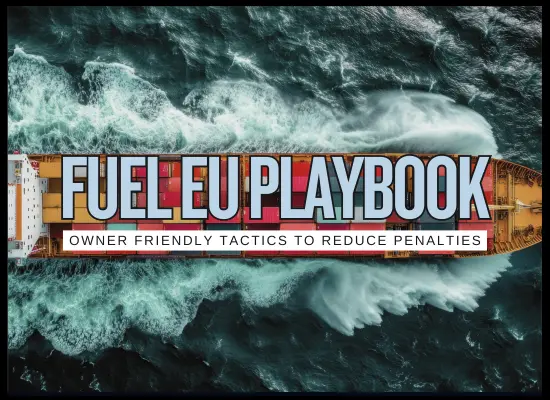
FuelEU Maritime starts putting real money on the line in 2025. The penalty math can snowball fast, especially if you’ve got energy-intensive routes, thin margins, or uncertain alternative-fuel access. Below are potential strategies shipowners could consider to reduce exposure. This is not legal, tax, or compliance advice; regulations, guidance, and port implementation evolve. Always validate against the latest texts, flag-state/class guidance, and your charterparty framework before acting.
1 Pooling to Offset Deficits Owner leverage
Where it tends to fit
- Mixed fleets or trades, some calls can plug into OPS or lower-CI fuel, others can’t yet.
- A season or two of uncertainty while alternative fuel supply ramps.
- Willing partners (internal or external) with simple governance.
Quick check: does pooling look cheaper?
If exploring this route
Paper that often sits behind this
- Basic data trail and audit rights; a short dispute/adjustment window.
- Caps or limits so one ship doesn’t carry the entire pool.
- Notes in the charterparty so costs/benefits follow operational control.
2 OPS Calls That Quietly Flip You Toward Surplus Port-side lever
Where it tends to fit
- Regular calls at EU core ports where OPS is available and slots are predictable.
- Long hotel loads at berth (reefers, pumps, HVAC) that make auxiliary fuel burn noticeable.
- A near-term bridge while alternative fuel supply and procedures settle in.
How it could help
- Less auxiliary fuel burned at berth; on some trades this nudges the voyage toward a surplus.
- Predictable port stays make OPS planning easier than fuel-switch mid-voyage.
Quick check: electricity vs. auxiliaries at berth
If exploring this route
Paper that often sits behind this
- Simple SOP and safety note for connection/disconnection.
- A line item for OPS fees in port-cost sheets; basic data log for audits.
- Notes in charterparty schedules where OPS is expected/available.
3 Borrow/Bank to Smooth 2025–2026 Time-shift lever
Where it tends to fit
- A clear view that next year’s rotations or fuel access might run cleaner than this year’s.
- Temporary gaps (yard stays, unusual charters) that create one-off deficits.
- Comfort with the program’s caps/conditions and a tidy documentation trail.
How it could help
- Banking may carry surplus forward so fewer changes are needed mid-rotation.
- Borrowing might cover a narrow gap now, repaid with next year’s improvements.
Quick check: on your inputs, which path looks lighter?
If exploring this route
Paper that often sits behind this
- Clear note of any banking carried forward and the audit trail behind it.
- Borrowing assumptions (share, uplift, repayment window) kept in one place.
- Cross-notes in charterparty schedules so expectations line up with operations.
4 Targeted Bio-Blends on High-Impact Rotations Fuel-side lever
Where it tends to fit
- Ports with reliable bio supply and lab support; paperwork (proof of sustainability, CI values) is routine.
- Rotations that sit just shy of a surplus where a modest CI nudge matters.
- Crews comfortable with blending SOPs and standard fuel housekeeping checks.
How it could help
- Selective B10–B30 on high-consumption legs might tip the average toward compliance without redesigning the whole fuel plan.
- When pooling or banking gets you close, a small blend can finish the job.
Quick check: is the premium lighter than the penalty you expect to avoid?
If exploring this route
Paper that often sits behind this
- Proof of sustainability (e.g., ISCC) and certified CI values attached to bunkering docs.
- Simple sampling/retention note and lab plan when blending.
- Cross-references in the charterparty on where and when blends may be used.
5 Voyage Tweaks That Nudge Intensity Without Hitting TCE Ops-side lever
Where it tends to fit
- Ports that confirm berth windows early, so arrival speed can match reality.
- Trades with frequent head seas or currents where routing has clear choices.
- Vessels with reliable noon data and quick feedback loops to the bridge.
How it could help
- Less fuel for the same ETA when the berth is not ready, which lowers intensity.
- Routing that avoids heavy weather reduces added resistance and fuel burn.
Quick check: small speed trim vs time cost
If exploring this route
Paper that often sits behind this
- Quick SOP for speed trim and arrival alignment with port updates.
- Routing note that lists common heavy weather sections and alternatives.
- Charterparty pointer so expectations on ETA flexibility are clear.
6 Hull and Propeller Care That Holds the Line on Intensity Upkeep lever
Where it tends to fit
- Warm trades or long idle periods where slime and light growth build quickly.
- Ports that allow cleaning with capture or have approved service providers.
- Vessels that show rising shaft power for the same speed over a few voyages.
How it could help
- Lower fuel for the same schedule which softens voyage intensity.
- Cleaner performance trends that make pooling and banking forecasts steadier.
Quick check: does a clean and polish pay on these inputs
If exploring this route
Paper that often sits behind this
- Biofouling management plan and a simple performance note per voyage.
- Port specific cleaning permissions or capture requirements kept on file.
- Supplier certificates for polishing heads and recovery systems where needed.
7 Charterparty Alignment So Costs Follow Control Contract lever
Where it tends to fit
- Time charters where routing, speed, and port choices sit with the charterer.
- Voyage charters that touch EU ports or spend time at berth in EU waters.
- Fleets that plan to pool, bank, borrow, or use OPS on selected calls.
How it could help
- Reduces arguments about who pays when a route or port choice moves intensity.
- Gives a calm timetable for funding or settlement linked to reporting milestones.
Clause ingredients that often help
- Scope note for EU related legs and at berth time, so the math follows the trade.
- Data sources and audit rights with a short correction window if inputs change.
- Notes on pooling or banking where relevant, so benefits and responsibilities are clear.
- Calendar cues for interim invoices and the final settlement against reports.
If exploring this route
FuelEU will keep evolving, so a calm plan helps. Start where the effort is small and the record keeping is easy. Pool if it narrows a gap, plug in where sockets are ready, bank or borrow with clean notes, and use blends or timing only where they pull their weight. Simple steps add up when they are repeatable and well documented.
We welcome your feedback, suggestions, corrections, and ideas for enhancements. Please click here to get in touch.