Maersk’s Stronger 2026 Signal Suggests the Container Market Still Has More Support Than Many Expected
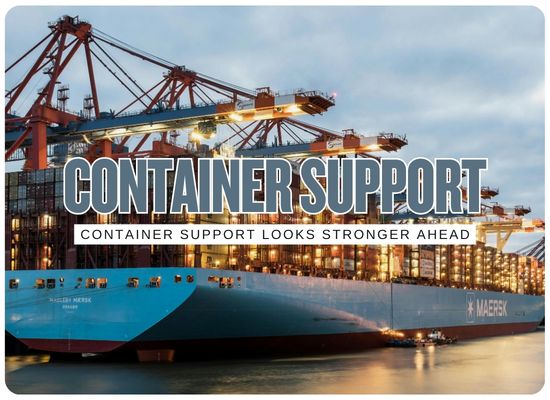
A.P. Moller-Maersk has sharply upgraded its full-year 2026 guidance after saying container demand has remained stronger than expected, especially out of the Far East, while spot rates have also stayed elevated. The company now expects underlying EBITDA of $8 billion to $10 billion, up from its earlier $4.5 billion to $7 billion range, and underlying EBIT of $2 billion to $4 billion, up from its prior range of negative $1.5 billion to positive $1 billion. Free cash flow guidance was also improved to at least negative $1.5 billion from at least negative $3 billion. Just weeks earlier, Maersk had maintained its prior 2026 outlook while still expecting global container market volume growth of 2% to 4%.
Operator Impact Snapshot
Maersk’s upgraded outlook points to a firmer container market backdrop than many operators had been preparing for earlier in the year. For carriers, brokers, ports, and suppliers, the key question now is not just whether rates are still elevated, but how long stronger-than-expected demand can keep capacity pressure from dragging earnings back down.
The guidance lift suggests larger liners may keep seeing healthier margins than expected if spot strength continues.
Current pricing remains constructive, but operators still need to watch whether this strength broadens or starts fading.
A firmer earnings outlook can improve confidence around vessel employment and near-term deployment decisions.
The updated guidance does not point to a weak-market shock for major container operators in the near term.
A stronger 2026 does not remove the longer-running concerns around overcapacity and route normalization later on.
Hormuz Disruption Table for Operators and Risk Teams
A clean operational view of the latest shipping pressure points after the pause in the evacuation initiative.
The current picture in and around Hormuz is less about a full closure and more about a rise in uncertainty after a vessel attack near Oman disrupted the confidence behind coordinated evacuation planning. Tanker operators, owners, brokers, insurers, and charterers are now dealing with a narrower question: whether passage remains possible under a more fragile security environment, and whether recent measures are enough to stabilize routing decisions, crew planning, and commercial timing.
| Pressure Lane | Current Readout | Current Situation | Commercial Importance | Who Feels It First | Near Term Signal to Watch |
|---|---|---|---|---|---|
|
Transit Confidence
Passage is still possible, but confidence around routine movement has been weakened.
|
High | A vessel attack near Oman has made operators more cautious about assuming that current passage conditions are stable enough for ad hoc planning. | Even without a formal closure, weaker confidence can alter chartering behavior, voyage timing, and tanker scheduling. | Owners, tanker operators, charterers, and voyage planners. | Whether additional attacks or attempted attacks start changing actual sailing patterns more visibly. |
|
IMO Linked Coordination
The evacuation initiative was paused, which changes the tone around organized maritime safety measures.
|
Watch | The pause suggests that conditions no longer support the same level of coordinated confidence behind emergency maritime movement planning. | That matters because organized safety coordination can shape how quickly operators feel comfortable making short-notice routing decisions. | Flag states, shipmanagers, safety teams, and regional maritime authorities. | Whether coordination mechanisms resume, narrow, or are replaced by more fragmented national guidance. |
|
War Risk and Premium Pressure
Insurance attention is likely to stay elevated even if traffic continues moving.
|
High | A direct attack near a key choke point adds fresh evidence for underwriters and risk desks assessing exposure in the Gulf and Hormuz approaches. | Higher premiums, tighter declarations, or extra review layers can quietly distort voyage economics without a headline route shutdown. | Insurers, brokers, owners, and cargo interests. | Whether premium changes spread beyond the immediate incident window into a more persistent risk repricing. |
|
Tanker Scheduling Friction
Cargo movement may continue, but timing is becoming harder to treat as routine.
|
Medium to High | Operators moving crude, products, LNG, and linked cargoes now face a market where security events can disrupt confidence faster than they disrupt formal access. | That can mean loading adjustments, waiting decisions, slower nominations, and more conservative fixture behavior. | Tanker operators, energy traders, schedulers, and terminal-linked service providers. | Whether delays remain manageable or begin extending into broader cargo-timing disruption. |
|
Crew and Vessel Safety Planning
Human factors are again becoming more visible in commercial decisions.
|
Watch | When vessel attacks move closer to actual transit lanes, crew confidence and onboard safety procedures become more important in route execution. | Even if the market keeps moving, managers may need stronger briefings, tighter watchkeeping discipline, and clearer onboard response planning. | Shipmanagers, masters, crewing teams, and owners. | Whether operators begin adding extra internal controls before approving passage through the area. |
|
Regional Signaling
The latest move shifts perception as much as it shifts procedure.
|
Rising | A pause in a safety-oriented initiative after an actual attack sends a stronger market signal than a routine advisory would have sent. | That can influence commercial behavior well beyond the immediate incident itself, especially for risk-sensitive cargo chains. | Brokers, traders, analysts, and marine financiers. | Whether the next developments point toward stabilization or a new pattern of reactive risk management. |
Operator readout: The current Hormuz picture is not defined by a confirmed shutdown. It is defined by a drop in confidence after a vessel attack disrupted the conditions needed for smoother coordinated safety planning. That distinction matters because shipping can continue moving while commercial risk still climbs.
Container Strength Pulse Tool
Use this quick estimator to translate the latest Maersk upgrade into a simple market-readout for carrier sentiment, charter mood, and rate durability.
The current inputs suggest the container market still has meaningful near-term support rather than sliding quickly into a weaker phase.
This points to an above-trend confidence profile for carriers and container-linked suppliers.
Even with a stronger market tone, excess vessel supply remains the clearest medium-term drag risk.
Current conditions imply that rates still have enough support to keep carrier earnings expectations lifted.
This editorial tool is not a freight forecast. It is designed to help readers translate the latest guidance shift into a simple commercial read on market tone and durability.
We welcome your feedback, suggestions, corrections, and ideas for enhancements. Please click here to get in touch.