Maritime Chokepoints That Are Rewriting Shipping in 2026
May 22, 2026
🔔 Subscribe to ShipUniverse Weekly →
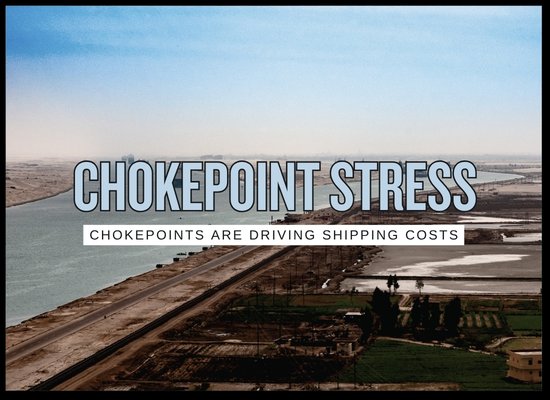
As of mid-May 2026, the global chokepoint picture is no longer one single shipping story. The Strait of Hormuz is the most acute live disruption, with high attack risk and freight markets still reacting to curtailed Gulf tonnage, while the Red Sea and Suez Canal are in a strange middle state: the canal itself is operating, but security risk in the wider corridor still shapes carrier decisions and keeps a full normalization from feeling settled. By contrast, the Panama Canal has largely moved back toward normal operating capacity, the Malacca Strait remains open and extremely busy, and the Turkish Straits are functioning but still prone to short-notice traffic suspensions and operational delay.
Global route pressure report
The chokepoint map is no longer about one blocked canal. It is about which routes are open, which are trusted, and which are quietly distorting fleet economics
In 2026, the difference between an open chokepoint and a commercially normal chokepoint has become one of the most important distinctions in shipping. Some corridors are functioning physically but still carrying security, cost, or schedule penalties large enough to reshape routing decisions.
Most acute
Hormuz
Direct security disruption is driving tanker-market stress and forcing tonnage into alternative loading regions.
Most ambiguous
Suez and Red Sea
The canal is open, but confidence in the wider corridor still depends on threat perception, not only canal mechanics.
Most improved
Panama
Water-driven restrictions have eased sharply, which is giving carriers one of the clearest route-normalization signals in the system.
Most stable but watched
Malacca
Open, busy, and strategically critical, but still carrying security vigilance and political sensitivity because so much traffic depends on it.
Current shipping pattern
The market is splitting chokepoints into three buckets
The first bucket is actively dangerous. The second is technically open but commercially fragile. The third is mostly functional again, yet still important because it is absorbing traffic or acting as the safer alternative when other corridors become unreliable.
Risk
Transit time
Insurance
Fleet positioning
Port spillover
Actively disruptive now
The Strait of Hormuz is the clearest live chokepoint shock in the current market. The issue is not only passage volume. It is the knock-on effect on tanker availability, sourcing patterns, and energy-route substitution.
Open but not fully normalized
The Red Sea and Suez Canal sit in this middle category. Operators can point to actual transits, but the corridor is still being priced through a security lens rather than as a fully routine trade lane.
Functioning and strategically supportive
The Panama Canal, Malacca Strait, and Turkish Straits are mostly functioning, but each matters because they either absorb displaced demand or remain too important to ignore when other corridors destabilize.
Current status of the main maritime chokepoints and how they are hitting shipping
This layout focuses on operational reality, not just geography. The main question is how each chokepoint is influencing routing, rates, cargo timing, and vessel deployment right now.
| Chokepoint | Current status | Most exposed cargo or ship groups | How shipping is adjusting | Main cost transmission | Secondary spillover | What owners should watch next | Commercial temperature |
|---|---|---|---|---|---|---|---|
|
Strait of Hormuz
Gulf energy gateway
|
Live high-risk disruption with a direct security component and strong tanker-market effects. | Crude, products, LNG, regional container services, fertilizer-linked cargoes, and any tonnage dependent on Gulf loading windows. | Ships are repositioning toward the Atlantic Basin, non-Gulf supply sources are gaining relative importance, and owners are rethinking voyage exposure and crew-risk tolerance. | Freight spikes, war-risk logic, sourcing substitution, longer ballast legs, and higher opportunity cost around Gulf employment. | More demand for U.S., Brazil, and West Africa liftings, plus tighter vessel availability in some Atlantic trades. | Whether passage normalizes gradually or in a stop-start fashion, because that will shape whether rates stay firm or overshoot downward later. | Very hot |
|
Bab el-Mandeb and Red Sea
The threat gate before Suez
|
Threat environment remains important enough that the corridor is still being judged on security confidence, not only physical openness. | Container networks, east-west liner loops, breakbulk cargoes, car carriers, and any service whose economics depend on keeping Cape diversion off the schedule. | Selective returns, cautious routing decisions, and continued contingency planning around Cape deployment for services that do not like risk surprises. | Longer voyage distance when avoided, higher schedule complexity, and weaker asset productivity when ships stay on the longer route. | European port sequencing changes, equipment imbalances, and vessel bunching risk if larger-scale returns happen unevenly. | Whether security confidence improves enough for a broader carrier return rather than isolated or service-specific moves. | Fragile |
|
Suez Canal
Physically open but tied to Red Sea confidence
|
The canal itself is operating, but commercial normality is still linked to the wider corridor risk picture. | Container lines, car carriers, chemicals, project cargo, and owners whose economics rely on preserving Asia-Europe transit efficiency. | Some carriers are probing a return while others remain cautious, which creates a split market rather than full route normalization. | Transit-time differentials, schedule redesign, bunker planning changes, and freight-rate sensitivity when short-route capacity returns. | Cape route demand can soften if returns broaden, but European port congestion risk may rise during transition phases. | The scale and durability of carrier re-entry, not just whether one or two services transit successfully. | Mixed |
|
Panama Canal
Recovered relative to the drought period
|
Largely back toward normal transit conditions, though operators still remember how fast water stress can change the picture. | LNG, container ships, grain, and any operator whose route economics depend on canal reliability rather than one-off slot opportunism. | Carriers are treating Panama as more dependable again, and some demand is being supported by stress elsewhere in the global system. | Lower delay risk than during the drought phase, but continued sensitivity to maintenance windows, weather forecasts, and slot strategy. | Canal reliability now partly acts as a release valve when Suez-linked trades are pressured by conflict risk. | Water levels, El Niño development, and whether current operating stability holds through the second half of the year. | Improving |
|
Turkish Straits
Operationally open but interruption-prone
|
Functioning, though still exposed to short suspensions tied to vessel size, technical incidents, traffic sequencing, and weather. | Black Sea-linked bulkers, tankers, regional trades, and ships with tight timing around grain, energy, or regional industrial cargo. | Operators build in more operational caution and sequence planning rather than treating the transit as a pure passage charge problem. | Delay, waiting time, tug or local-support exposure, and timing risk when a short closure catches the vessel at the wrong stage. | Black Sea supply-chain timing can become less predictable even without a full strategic closure. | Whether short suspensions remain routine and manageable or start compounding with regional war-risk and documentation issues. | Tactical |
|
Straits of Malacca and Singapore
Open and heavily used
|
Open, politically stable in navigation terms, and still one of the system’s key relief corridors when other routes destabilize. | Energy cargoes, Asia-Europe and intra-Asia container traffic, dry bulk, and almost any east-west trade that cannot afford route uncertainty elsewhere. | The corridor continues to absorb high traffic while operators maintain elevated vigilance on security and navigational discipline. | Crowding, schedule sensitivity, and security-watch intensity rather than outright closure or passage restriction. | Its strategic importance becomes more visible every time another chokepoint becomes unreliable. | Security incidents, political rhetoric around monetization, and whether heavy traffic starts creating wider operational friction. | Busy but stable |
|
Cape of Good Hope route
Not a chokepoint, but the system’s pressure valve
|
Functioning as the main detour route for services that still do not trust the Red Sea enough to commit fully. | Container lines, car carriers, and any owner whose voyage economics changed materially when Suez confidence fell. | Longer voyages remain the trade-off for reduced security exposure in the Red Sea corridor. | More days at sea, more bunker burn, lower asset turns, and more schedule variability when weather and port bunching interact. | Rate structures, fleet deployment, and port arrival patterns all change when too much cargo is forced onto the long route. | Whether this route starts losing emergency-demand status as Red Sea confidence gradually improves or stays elevated if insecurity persists. | Pressure valve |
Most important distinction
A chokepoint can be physically open and still commercially impaired. That difference is driving much of the current route confusion in 2026.
Main commercial pattern
Energy-linked chokepoints are transmitting risk fastest into freight rates, while container-linked chokepoints are transmitting it through schedule design and asset productivity.
Best owner takeaway
The right question is no longer “is the route open?” It is “is the route open enough, trusted enough, and stable enough for this cargo and this charter?”
Interactive route tool
Chokepoint Exposure Planner
Compare the current route penalty of the main maritime chokepoints by blending security, delay, fuel, insurance, and cargo sensitivity into one directional planning view.
Voyage setup
Build the cargo, route dependence, and commercial sensitivity that define how much chokepoint stress really matters
Trade profile
Route dependence
Commercial sensitivity
Detour assumptions
Exposure board
See which chokepoint is putting the most commercial pressure on this voyage profile right now
Total route pressure
0 / 100
Higher means this trade profile is more exposed to chokepoint-driven disruption right now.
Directional delay bill
$0
A blended estimate of detour and timing cost under the current assumptions.
Security and insurance bill
$0
Directional cost pressure from security posture and insurance sensitivity.
Biggest live chokepoint
Review
The chokepoint currently doing the most commercial damage to this voyage profile.
Chokepoint pressure map
Hormuz exposure pressure
0
Suez and Red Sea pressure
0
Panama pressure
0
Malacca pressure
0
The tool is evaluating which chokepoint is currently shaping this voyage profile the most.
Most exposed
Main spillover
Best next move
Model note
This is a directional commercial-planning tool. It does not replace voyage security advice, charter-party review, or current naval guidance. It helps readers compare which chokepoint is imposing the biggest route penalty on their trade profile right now.
This is a directional commercial-planning tool. It does not replace voyage security advice, charter-party review, or current naval guidance. It helps readers compare which chokepoint is imposing the biggest route penalty on their trade profile right now.
We welcome your feedback, suggestions, corrections, and ideas for enhancements. Please click here to get in touch.