London Moves From Tracking the Shadow Fleet to Interdiction
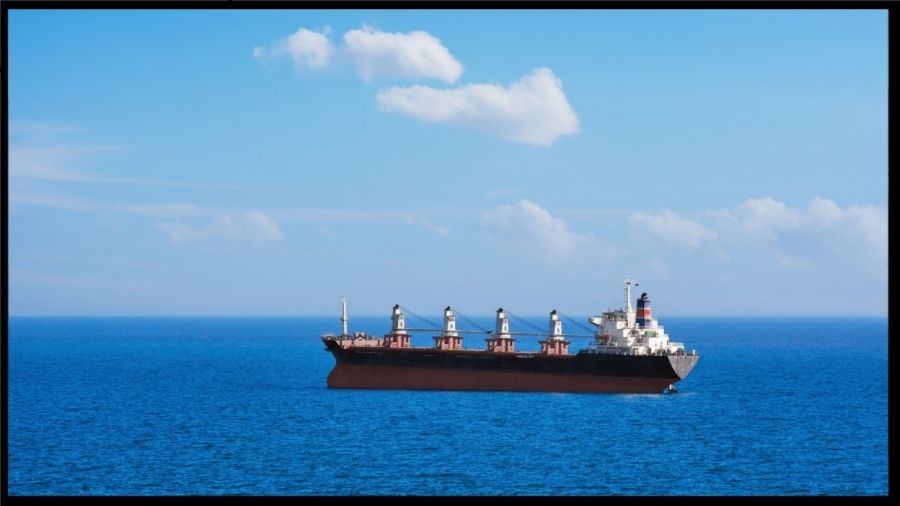
The UK has formally authorised its armed forces and law-enforcement officers to board sanctioned Russian shadow-fleet vessels transiting through UK waters, in a move announced by the Prime Minister’s Office and Ministry of Defence on March 25, 2026. The government said British forces will now be able to interdict vessels already sanctioned by the UK as they pass through areas including UK waters and the Channel, with each case to be assessed individually by law-enforcement, military, and energy-market specialists before ministers approve action. The government also said military and law-enforcement teams have recently trained for scenarios including non-compliant ships, armed vessels, and tankers using advanced surveillance or evasion methods, and that following detention, criminal proceedings may be brought against owners, operators, and crew for breaches of UK sanctions law.
Click here for 30 second summary of the full piece ▶
The UK has formally opened a boarding-and-detention track against sanctioned shadow-fleet tankers
The UK government announced on March 25 that British armed forces and law-enforcement officers will be able to interdict vessels sanctioned by the UK while they transit through UK waters. The government said each ship will be assessed individually before ministers approve action, that boarding teams have been preparing for scenarios including non-compliant or armed vessels, and that after detention criminal proceedings may be brought against owners, operators, and crew for breaches of UK sanctions law.
- Authority granted: sanctioned shadow-fleet vessels transiting UK waters can now be boarded and interdicted.
- Detention risk stated plainly: operators may be forced to divert or risk detention by British forces.
- Legal follow-through: owners, operators, and crew may face criminal proceedings after detention.
| Interdiction bucket | Confirmed development | Current scale signal | Operational effect | Signals to watch next |
|---|---|---|---|---|
| New boarding authority |
The UK government said the Prime Minister has agreed that the UK Armed Forces and law-enforcement officers will be able to interdict vessels sanctioned by the UK while transiting UK waters.
The announcement was made jointly by 10 Downing Street and the Ministry of Defence on March 25, 2026.
Authority now granted
|
Applies to UK-sanctioned vessels in UK waters, including the Channel. | Shadow-fleet passage near the UK now carries direct boarding and detention risk rather than only tracking or diplomatic pressure. | First actual interdiction, legal basis used in practice, and how aggressively the UK applies the power against transiting tankers. |
| Detention risk |
The government said the move will force sanctioned operators either to divert to longer routes or risk being detained by British forces.
Detention is described as a real enforcement outcome, not just a theoretical possibility.
Detention explicitly stated
|
Route choice and voyage economics are now directly affected. | Tanker operators using UK-adjacent waters may have to re-price risk, insurance, time, and fuel around possible interception. | Diversion patterns, AIS behavior, and whether operators reduce Channel exposure or rely more heavily on alternate passages. |
| Target selection process |
Each ship will be individually considered by law-enforcement, military, and energy-market specialists before a recommendation is made to ministers and an operation is executed.
That suggests a case-by-case screening model rather than blanket automatic action.
Case-by-case review
|
Multi-agency screening before operations. | Enforcement is likely to focus on vessels with clearer sanctions exposure, stronger evidence trails, and manageable market consequences. | Whether the UK publishes criteria around ownership opacity, flag history, cargo documentation, or sanctions-link evidence. |
| Boarding preparation |
The government said military and law-enforcement specialists have trained for scenarios including boarding ships that do not surrender, are armed, or use high-tech surveillance to evade capture.
This indicates planning for resistant or security-sensitive boardings rather than simple compliance inspections.
Operational rehearsals complete
|
Boarding teams prepared for hostile or evasive conditions. | The enforcement model now assumes some shadow-fleet tankers may contest boarding or try to complicate attribution and interception. | Whether future operations involve Royal Marines, specialist boarding teams, or publicized seizure-style enforcement. |
| Post-detention legal path |
Following detention, criminal proceedings may be brought against owners, operators, and crew for breaches of UK sanctions legislation.
That makes this more than a maritime stop. It opens a legal enforcement track after interdiction.
Criminal exposure widened
|
Owners, operators, and crew can all face legal follow-up. | Documentation, beneficial ownership, insurance, and sanctions compliance records become central evidence questions after any boarding. | First prosecutions, vessel forfeiture outcomes, and whether cargoes are seized, redirected, or held pending court action. |
| Broader allied pattern |
The UK said Finland, Sweden, and Estonia have recently carried out operations against suspected illegal shadow-fleet vessels in the Baltic, and that the UK had supported allies in monitoring and tracking ships for interdiction in European and Mediterranean waters.
The British move is framed as part of a wider northern European enforcement push rather than an isolated national step.
Allied enforcement alignment
|
UK sanctions now cover 544 Russian shadow-fleet vessels, according to the government. | Enforcement pressure is becoming geographically broader, making evasive routing and sanctions circumvention more difficult across multiple theaters. | Joint Expeditionary Force coordination, additional sanctions listings, and whether allied navies synchronize interdiction practices more openly. |
A shadow-fleet crackdown becomes materially stronger when several things line up at once: clear legal authority, more than one country enforcing, limited safe route alternatives, and a higher chance that targeted ships resist or complicate boarding. This tool turns that enforcement pattern into a practical pressure score.
The key shift is that the UK is no longer just naming or tracking vessels. It has now publicly authorised interdiction in its own waters.
When key northern European states coordinate, sanctioned vessels lose clean access to some of the most commercially useful sea routes near Europe.
If a ship is armed, evasive, or non-compliant, boarding becomes harder, but the UK has signaled it has prepared specifically for those cases.