
SHIPUNIVERSE
Maritime Intelligence, Tools & Live Industry Radars

One place for live maritime intelligence, practical decision tools, industry events and focused reporting.

17Live Radars 286Maritime Tools
24/7Intelligence Focus
GlobalIndustry Coverage
RADARS
TOOLS
All Tools
Latest 20
Open to load latest items…
NEWS
All News
Latest 20
Open to load latest items…
REPORTS
All Reports
Latest 20
Open to load latest items…
TECH
All Tech
Latest 20
Open to load latest items…
CRUISE
All Cruise
Latest 20
Open to load latest items…
NAVAL
All Naval
Latest 20
Open to load latest items…
SHIPUNIVERSE REPORTING

Reports, news and industry coverage

Full analysis in the ShipUniverse intelligence layout.

← Back to latest posts ShipUniverse / REPORT

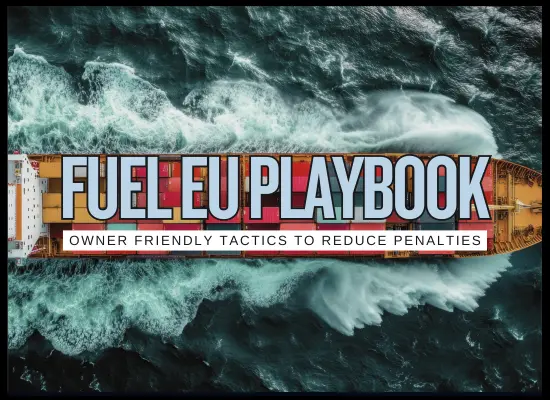
FuelEU 2025: The “€2,400/Ton” Penalty Trap and 7 Ways Shipowners Could Dodge It

🔔 Subscribe to ShipUniverse Weekly →

FuelEU Maritime starts putting real money on the line in 2025. The penalty math can snowball fast, especially if you’ve got energy-intensive routes, thin margins, or uncertain alternative-fuel access. Below are potential strategies shipowners could consider to reduce exposure. This is not legal, tax, or compliance advice; regulations, guidance, and port implementation evolve. Always validate against the latest texts, flag-state/class guidance, and your charterparty framework before acting.

1 Pooling to Offset Deficits Owner leverage
Share surplus across ships Internal or 3rd-party pools Audit-friendly records
If some calls run “cleaner” (OPS access, lower-CI bunkers), their surplus might help cover ships that run short, within an agreed pool, so less of the budget leans on the €2,400/ton penalty.

Where it tends to fit

  • Mixed fleets or trades, some calls can plug into OPS or lower-CI fuel, others can’t yet.
  • A season or two of uncertainty while alternative fuel supply ramps.
  • Willing partners (internal or external) with simple governance.

Quick check: does pooling look cheaper?

Result
Enter values and tap Calculate.

If exploring this route

A simple sketch might help: a one-page view of likely surplus/deficit by vessel for 2025, a short list of potential pool partners, and a note on who records what. Some owners also keep a quarterly re-forecast so surprises are rare.

Paper that often sits behind this

  • Basic data trail and audit rights; a short dispute/adjustment window.
  • Caps or limits so one ship doesn’t carry the entire pool.
  • Notes in the charterparty so costs/benefits follow operational control.
Watch-out: if OPS/fuel access slips or records are thin, a projected surplus can flip to a deficit fast. Pools depend on clear governance and creditworthiness.
2 OPS Calls That Quietly Flip You Toward Surplus Port-side lever
Shore power (OPS) Lower-at-berth CI Port-by-port readiness
Plugging into shore power at the right ports might lower voyage intensity without changing the main fuel plan. On some rotations, a handful of OPS calls can move the overall picture in a helpful direction.

Where it tends to fit

  • Regular calls at EU core ports where OPS is available and slots are predictable.
  • Long hotel loads at berth (reefers, pumps, HVAC) that make auxiliary fuel burn noticeable.
  • A near-term bridge while alternative fuel supply and procedures settle in.

How it could help

  • Less auxiliary fuel burned at berth; on some trades this nudges the voyage toward a surplus.
  • Predictable port stays make OPS planning easier than fuel-switch mid-voyage.

Quick check: electricity vs. auxiliaries at berth

Result
Enter values and tap Calculate.
Note: This is a simple operating-cost check (electricity vs. auxiliary fuel at berth). Compliance impacts can differ by port rules and accounting, treat any penalty/allowance effect separately.

If exploring this route

A short port map might help: which calls already have OPS sockets, typical wait times for connections, and any local booking or compatibility notes. Some owners also keep a one-pager for crew steps so the hook-up is routine.

Paper that often sits behind this

  • Simple SOP and safety note for connection/disconnection.
  • A line item for OPS fees in port-cost sheets; basic data log for audits.
  • Notes in charterparty schedules where OPS is expected/available.
Watch-out: plug-in timing, socket type, and grid availability can vary by port; it’s worth keeping expectations modest on first calls and tightening the routine over time.
3 Borrow/Bank to Smooth 2025–2026 Time-shift lever
Bank surplus into next year Borrow limited share from future Rule caps & audit trail
Some owners treat banking and borrowing as a gentle shock absorber, banking surplus from a “good” year into the next, or borrowing a limited slice from the future to cover a temporary shortfall. It’s less about perfect optimization and more about keeping the penalty line quiet while operations catch up.

Where it tends to fit

  • A clear view that next year’s rotations or fuel access might run cleaner than this year’s.
  • Temporary gaps (yard stays, unusual charters) that create one-off deficits.
  • Comfort with the program’s caps/conditions and a tidy documentation trail.

How it could help

  • Banking may carry surplus forward so fewer changes are needed mid-rotation.
  • Borrowing might cover a narrow gap now, repaid with next year’s improvements.

Quick check: on your inputs, which path looks lighter?

Result
Enter values and tap Calculate.
Note: Program caps/conditions apply; this is a simple cost view using your own assumptions for uplift and next-year cover cost.

If exploring this route

A simple tracker might help: expected surplus/deficit by vessel, any banking carried forward, and a small note on borrowing assumptions and limits. Some owners keep quarterly checkpoints so nothing drifts.

Paper that often sits behind this

  • Clear note of any banking carried forward and the audit trail behind it.
  • Borrowing assumptions (share, uplift, repayment window) kept in one place.
  • Cross-notes in charterparty schedules so expectations line up with operations.
Watch-out: program caps and conditions apply; borrowing shifts effort into next year, so it helps when there’s a realistic path to cleaner voyages or better access to OPS/alt fuel.
4 Targeted Bio-Blends on High-Impact Rotations Fuel-side lever
BXX blends Route-specific Documented CI
A small bio-blend on the right legs might lower the voyage intensity enough to soften or erase a deficit. The idea is selective use only where supply is steady, paperwork is clean, and the premium looks lighter than the penalty you’re trying to avoid.

Where it tends to fit

  • Ports with reliable bio supply and lab support; paperwork (proof of sustainability, CI values) is routine.
  • Rotations that sit just shy of a surplus where a modest CI nudge matters.
  • Crews comfortable with blending SOPs and standard fuel housekeeping checks.

How it could help

  • Selective B10–B30 on high-consumption legs might tip the average toward compliance without redesigning the whole fuel plan.
  • When pooling or banking gets you close, a small blend can finish the job.

Quick check: is the premium lighter than the penalty you expect to avoid?

Result
Enter values and tap Calculate.
Note: This is a simple spend vs. penalty proxy. Real compliance impact depends on certified CI values and methodology, treat this as a quick sense-check.

If exploring this route

A short matrix can help: ports with steady bio supply, typical lead times, CI paperwork, and any cold-flow/storage notes. Some owners also park a one-pager SOP for sampling and record-keeping.

Paper that often sits behind this

  • Proof of sustainability (e.g., ISCC) and certified CI values attached to bunkering docs.
  • Simple sampling/retention note and lab plan when blending.
  • Cross-references in the charterparty on where and when blends may be used.
Watch-out: storage/cold-flow behavior and filter management matter; documentation gaps can erase the intended compliance effect even if the fuel itself performs well.
5 Voyage Tweaks That Nudge Intensity Without Hitting TCE Ops-side lever
Speed and timing Weather routing Berth readiness
Small schedule choices can soften voyage intensity. A little speed trim when the berth is not ready, a weather route that avoids heavy head seas, or a smoother handoff at anchor. None of this needs a big redesign, it is more about alignment.

Where it tends to fit

  • Ports that confirm berth windows early, so arrival speed can match reality.
  • Trades with frequent head seas or currents where routing has clear choices.
  • Vessels with reliable noon data and quick feedback loops to the bridge.

How it could help

  • Less fuel for the same ETA when the berth is not ready, which lowers intensity.
  • Routing that avoids heavy weather reduces added resistance and fuel burn.

Quick check: small speed trim vs time cost

Result
Enter values and tap Calculate.
Note: This is a simple trade off calculator. It assumes consumption is proportional to speed raised to the exponent you choose, and compares fuel savings to the value of time added.

If exploring this route

A simple dashboard can help. Berth readiness signals, weather constraints, and a note on the next best ETA. Short feedback loops make this feel routine, not a special project.

Paper that often sits behind this

  • Quick SOP for speed trim and arrival alignment with port updates.
  • Routing note that lists common heavy weather sections and alternatives.
  • Charterparty pointer so expectations on ETA flexibility are clear.
Watch-out: if the berth is firm and time is valuable, trimming speed can backfire. The quick check above is a guide, actual curves and schedules decide.
6 Hull and Propeller Care That Holds the Line on Intensity Upkeep lever
Biofouling plan Underwater clean and polish Speed loss control
Light fouling can add drag that pushes fuel up and intensity with it. A tidy cadence for hull cleaning and propeller polish keeps the baseline steady. This works best when cleaning is planned with port rules in mind and evidence is easy to show.

Where it tends to fit

  • Warm trades or long idle periods where slime and light growth build quickly.
  • Ports that allow cleaning with capture or have approved service providers.
  • Vessels that show rising shaft power for the same speed over a few voyages.

How it could help

  • Lower fuel for the same schedule which softens voyage intensity.
  • Cleaner performance trends that make pooling and banking forecasts steadier.

Quick check: does a clean and polish pay on these inputs

Result
Enter values and tap Calculate.

If exploring this route

A short log can help. Days since last clean, speed loss against a fair weather lane, and a note on port rules for capture. With that, timing choices feel simple.

Paper that often sits behind this

  • Biofouling management plan and a simple performance note per voyage.
  • Port specific cleaning permissions or capture requirements kept on file.
  • Supplier certificates for polishing heads and recovery systems where needed.
Watch-out: local rules vary and some ports need capture systems. Plan the job where approvals and gear are known so the day goes smoothly.
7 Charterparty Alignment So Costs Follow Control Contract lever
Costs track operational decisions Clear data trail Surrender timing signposts
A short clause set can make FuelEU costs land with the party that gives the orders that drive those costs. The aim is simple expectations on data, timing, and what happens if a voyage pattern changes.

Where it tends to fit

  • Time charters where routing, speed, and port choices sit with the charterer.
  • Voyage charters that touch EU ports or spend time at berth in EU waters.
  • Fleets that plan to pool, bank, borrow, or use OPS on selected calls.

How it could help

  • Reduces arguments about who pays when a route or port choice moves intensity.
  • Gives a calm timetable for funding or settlement linked to reporting milestones.

Clause ingredients that often help

  • Scope note for EU related legs and at berth time, so the math follows the trade.
  • Data sources and audit rights with a short correction window if inputs change.
  • Notes on pooling or banking where relevant, so benefits and responsibilities are clear.
  • Calendar cues for interim invoices and the final settlement against reports.

If exploring this route

A brief rider can travel with fixtures. One page that sets scope, data rules, and timing, plus a note that the parties will cooperate on OPS, pooling, and banking where it is practical.
Watch-out: if the trade pattern changes or a port adds a new rule, the rider may need a quick update. A small review window keeps things current.

FuelEU will keep evolving, so a calm plan helps. Start where the effort is small and the record keeping is easy. Pool if it narrows a gap, plug in where sockets are ready, bank or borrow with clean notes, and use blends or timing only where they pull their weight. Simple steps add up when they are repeatable and well documented.

We welcome your feedback, suggestions, corrections, and ideas for enhancements. Please click here to get in touch.
By the ShipUniverse Editorial Team — About Us | Contact


← Browse more ShipUniverse posts
MARITIME DECISION TOOLS

Practical tools for real vessel and commercial decisions

Browse the latest 24 tools or instantly search every published ShipUniverse maritime tool.

24 latest toolsView all 286 →
TOOL

Port Waste Reception, MARPOL Delivery Notice, Disposal Logistics & Charge Verification Tool

🔔 Subscribe to ShipUniverse Weekly → Port Operations · MARPOL Waste…

Open →
TOOL

Maritime Crew Recruitment, Retention, Manning Agency Fees & Attrition Cost Tool

🔔 Subscribe to ShipUniverse Weekly → ShipUniverse · Fleet Crewing Economics…

Open →
TOOL

Container Rail Intermodal Connection, Terminal Dwell & Train Slot Tool

🔔 Subscribe to ShipUniverse Weekly → Ship-to-Rail · Intermodal Terminal ·…

Open →
TOOL

Bulk Grain Cargo Quality, Fumigation, Hold Readiness & Rejection Exposure Tool

🔔 Subscribe to ShipUniverse Weekly → Cargo quality · Hold inspection…

Open →
TOOL

Marine Equipment OEM Warranty, Service SLA & Repair Claim Tool

🔔 Subscribe to ShipUniverse Weekly → Equipment Reliability · OEM Claims…

Open →
TOOL

Freight Forwarder Shipment Quotation, Buy/Sell Rates, Routing & Margin Tool

🔔 Subscribe to ShipUniverse Weekly → Freight forwarding · NVOCC pricing…

Open →
TOOL

Ro-Ro Vehicle Terminal Yard Capacity, PDI & Vessel Loading Flow Tool

🔔 Subscribe to ShipUniverse Weekly → Vehicle terminals · PCTC &…

Open →
TOOL

Marine Hull & P&I Renewal, Premium Quote, Deductible & Coverage Comparison Tool

🔔 Subscribe to ShipUniverse Weekly → Marine Insurance · Renewal Tender…

Open →
TOOL

Offshore Support Vessel Charter Bid, Utilization & Campaign Profitability Tool

🔔 Subscribe to ShipUniverse Weekly → Offshore commercial operations · PSV…

Open →
TOOL

Marine Repair Tender, Shipyard Bid Comparison & Contract Cost Risk Tool

🔔 Subscribe to ShipUniverse Weekly → Ship Repair Procurement · Yard…

Open →
TOOL

Container Transshipment, Missed Connection, Rollover & Recovery Cost Tool

🔔 Subscribe to ShipUniverse Weekly → Container Liner Networks · Feeder-to-Mother…

Open →
TOOL

Vessel Pre-Purchase Technical Survey, Defect Valuation & Acquisition CAPEX Tool

🔔 Subscribe to ShipUniverse Weekly → Vessel S&P · Technical Due…

Open →
TOOL

Contract of Affreightment, Cargo Nomination, Fleet Allocation & Fulfilment Risk Tool

🔔 Subscribe to ShipUniverse Weekly → Dry Bulk Contracts · Cargo…

Open →
TOOL

Port Pilotage, Tug Dispatch, Berth Window & Marine Services Coordination Tool

🔔 Subscribe to ShipUniverse Weekly → Harbor Operations · Pilotage ·…

Open →
TOOL

Offshore Heavy Lift, Crane Spread, Weather Window & Installation Cost Tool

🔔 Subscribe to ShipUniverse Weekly → Offshore Construction · Heavy Lifts…

Open →
TOOL

Cruise Embarkation, Terminal Security, Gangway Queue & Passenger Processing Tool

🔔 Subscribe to ShipUniverse Weekly → Cruise Operations · Terminal Security…

Open →
TOOL

Dangerous Goods Declaration, Booking Acceptance & Documentation Readiness Tool

🔔 Subscribe to ShipUniverse Weekly → IMDG Documentation · Dangerous Goods…

Open →
TOOL

Marine Salvage, Wreck Removal, Pollution Response & Casualty Cost Tool

🔔 Subscribe to ShipUniverse Weekly → Marine Casualty · Emergency Salvage…

Open →
TOOL

Ferry Route Capacity, Timetable Reliability & Passenger Revenue Tool

🔔 Subscribe to ShipUniverse Weekly → Ferry Networks · Route Planning…

Open →
TOOL

Inland Barge Tow, Lock Delay, Fleet Utilization & Voyage Profitability Tool

🔔 Subscribe to ShipUniverse Weekly → Inland Navigation • Towboat Economics…

Open →
TOOL

Marine Bunker Procurement, Supplier Quote Comparison & Delivered Fuel Cost Tool

🔔 Subscribe to ShipUniverse Weekly → Bunker Procurement • Fuel Grades…

Open →
TOOL

Reefer Cargo Temperature Excursion, Cold Chain & Cargo Claim Exposure Tool

🔔 Subscribe to ShipUniverse Weekly → Reefer Cargo • Temperature Evidence…

Open →
TOOL

Electronic Bill of Lading, Cargo Release & Documentation Discrepancy Tool

🔔 Subscribe to ShipUniverse Weekly → Container Shipping • Digital Trade…

Open →
TOOL

Crew Change, Relief Logistics, Port Coordination & Cost Tool

🔔 Subscribe to ShipUniverse Weekly → Fleet Crewing • Seafarer Repatriation…

Open →