
SHIPUNIVERSE
Maritime Intelligence, Tools & Live Industry Radars

One place for live maritime intelligence, practical decision tools, industry events and focused reporting.

17Live Radars 286Maritime Tools
24/7Intelligence Focus
GlobalIndustry Coverage
RADARS
TOOLS
All Tools
Latest 20
Open to load latest items…
NEWS
All News
Latest 20
Open to load latest items…
REPORTS
All Reports
Latest 20
Open to load latest items…
TECH
All Tech
Latest 20
Open to load latest items…
CRUISE
All Cruise
Latest 20
Open to load latest items…
NAVAL
All Naval
Latest 20
Open to load latest items…
SHIPUNIVERSE REPORTING

Reports, news and industry coverage

Full analysis in the ShipUniverse intelligence layout.

← Back to latest posts ShipUniverse / NEWS

Exchange Of Fire Off Yemen Puts Bab el Mandeb Back In The Spotlight

🔔 Subscribe to ShipUniverse Weekly →

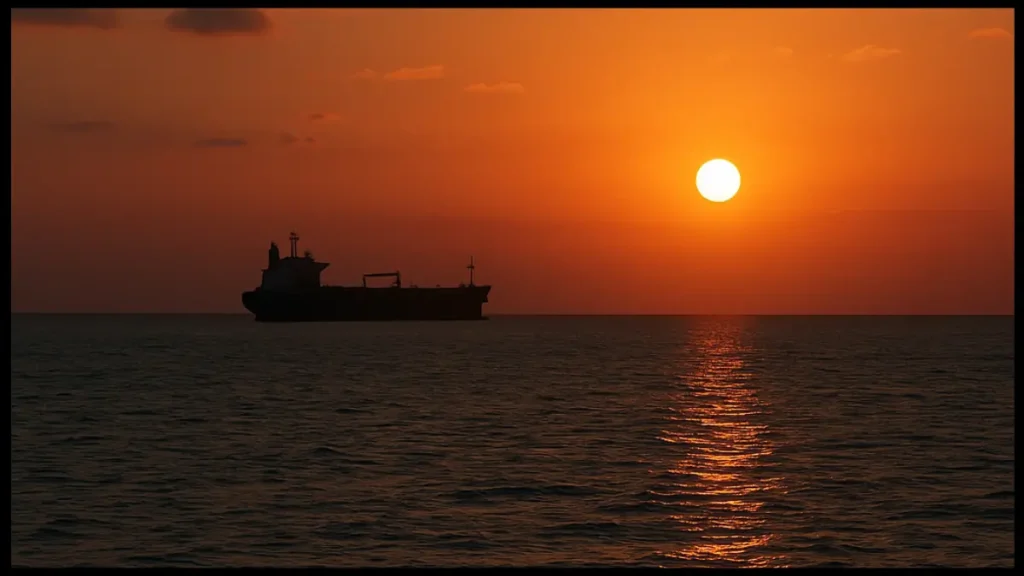
A bulk carrier transiting close to the Bab el Mandeb has reported an exchange of fire with around fifteen small boats about 15 nautical miles west of Yemen. According to UKMTO and security sources, the small craft closed to within 1 to 2 cables, fired on the ship, and withdrew after the onboard security team returned fire. The crew is reported safe and the vessel is continuing its voyage, but the incident underlines that piracy style attacks have not disappeared from this corridor even as Houthi missile and drone activity has eased under the current ceasefire.

Click here for 30 second summary

Bab el Mandeb incident in 30 seconds

A merchant ship about 15 nautical miles west of Yemen reported being approached by roughly fifteen small boats and coming under fire. The onboard security team returned fire, the attackers broke off, and the ship and crew remained safe. The incident sits on a critical lane linking Asia and Europe, where containers, crude, products and bulk cargo all funnel through the same narrow gate.

  • Risk signal: Confirms that small-boat, close-range attacks still occur alongside the missile and drone threats the region has faced in recent years.
  • Operational impact: Puts renewed focus on guards, hardening, watchkeeping and routing choices, with more scrutiny from charterers and insurers on how transits are planned and documented.
  • Cost and routing: War-risk premia and security costs are likely to stay elevated, and any move toward convoys, delays or diversions will translate quickly into higher voyage cost and schedule pressure.
Bottom line: traffic through Bab el Mandeb continues, but this incident shows that security risk in the corridor is active and layered, and that protection, documentation and pricing for these passages cannot be treated as a formality.
Exchange of Fire 15 miles off Yemen: live security test for Bab el Mandeb traffic
Item Summary Business mechanics Bottom line effect
Incident outline UKMTO reports a merchant vessel about 15 nautical miles west of Yemen sighted roughly fifteen small craft at a range of 1 to 2 cables and came under fire. Security sources identify the ship as a bulk carrier in the Bab el Mandeb approach. The small boats disengaged after an exchange of fire and the crew is reported safe. The event fits a pattern of small boat attacks where fast craft probe or harass passing ships and pull back once they meet armed resistance. Even without damage, each alert forces masters, security teams and insurers to reassess how they read risk levels in this corridor. 📉 Extra days at anchor raise costs for owner and charterer if ships slow, stage convoys or wait for daylight transits after similar alerts. 📈 Sends a clear signal that documentation for routing and security planning will be tested in practice, not just on paper.
Nature of threat Officials and private security firms describe the assailants as suspected pirates rather than state linked forces, with no missiles or drones reported in this case and no claim of responsibility from armed groups. The focus was on closing with the ship using multiple small boats and opening fire with light weapons. That profile keeps the risk closer to classic piracy or armed robbery patterns, but it comes on top of a two year period of Houthi strikes and other incidents. For operators and insurers, it means the area carries layered risk from both state and non state actors, so threat screens and advisories cannot be relaxed. 📉 Extra days at anchor raise costs for owner and charterer when vessels wait for updated threat assessments or naval escorts. 📈 Sends a clear signal that documentation on security teams, citadels and drills matters when justifying cover and routing choices.
Location and corridor The position fifteen miles west of Yemen lies close to the Bab el Mandeb Strait, the gate between the Red Sea and Gulf of Aden that carries a material share of Asia to Europe container, crude and product flows alongside bulk cargo. This is a genuine bottleneck. Any shift from straight transits to wider routing, speed changes, convoys or daylight only passages cascades into schedule changes on Europe to Asia loops, refinery runs and commodity chains which are already coping with earlier disruptions in the Red Sea and Gulf of Aden. 📉 Extra days at anchor raise costs for owner and charterer when strings are replanned or alternative routes considered. 📈 Sends a clear signal that documented chokepoint risk mapping and mitigation will be scrutinised by customers, lenders and underwriters.
Armed teams and BMP in real use Security reporting indicates the onboard armed team returned fire and helped deter the small craft, with no crew injuries. This follows earlier 2025 cases where embarked guards also played an active role once small boats opened fire. The incident validates cost lines that some charterers question during quiet periods, such as armed guards, additional watchkeeping, hardening measures and time spent on drills. It also feeds back into best management practice revisions and port state discussions around weapons, licensing and reporting obligations. 📉 Extra days at anchor raise costs for owner and charterer if security team changes or port checks are needed more often. 📈 Sends a clear signal that documentation on guard contracts, training and incident logs will be tested in practice, not just during audits.
War risk and insurance pricing Underwriters were already charging higher war risk rates for parts of the Red Sea and Yemen approaches due to previous missile and drone activity. Fresh small boat attacks give brokers and insurers more data points to justify maintaining or increasing those premia for vessels transiting the high risk grid. Even if the overall risk score in the area does not change overnight, each new event supports a cautious stance on pricing and wording. Owners that can demonstrate careful routing, strong security procedures and clean incident histories are best placed to negotiate, while weaker documentation limits flexibility. 📉 Extra days at anchor raise costs for owner and charterer as higher war risk and security surcharges stack on top of ordinary voyage expenses. 📈 Sends a clear signal that documentation for risk controls and prior passages can unlock better terms in a stressed rating environment.
Routing and diversion costs For now, reporting indicates the attacked ship continued on its planned route after the small craft departed, but owners and charterers watching the case will revisit their risk matrices for Bab el Mandeb and nearby waypoints, especially for lightly crewed or less protected ships. The immediate options are to keep routing through Bab el Mandeb with tighter controls, to adjust timing and convoy use, or in extreme cases to divert around the Cape on selected strings. Each step up the ladder increases sailing days, bunker cost and capacity tied up, which is why small changes in perceived risk can have large cost effects. 📉 Extra days at anchor raise costs for owner and charterer once rerouting or speed changes are priced in. 📈 Sends a clear signal that documentation of diversion triggers and route planning assumptions will be examined if costs rise or delays accumulate.
Wider 2025 pattern This incident follows a string of 2025 attacks and near misses off Yemen and in the southern Red Sea, ranging from missile and drone strikes on tankers to earlier small boat engagements where armed guards returned fire and fires broke out on board. For operators, the message is that risk has shifted rather than disappeared. Periods with fewer state linked attacks can be followed by increases in criminal activity or opportunistic piracy, so security planning and incident reporting need to cover more than a single threat type. 📉 Extra days at anchor raise costs for owner and charterer if fleets are forced to live with a chronic security cost line in the region. 📈 Sends a clear signal that documentation tracking all categories of incident and response is essential for board level risk and capital allocation decisions.
Notes: Details summarised here draw on UKMTO advisories and multiple press and security reports dated December 5, 2025. Positions, vessel type and threat characterisation are subject to later update as investigations continue. Cost and routing implications vary by ship type, cargo, insurance terms and fleet security posture.

Bab el Mandeb after the latest small boat attack

An exchange of fire between a merchant ship and multiple small craft near Yemen brings attention back to how fragile a critical lane can feel when even one voyage turns into a live incident. The flow of ships continues, but every operator now has a fresh reference point for how close risk can come.

High value corridor
Security tested in real time
Corridor role

Asia Europe link in one narrow gate

Bab el Mandeb is on the main line between the Indian Ocean and Suez. Container strings, crude, products and bulk flows share the same funnel, so any rise in risk affects several trades at once, not just one niche segment.

Type of incident

Small craft, short range fire

The latest report describes a cluster of fast boats closing to short range and opening fire with light weapons, then pulling away once onboard security responded. This is closer to piracy and armed robbery patterns than to missile activity.

Operational signal

Security plans are live tools

Watchkeeping, drills, guards and reporting are not abstract compliance exercises in this zone. They form the difference between a successful deterrent and an incident that leaves a ship damaged or crew injured.

How operators are likely to rate current risk

Paper risk only Heightened operational risk with real incidents Route only in exceptional cases

Shipowners

Balancing earnings, security cost and liability.

  • Need to evidence that transits follow recognised guidance, have hardening in place and use trained guards where justified by risk.
  • Weigh up whether day rates on certain trades compensate for higher war risk premia, security spend and potential schedule disruption.

Charterers and cargo owners

Route choice and contract wording under the microscope.

  • Revisit deviation, war risk and waiting time clauses to see who pays if a transit is delayed or diverted after new incidents.
  • May ask for proof of security planning and reporting as part of vetting, especially on regular shuttle trades through the area.

Insurers and financiers

Pricing persistent chokepoint risk.

  • Use fresh incidents when adjusting war risk levels and policy wording, particularly for lightly protected voyages.
  • Give better terms to fleets that can show a consistent record of routing discipline, training and incident free transits.

Constructive side effects in a difficult setting

Not good news, but it forces practical improvements.

  • Pushes some operators to close gaps in watchkeeping, citadel arrangements, drills and security team management.
  • Encourages clearer dialogue with charterers on what is in place before a transit, which can reduce disputes later.
  • Supports investment cases for better tracking, alert systems and training across fleets that use high risk corridors regularly.

Persistent negatives for cost and complexity

Risk does not stay on a slide, it shows up on invoices.

  • Higher war risk premia, security fees and possible delays add to voyage cost for ships that still need this route.
  • Crews face higher stress when transiting areas where recent incidents show that small craft can and do open fire.
  • Network planners have to keep contingency routing and extra time in schedules, which reduces overall system efficiency.

How this could play out over the next few months

Scenario 1 Isolated case with stronger escorts If this attack is followed by a quiet period and visible naval presence, traffic patterns stay largely the same, but security spending and war risk premia remain higher than before recent Red Sea troubles.
Scenario 2 Cluster of small boat incidents A run of similar events would prompt more owners to insist on armed teams and perhaps stricter limits for certain ship types, while charterers press for clarity on who pays for extra measures and delays.
Scenario 3 Link to wider regional tension If attacks start to overlap with state linked action again, some services may partly re-route around the Cape, which increases sailing days and cost but reduces exposure to a narrow chokepoint.

The exchange of fire off Yemen adds another recent case to a corridor that remains central to Asia–Europe trade and regional energy flows. Naval patrols, insurers and route planners are already factoring the incident into their assessment of Bab el Mandeb, but traffic continues with tighter attention on security posture and documentation. How many similar reports follow in the coming weeks will shape whether this is treated as an isolated flare-up or the start of a more persistent uptick in small-boat attacks in the area.

We welcome your feedback, suggestions, corrections, and ideas for enhancements. Please click here to get in touch.
By the ShipUniverse Editorial Team — About Us | Contact


← Browse more ShipUniverse posts
MARITIME DECISION TOOLS

Practical tools for real vessel and commercial decisions

Browse the latest 24 tools or instantly search every published ShipUniverse maritime tool.

24 latest toolsView all 286 →
TOOL

Port Waste Reception, MARPOL Delivery Notice, Disposal Logistics & Charge Verification Tool

🔔 Subscribe to ShipUniverse Weekly → Port Operations · MARPOL Waste…

Open →
TOOL

Maritime Crew Recruitment, Retention, Manning Agency Fees & Attrition Cost Tool

🔔 Subscribe to ShipUniverse Weekly → ShipUniverse · Fleet Crewing Economics…

Open →
TOOL

Container Rail Intermodal Connection, Terminal Dwell & Train Slot Tool

🔔 Subscribe to ShipUniverse Weekly → Ship-to-Rail · Intermodal Terminal ·…

Open →
TOOL

Bulk Grain Cargo Quality, Fumigation, Hold Readiness & Rejection Exposure Tool

🔔 Subscribe to ShipUniverse Weekly → Cargo quality · Hold inspection…

Open →
TOOL

Marine Equipment OEM Warranty, Service SLA & Repair Claim Tool

🔔 Subscribe to ShipUniverse Weekly → Equipment Reliability · OEM Claims…

Open →
TOOL

Freight Forwarder Shipment Quotation, Buy/Sell Rates, Routing & Margin Tool

🔔 Subscribe to ShipUniverse Weekly → Freight forwarding · NVOCC pricing…

Open →
TOOL

Ro-Ro Vehicle Terminal Yard Capacity, PDI & Vessel Loading Flow Tool

🔔 Subscribe to ShipUniverse Weekly → Vehicle terminals · PCTC &…

Open →
TOOL

Marine Hull & P&I Renewal, Premium Quote, Deductible & Coverage Comparison Tool

🔔 Subscribe to ShipUniverse Weekly → Marine Insurance · Renewal Tender…

Open →
TOOL

Offshore Support Vessel Charter Bid, Utilization & Campaign Profitability Tool

🔔 Subscribe to ShipUniverse Weekly → Offshore commercial operations · PSV…

Open →
TOOL

Marine Repair Tender, Shipyard Bid Comparison & Contract Cost Risk Tool

🔔 Subscribe to ShipUniverse Weekly → Ship Repair Procurement · Yard…

Open →
TOOL

Container Transshipment, Missed Connection, Rollover & Recovery Cost Tool

🔔 Subscribe to ShipUniverse Weekly → Container Liner Networks · Feeder-to-Mother…

Open →
TOOL

Vessel Pre-Purchase Technical Survey, Defect Valuation & Acquisition CAPEX Tool

🔔 Subscribe to ShipUniverse Weekly → Vessel S&P · Technical Due…

Open →
TOOL

Contract of Affreightment, Cargo Nomination, Fleet Allocation & Fulfilment Risk Tool

🔔 Subscribe to ShipUniverse Weekly → Dry Bulk Contracts · Cargo…

Open →
TOOL

Port Pilotage, Tug Dispatch, Berth Window & Marine Services Coordination Tool

🔔 Subscribe to ShipUniverse Weekly → Harbor Operations · Pilotage ·…

Open →
TOOL

Offshore Heavy Lift, Crane Spread, Weather Window & Installation Cost Tool

🔔 Subscribe to ShipUniverse Weekly → Offshore Construction · Heavy Lifts…

Open →
TOOL

Cruise Embarkation, Terminal Security, Gangway Queue & Passenger Processing Tool

🔔 Subscribe to ShipUniverse Weekly → Cruise Operations · Terminal Security…

Open →
TOOL

Dangerous Goods Declaration, Booking Acceptance & Documentation Readiness Tool

🔔 Subscribe to ShipUniverse Weekly → IMDG Documentation · Dangerous Goods…

Open →
TOOL

Marine Salvage, Wreck Removal, Pollution Response & Casualty Cost Tool

🔔 Subscribe to ShipUniverse Weekly → Marine Casualty · Emergency Salvage…

Open →
TOOL

Ferry Route Capacity, Timetable Reliability & Passenger Revenue Tool

🔔 Subscribe to ShipUniverse Weekly → Ferry Networks · Route Planning…

Open →
TOOL

Inland Barge Tow, Lock Delay, Fleet Utilization & Voyage Profitability Tool

🔔 Subscribe to ShipUniverse Weekly → Inland Navigation • Towboat Economics…

Open →
TOOL

Marine Bunker Procurement, Supplier Quote Comparison & Delivered Fuel Cost Tool

🔔 Subscribe to ShipUniverse Weekly → Bunker Procurement • Fuel Grades…

Open →
TOOL

Reefer Cargo Temperature Excursion, Cold Chain & Cargo Claim Exposure Tool

🔔 Subscribe to ShipUniverse Weekly → Reefer Cargo • Temperature Evidence…

Open →
TOOL

Electronic Bill of Lading, Cargo Release & Documentation Discrepancy Tool

🔔 Subscribe to ShipUniverse Weekly → Container Shipping • Digital Trade…

Open →
TOOL

Crew Change, Relief Logistics, Port Coordination & Cost Tool

🔔 Subscribe to ShipUniverse Weekly → Fleet Crewing • Seafarer Repatriation…

Open →