
SHIPUNIVERSE
Maritime Intelligence, Tools & Live Industry Radars

One place for live maritime intelligence, practical decision tools, industry events and focused reporting.

17Live Radars 300Maritime Tools
24/7Intelligence Focus
GlobalIndustry Coverage
RADARS
TOOLS
All Tools
Latest 20
Open to load latest items…
NEWS
All News
Latest 20
Open to load latest items…
REPORTS
All Reports
Latest 20
Open to load latest items…
TECH
All Tech
Latest 20
Open to load latest items…
CRUISE
All Cruise
Latest 20
Open to load latest items…
NAVAL
All Naval
Latest 20
Open to load latest items…
SHIPUNIVERSE REPORTING

Reports, news and industry coverage

Full analysis in the ShipUniverse intelligence layout.

← Back to latest posts ShipUniverse / NEWS

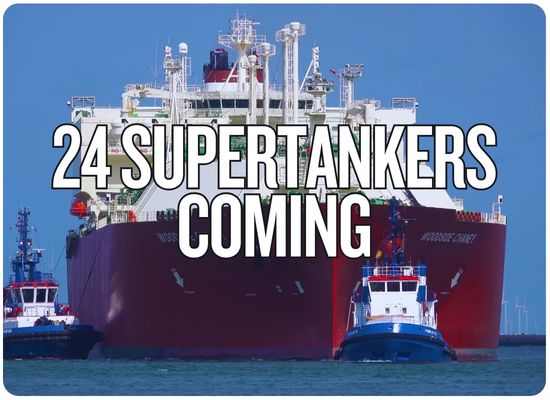
COSCO Bets on 24 New Supertankers as the Global VLCC Orderbook Swells to 38% of Today’s Fleet

🔔 Subscribe to ShipUniverse Weekly →

COSCO Shipping Energy Transportation disclosed a major crude-tanker fleet expansion on November 9, 2026, covering 10 newly contracted VLCCs and plans to bareboat-charter another 14 newbuildings. Its Hainan subsidiary signed contracts for six ships at Yangzhou COSCO Shipping Heavy Industry and four at Dalian Shipbuilding Industry, with combined shipbuilding prices of approximately $1.42 billion. The separate 14-ship charter program involves six Chinese financial leasing companies and maximum aggregate rental commitments of approximately $2.6 billion over terms of up to 20 years. The directly ordered tankers are scheduled for delivery from 2029 into 2030, while the chartered vessels are expected during 2030. The Yangzhou contract and the 14-vessel leasing arrangement remain subject to shareholder approval.

ShipUniverse | Tanker Investment Intelligence | November 9, 2026

24 VLCCs. Two Financing Models. One 2030 Delivery Wave.

COSCO Shipping Energy has ordered ten supertankers and announced plans to operate fourteen more through long-term bareboat charters with Chinese financial institutions.

24Total VLCCs in the announced program
$1.42BApproximate ten-ship contract value
$2.6BMaximum multiyear charter payments
2029–30Scheduled newbuilding deliveries

The fleet acquisition structure

10 VLCCsDirectly ordered newbuildings
Yangzhou COSCO yard6 ships
Dalian Shipbuilding4 ships
Average contract price~$142M each
Propulsion provisionsAll 10 fuel-ready
Commercial structureDirect shipbuilding investment
14 VLCCsProposed long-term bareboat charters
Bank of Communications / ICBC leasing7 ships
ABC / BOC leasing4 ships
CITIC / Minsheng leasing3 ships
LNG dual-fuel / conventional10 / 4
Charter termsUp to 20 years
Commercial structureFixed-rent bareboat charters
Direct investment, including capitalized project costs RMB 9.572B

Ten ordered ships. The lower RMB 9.482B figure is the total shipbuilding contract price.

Maximum charter hire over contract life RMB 17.4B

Fourteen planned charters. Payments accrue over future contract periods and are not immediate shipyard capital spending.

When the additional capacity arrives

August 2029

First scheduled Yangzhou vessel deliveries begin.

September 2029

Dalian's four-vessel delivery window begins, finishing by May 2030.

Throughout 2030

Fourteen chartered VLCCs expected to enter service; Yangzhou's final deliveries run to November.

Approval is not identical for every ship: Dalian's four-ship agreement has board approval. The related-party Yangzhou contract and the fourteen-vessel bareboat plan still require shareholder approval. Delivery dates are scheduled, not guaranteed.

Sources: COSCO Shipping Energy filings 2026-075, 2026-076, 2026-077 and November 9 board resolution. USD values approximate; RMB amounts from company filings.

ShipUniverse | 10-Point Strategic Tanker Report

Ten Forces Behind COSCO's 24-VLCC Gamble

Why the same investment that expands Chinese crude-carrying capacity could also magnify shipyard congestion, charter obligations and future freight-rate pressure.

~7.2M dwtIllustrative carrying capacity at 300,000 dwt per vessel
~48M bblIllustrative total cargo across 24 fully laden VLCCs, at 2M barrels each
38%VLCC newbuilding orderbook versus existing fleet, Veson September 2026

Explore the 10 commercial consequences

01Twenty-four ships represent an enormous cargo networkPotential scale: 48 million barrels

At an illustrative two million barrels per loaded VLCC, the planned fleet would hold approximately 48 million barrels in one fully laden cycle. That is a cargo-capacity comparison, not an annual oil-export forecast.

Industry effect: Large fleets allow cargo commitments and vessel positioning to be coordinated across many loading locations, but utilization depends on actual trade demand.

02Twenty twenty-nine and 2030 become critical delivery yearsA concentrated delivery window

Six Yangzhou vessels are scheduled between August 2029 and November 2030; four Dalian units between September 2029 and May 2030; and all 14 planned charters during 2030.

Industry effect: The timing of deliveries, drydock retirements and global oil demand will determine whether this new capacity replaces older tankers or adds net supply.

03The global VLCC orderbook is already unusually large38% of the existing fleet

Veson reported a 38% VLCC orderbook-to-fleet ratio in September 2026, up from 15% in September 2025. These figures precede COSCO's November announcement and should not be described as a newly recalculated ratio.

Industry effect: If trade growth and scrapping lag the deliveries, greater vessel availability could weaken freight earnings.

04Direct ownership and bareboat chartering create different risks10 owned-order ships versus 14 leased ships

COSCO's directly contracted hulls create a shipbuilding investment and future ownership exposure. Bareboat-chartered ships allow operating control without the same initial purchase outlay, while leaving substantial fixed hire obligations.

Industry effect: The two structures respond differently to vessel residual values, debt arrangements and periods of weak freight rates.

05The $2.6 billion charter ceiling creates a long financial tailUp to 20 years of fixed hire

RMB 17.4 billion is the maximum aggregate payment across the proposed leases, not their construction price or an upfront cash requirement. The actual per-day hire cannot be established from the total alone without final terms and payment schedules.

Industry effect: COSCO reduces immediate asset-purchase needs but accepts fixed contractual obligations during future freight cycles.

06Dual-fuel readiness is not the same as dual-fuel operation10 dual-fuel, 10 ready, 4 conventional

The 14 planned charter vessels include ten LNG dual-fuel ships and four conventionally powered ships. The ten directly ordered ships feature LNG-ready or LNG/methanol dual-fuel-ready arrangements.

Industry effect: Fuel-system maturity, future conversion costs, bunker availability and emissions regulation will affect operating competitiveness.

07Chinese yards and financial lessors capture the contractsTwo builders and six leasing institutions

All ten directly ordered ships are assigned to domestic yards. COSCO's Yangzhou shipbuilder is a related party, requiring additional shareholder approval; Dalian's four-ship contract does not require that vote.

Industry effect: A concentrated Chinese industrial supply chain may simplify coordination but makes yard schedules, financing approvals and related-party governance important execution variables.

08Old supertankers can currently be worth more than new onesAn extraordinary vessel-valuation inversion

Veson recorded a 15-year-old, 310,000-dwt VLCC valuation of $139.2 million against $138.7 million for a comparable newbuilding at the end of September. The premium reflects the immediate earnings opportunity available from existing vessels.

Industry effect: Ordering for later delivery avoids some present secondhand premiums, but earnings by 2030 may look very different.

09Tanker supply growth extends beyond COSCO23% overall fleet-capacity growth projected

S&P Global Energy CERA projected total tanker capacity increasing from 703.72 million dwt at year-end 2025 to 862.98 million dwt in 2029, after taking orders and scrapping into account.

Industry effect: That is a forecast for the entire tanker fleet, not just VLCCs. Global utilization will depend on demand, vessel speed, sanctions, aging fleets and voyage distances.

10Oil trade routes may change before these ships arriveToday's earnings are not 2030 earnings

Gulf security disruption and longer Atlantic Basin-to-Asia crude voyages have increased demand for tanker capacity in 2026. A return to shorter routes, changes in Middle Eastern exports, or a recovery of previously constrained vessels could alter future ton-mile demand.

Industry effect: Vessel value and freight-rate forecasts require route scenarios, not merely assumptions that today's strong rates will persist.

How fast the industry orderbook expanded

September 202515% of trading fleet
September 202638% of trading fleet

Both percentages are Veson Nautical's dated VLCC fleet-orderbook observations, shown on a 0–40% visual scale. Newbuilding orders do not become immediate operating capacity.

Additional filing requires caution: COSCO's November 9 board resolution also mentions a separate 16-VLCC long-term leasing and financing proposal. The public description does not establish whether those 16 hulls overlap the disclosed fleet program. They should not be added to the 24 to claim a confirmed 40-ship expansion.

Sources: COSCO Shipping Energy November 9 filings; Veson Nautical September and October 2026 market analysis; S&P Global Energy CERA, November 3, 2026. Capacity illustrations use assumed standard VLCC sizes.

ShipUniverse | Interactive VLCC Fleet Economics Tool

Will 24 New Supertankers Make Money in 2030?

Model owned-versus-bareboat tanker earnings, daily break-even rates and fleet operating contribution under different freight markets.

Fleet & earnings assumptions

Illustrative daily earnings net of voyage costs
Excludes the assumed off-hire days
Illustrative, not a disclosed charter rate
Owned-ship capital recovery
Annual fleet operating contribution $263.8M

After entered vessel operating costs and bareboat hire, before owned-ship financing, tax, central overhead and capital recovery.

$164.2MAnnual owned-fleet contribution
$99.6MAnnual bareboat-fleet contribution
$129.8MAssumed annual bareboat hire
$169.1MContribution after simple owned-capital recovery allowance
$43,271Owned VLCC TCE/day covering OPEX plus simple capital recovery
$42,659Bareboat VLCC TCE/day covering OPEX plus hire

Daily earnings versus break-even thresholds

Selected daily TCE
Owned full-cost screen
Bareboat cash break-even
Calculation: Annual TCE receipts = ships × earning days × TCE/day. Vessel operating costs are charged for 365 days per ship. Bareboat hire is charged for 365 days per chartered ship. Owned-capital recovery is purchase price divided evenly by selected years, with no interest or residual value. Break-even TCE divides annual cost obligations by assumed earning days.
Important limitations: This is an illustrative steady-state fleet screen, not COSCO's budget or 2030 earnings forecast. It assumes all entered vessels have been delivered and earn the same rate. It excludes construction timing, financing interest, debt service, residual values, tax, ship-management overhead, drydock capital expenditure, fuel premiums, off-hire disputes and accounting differences between lease expense and reported earnings. The $25,400 daily charter input is illustrative rather than a published lease rate.

Factual fleet counts and ship contract prices: COSCO Shipping Energy November 9 filings. All earnings, OPEX, bareboat daily hire and recovery assumptions are adjustable ShipUniverse scenarios.

Feedback Welcome

We welcome your feedback, suggestions, corrections, and ideas for enhancements.

Please click here to get in touch
By the ShipUniverse Editorial Team — About Us | Contact


← Browse more ShipUniverse posts
MARITIME DECISION TOOLS

Practical tools for real vessel and commercial decisions

Browse the latest 24 tools or instantly search every published ShipUniverse maritime tool.

24 latest toolsView all 300 →
TOOL

Port Terminal Concession Bid, Throughput Guarantees, Tariff Escalation & Investment NPV Tool

🔔 Subscribe to ShipUniverse Weekly → SHIPUNIVERSE / PORT INFRASTRUCTURE INVESTMENT…

Open →
TOOL

Fleet Debt Covenant Headroom, Vessel Valuation Shock, Interest Rates & Refinancing Liquidity Tool

🔔 Subscribe to ShipUniverse Weekly → SHIPUNIVERSE / FLEET FINANCING INTELLIGENCE…

Open →
TOOL

Maritime Freight FFA Hedging, Bunker Price Risk, Margin Calls & Cash-Flow Protection Tool

🔔 Subscribe to ShipUniverse Weekly → SHIPUNIVERSE / FREIGHT DERIVATIVES &…

Open →
TOOL

Empty Container Repositioning, Depot Inventory, Leasing & Shortage Cost Tool

🔔 Subscribe to ShipUniverse Weekly → SHIPUNIVERSE / CONTAINER EQUIPMENT NETWORK…

Open →
TOOL

Subsea Cable Fault Repair, Vessel Spread, Restoration Timeline & Emergency Repair Cost Tool

🔔 Subscribe to ShipUniverse Weekly → SHIPUNIVERSE / SUBSEA EMERGENCY RECOVERY…

Open →
TOOL

Container Shipping Service Contract, Minimum Volume Commitment, Carrier Allocation & Shortfall Cost Tool

🔔 Subscribe to ShipUniverse Weekly → SHIPUNIVERSE / OCEAN FREIGHT PROCUREMENT…

Open →
TOOL

Fleet Retrofit CAPEX Prioritization, Fuel Savings, Decarbonization & Capital Allocation Tool

🔔 Subscribe to ShipUniverse Weekly → SHIP UNIVERSE / FLEET CAPITAL…

Open →
TOOL

Port Container Crane Fleet Replacement,Availability & Lifecycle CAPEX ROI Tool

🔔 Subscribe to ShipUniverse Weekly → SHIP UNIVERSE / TERMINAL ASSET…

Open →
TOOL

Maritime Counterparty Credit, Charter Hire Default, Payment Security & Recovery Exposure Tool

🔔 Subscribe to ShipUniverse Weekly → Charter Risk · Receivables ·…

Open →
TOOL

Cruise Ship Elevator Capacity, Passenger Flow, Outage Risk & Modernization ROI Tool

🔔 Subscribe to ShipUniverse Weekly → Cruise Operations · Hotel Engineering…

Open →
TOOL

Ship Lay-Up, Preservation, Reactivation & Return-to-Service Economics Tool

🔔 Subscribe to ShipUniverse Weekly → Shipowner Strategy · Vessel Preservation…

Open →
TOOL

Maritime Cyber Incident Recovery, OT Downtime, Business Interruption & Restoration Cost Tool

🔔 Subscribe to ShipUniverse Weekly → Maritime Cyber Resilience · Vessel…

Open →
TOOL

Vessel Technical Management Contract Tender, Fleet OPEX, Fees & SLA Comparison Tool

🔔 Subscribe to ShipUniverse Weekly → Ship Management · Fleet OPEX…

Open →
TOOL

Shipbuilding Refund Guarantee, Yard Credit Risk, Progress Payments & Delivery Default Tool

🔔 Subscribe to ShipUniverse Weekly → Shipbuilding Finance · Newbuilding Security…

Open →
TOOL

Port Waste Reception, MARPOL Delivery Notice, Disposal Logistics & Charge Verification Tool

🔔 Subscribe to ShipUniverse Weekly → Port Operations · MARPOL Waste…

Open →
TOOL

Maritime Crew Recruitment, Retention, Manning Agency Fees & Attrition Cost Tool

🔔 Subscribe to ShipUniverse Weekly → ShipUniverse · Fleet Crewing Economics…

Open →
TOOL

Container Rail Intermodal Connection, Terminal Dwell & Train Slot Tool

🔔 Subscribe to ShipUniverse Weekly → Ship-to-Rail · Intermodal Terminal ·…

Open →
TOOL

Bulk Grain Cargo Quality, Fumigation, Hold Readiness & Rejection Exposure Tool

🔔 Subscribe to ShipUniverse Weekly → Cargo quality · Hold inspection…

Open →
TOOL

Marine Equipment OEM Warranty, Service SLA & Repair Claim Tool

🔔 Subscribe to ShipUniverse Weekly → Equipment Reliability · OEM Claims…

Open →
TOOL

Freight Forwarder Shipment Quotation, Buy/Sell Rates, Routing & Margin Tool

🔔 Subscribe to ShipUniverse Weekly → Freight forwarding · NVOCC pricing…

Open →
TOOL

Ro-Ro Vehicle Terminal Yard Capacity, PDI & Vessel Loading Flow Tool

🔔 Subscribe to ShipUniverse Weekly → Vehicle terminals · PCTC &…

Open →
TOOL

Marine Hull & P&I Renewal, Premium Quote, Deductible & Coverage Comparison Tool

🔔 Subscribe to ShipUniverse Weekly → Marine Insurance · Renewal Tender…

Open →
TOOL

Offshore Support Vessel Charter Bid, Utilization & Campaign Profitability Tool

🔔 Subscribe to ShipUniverse Weekly → Offshore commercial operations · PSV…

Open →
TOOL

Marine Repair Tender, Shipyard Bid Comparison & Contract Cost Risk Tool

🔔 Subscribe to ShipUniverse Weekly → Ship Repair Procurement · Yard…

Open →