
SHIPUNIVERSE
Maritime Intelligence, Tools & Live Industry Radars

One place for live maritime intelligence, practical decision tools, industry events and focused reporting.

17Live Radars 286Maritime Tools
24/7Intelligence Focus
GlobalIndustry Coverage
RADARS
TOOLS
All Tools
Latest 20
Open to load latest items…
NEWS
All News
Latest 20
Open to load latest items…
REPORTS
All Reports
Latest 20
Open to load latest items…
TECH
All Tech
Latest 20
Open to load latest items…
CRUISE
All Cruise
Latest 20
Open to load latest items…
NAVAL
All Naval
Latest 20
Open to load latest items…
SHIPUNIVERSE REPORTING

Reports, news and industry coverage

Full analysis in the ShipUniverse intelligence layout.

← Back to latest posts ShipUniverse / NEWS

Both Boilers Disabled: Coast Guard Establishes 1,000-Meter Exclusion Zone Around Aframax Tanker

🔔 Subscribe to ShipUniverse Weekly →

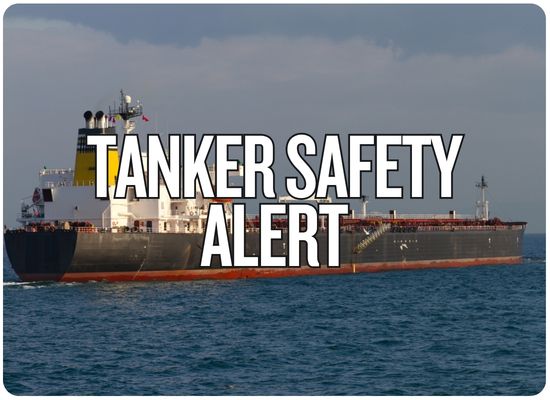
The U.S. Coast Guard has disclosed a serious machinery and cargo-safety failure aboard the 112,827-dwt crude oil tanker KALAHARI, with both auxiliary boilers out of service and the vessel's inert-gas system inoperable near Pascagoula, Mississippi. In a temporary rule published October 30, 2026, the Captain of the Port, Sector Mobile, identifies an increased risk of fire or explosion and establishes a 1,000-meter safety zone around the tanker while repairs are undertaken at anchorage. The Coast Guard was notified of the problem October 12, and an earlier navigation bulletin had already warned mariners of restrictions around the vessel. The latest federal rule runs through December 27, but actual enforcement ends when repairs are completed. The ship's cargo condition, cause of the boiler failures, repair costs and confirmed return-to-service date remain undisclosed.

ShipUniverse | Tanker Safety Incident

Two Disabled Boilers. One Critical Safety System Unavailable.

A 112,827-dwt crude tanker faces a Coast Guard exclusion zone after a machinery failure left its inert-gas system inoperable.

112,827Deadweight tonnes, M/T KALAHARI
2Auxiliary boilers out of service
1,000 mRestricted-area radius
2009Year built, crude oil tanker

The reported machinery-to-safety failure chain

Machinery condition Both boilers disabled

Coast Guard identifies both auxiliary boilers as out of service. The failure causes and sequence are not disclosed.

→
Safety consequence Inert gas unavailable

The agency reports the resulting inert-gas-system outage. Tank oxygen levels and pressure are not published.

→
Regulatory response Fire / explosion risk

Captain of the Port establishes a temporary restricted area around the vessel during repairs.

What a 1,000-meter exclusion radius means

1,000 m from center
Conceptual safety-zone footprint

The restricted water area

3.14 km² Calculated area of a full 1,000 m radius circle
2.0 km Full diameter, approximately 1.08 nautical miles
30°05.533′ N 88°24.958′ W Approximate position stated in the federal rule
Important: This schematic is not a nautical chart or navigational reference. The area is enforced only as specified by the Coast Guard. The published rule does not establish a fire, explosion, oil spill, unsafe measured tank atmosphere, or loss of the vessel's propulsion.

Sources: USCG temporary final rule 33 CFR 165.T08-0467; vessel particulars cross-checked against Gard and VesselFinder. Circle area is a ShipUniverse geometric calculation.

ShipUniverse | Incident Evidence & Regulation

The Two-Week Warning Before the Federal Rule

An earlier navigation bulletin shows the tanker safety-zone issue was already circulating before the October 30 Federal Register publication.

Documented chronology

October 12 Coast Guard says it was notified of both boilers being unavailable and the resulting inert-gas outage.
October 15 Navigation bulletin reports a 1,000 m restriction and an initial October 12 to November 12 window.
October 28 Actual notice begins for the temporary final rule's revised restriction period.
October 30 Federal Register publishes temporary final rule under docket USCG-2026-0467.
December 27 Scheduled rule expiration, not a stated repair deadline or confirmed off-hire duration.
Two different end dates: The earlier navigation bulletin used November 12; the later federal regulation uses December 27. The actual restriction ends following repair completion under the rule's enforcement provisions. Neither date independently proves the vessel's repair duration.

What can be confirmed, and what still needs evidence?

ESTABLISHED Public record NOT DISCLOSED Missing finding CONDITIONAL Operational consequence
Issue Documented information Operational or investigative question Evidence status
Machinery availability Both auxiliary boilers reported out of service. What components failed? Did the two outages share a cause or occur sequentially? ESTABLISHED
Inert-gas capability System reported inoperable as a result of the boiler outages. What independent backup, if any, was available? What restoration and test sequence is required? ESTABLISHED
Cargo-tank atmosphere Coast Guard cites increased fire or explosion risk. Actual tank oxygen content, positive pressure, cargo residues and monitoring results are unavailable. NOT DISCLOSED
Cargo carried The ship is identified independently as a crude oil tanker. Was the tanker loaded, in ballast, washed or gas-free when the defect was reported? NOT DISCLOSED
Coast Guard controls 1,000 m radius exclusion zone with entry subject to authorization. Were other movement, cargo-transfer or operational restrictions separately imposed? CONDITIONAL
Repair work Repairs to boilers and the inert-gas system are contemplated at anchorage. Which specialists, materials and inspections are needed, and when will repairs be accepted? NOT DISCLOSED
Anchorage traffic Unapproved vessel and personnel entry within the safety zone is restricted. How many other anchorage positions or commercial movements are actually affected? NOT DISCLOSED
Commercial exposure No repair value, off-hire claim or voyage-loss amount appears in the rule. Charter terms determine who bears hire, schedule or service costs. CONDITIONAL
Return to service Enforcement is tied to arrival and completion of repair work, with notices to mariners. Actual repairs, testing, subsequent permissions and voyage resumption are not confirmed. NOT DISCLOSED
For nearby vessel operators

The immediate practical issue is maintaining clearance from the restricted area unless specifically authorized by Coast Guard Sector Mobile. This is a defined vessel-centered exclusion zone, not a declared closure of the entire Port of Pascagoula.

For tanker owners and charterers

The decisive technical issue is restoration and verification of cargo-tank atmosphere control. The financial consequences cannot be established without cargo condition, downtime and charter-party information.

Sources: USCG Federal Register rule and USACE-related October 15 navigation bulletin. The uncertainty column is editorial research analysis, not an assertion that an incident, breach or loss has occurred.

ShipUniverse | Interactive Tanker Economics Tool

What Could a Tanker's Inert-Gas Failure Cost?

Test repair expense, lost earning potential and offshore support costs across alternative downtime scenarios.

Set the vessel scenario

Assumed unavailable days, not the regulatory expiration period.
Scenario assumption after voyage-related costs, not actual charter hire.
75%
0% assumes none of the modeled opportunity is lost; 100% assumes all is lost. Not an insurance or charter determination.
Direct expenses
Incremental attendance or logistics only, avoiding expenses already counted.
Illustrative combined economic exposure $967,500

Foregone contribution plus entered incremental costs. Not a reported casualty loss, booked expense or insurance claim.

$562,500 Modeled foregone commercial contribution
$405,000 Incremental repair and support expense
$96,750 Combined exposure per downtime day
3.14 km² Geometric footprint of federal safety zone

Where the modeled exposure comes from

Foregone earnings
$562,500
Repairs and parts
$250,000
Specialists / fixed
$75,000
Daily support
$80,000

Downtime versus earnings sensitivity

Combined illustrative exposure, keeping selected direct costs and loss-share factor unchanged. Daily contribution scenarios are assumptions.

Downtime $50K / day $100K / day $200K / day
5 days
10 days
20 days
Method: Foregone contribution = downtime days × assumed daily contribution × assumed loss percentage. Direct expense = repairs + specialist mobilization + other fixed expenses + daily support × downtime days. The combined result is a scenario total, not necessarily an amount borne by one party.
Contract warning: Do not add full charter hire, market earnings and lost profits together unless the contract and economic accounting establish they are separate exposures. Actual off-hire allocation, insurance recoveries, mitigation, deductibles, operating expenses and liability are not modeled. No source has established KALAHARI's repair expense or downtime.

Government reference: USCG temporary final rule 2026-22269. Financial scenarios are illustrative ShipUniverse inputs and are not attributed to the tanker owner, manager, insurer or Coast Guard.

Feedback Welcome

We welcome your feedback, suggestions, corrections, and ideas for enhancements.

Please click here to get in touch
By the ShipUniverse Editorial Team — About Us | Contact


← Browse more ShipUniverse posts
MARITIME DECISION TOOLS

Practical tools for real vessel and commercial decisions

Browse the latest 24 tools or instantly search every published ShipUniverse maritime tool.

24 latest toolsView all 286 →
TOOL

Port Waste Reception, MARPOL Delivery Notice, Disposal Logistics & Charge Verification Tool

🔔 Subscribe to ShipUniverse Weekly → Port Operations · MARPOL Waste…

Open →
TOOL

Maritime Crew Recruitment, Retention, Manning Agency Fees & Attrition Cost Tool

🔔 Subscribe to ShipUniverse Weekly → ShipUniverse · Fleet Crewing Economics…

Open →
TOOL

Container Rail Intermodal Connection, Terminal Dwell & Train Slot Tool

🔔 Subscribe to ShipUniverse Weekly → Ship-to-Rail · Intermodal Terminal ·…

Open →
TOOL

Bulk Grain Cargo Quality, Fumigation, Hold Readiness & Rejection Exposure Tool

🔔 Subscribe to ShipUniverse Weekly → Cargo quality · Hold inspection…

Open →
TOOL

Marine Equipment OEM Warranty, Service SLA & Repair Claim Tool

🔔 Subscribe to ShipUniverse Weekly → Equipment Reliability · OEM Claims…

Open →
TOOL

Freight Forwarder Shipment Quotation, Buy/Sell Rates, Routing & Margin Tool

🔔 Subscribe to ShipUniverse Weekly → Freight forwarding · NVOCC pricing…

Open →
TOOL

Ro-Ro Vehicle Terminal Yard Capacity, PDI & Vessel Loading Flow Tool

🔔 Subscribe to ShipUniverse Weekly → Vehicle terminals · PCTC &…

Open →
TOOL

Marine Hull & P&I Renewal, Premium Quote, Deductible & Coverage Comparison Tool

🔔 Subscribe to ShipUniverse Weekly → Marine Insurance · Renewal Tender…

Open →
TOOL

Offshore Support Vessel Charter Bid, Utilization & Campaign Profitability Tool

🔔 Subscribe to ShipUniverse Weekly → Offshore commercial operations · PSV…

Open →
TOOL

Marine Repair Tender, Shipyard Bid Comparison & Contract Cost Risk Tool

🔔 Subscribe to ShipUniverse Weekly → Ship Repair Procurement · Yard…

Open →
TOOL

Container Transshipment, Missed Connection, Rollover & Recovery Cost Tool

🔔 Subscribe to ShipUniverse Weekly → Container Liner Networks · Feeder-to-Mother…

Open →
TOOL

Vessel Pre-Purchase Technical Survey, Defect Valuation & Acquisition CAPEX Tool

🔔 Subscribe to ShipUniverse Weekly → Vessel S&P · Technical Due…

Open →
TOOL

Contract of Affreightment, Cargo Nomination, Fleet Allocation & Fulfilment Risk Tool

🔔 Subscribe to ShipUniverse Weekly → Dry Bulk Contracts · Cargo…

Open →
TOOL

Port Pilotage, Tug Dispatch, Berth Window & Marine Services Coordination Tool

🔔 Subscribe to ShipUniverse Weekly → Harbor Operations · Pilotage ·…

Open →
TOOL

Offshore Heavy Lift, Crane Spread, Weather Window & Installation Cost Tool

🔔 Subscribe to ShipUniverse Weekly → Offshore Construction · Heavy Lifts…

Open →
TOOL

Cruise Embarkation, Terminal Security, Gangway Queue & Passenger Processing Tool

🔔 Subscribe to ShipUniverse Weekly → Cruise Operations · Terminal Security…

Open →
TOOL

Dangerous Goods Declaration, Booking Acceptance & Documentation Readiness Tool

🔔 Subscribe to ShipUniverse Weekly → IMDG Documentation · Dangerous Goods…

Open →
TOOL

Marine Salvage, Wreck Removal, Pollution Response & Casualty Cost Tool

🔔 Subscribe to ShipUniverse Weekly → Marine Casualty · Emergency Salvage…

Open →
TOOL

Ferry Route Capacity, Timetable Reliability & Passenger Revenue Tool

🔔 Subscribe to ShipUniverse Weekly → Ferry Networks · Route Planning…

Open →
TOOL

Inland Barge Tow, Lock Delay, Fleet Utilization & Voyage Profitability Tool

🔔 Subscribe to ShipUniverse Weekly → Inland Navigation • Towboat Economics…

Open →
TOOL

Marine Bunker Procurement, Supplier Quote Comparison & Delivered Fuel Cost Tool

🔔 Subscribe to ShipUniverse Weekly → Bunker Procurement • Fuel Grades…

Open →
TOOL

Reefer Cargo Temperature Excursion, Cold Chain & Cargo Claim Exposure Tool

🔔 Subscribe to ShipUniverse Weekly → Reefer Cargo • Temperature Evidence…

Open →
TOOL

Electronic Bill of Lading, Cargo Release & Documentation Discrepancy Tool

🔔 Subscribe to ShipUniverse Weekly → Container Shipping • Digital Trade…

Open →
TOOL

Crew Change, Relief Logistics, Port Coordination & Cost Tool

🔔 Subscribe to ShipUniverse Weekly → Fleet Crewing • Seafarer Repatriation…

Open →