
SHIPUNIVERSE
Maritime Intelligence, Tools & Live Industry Radars

One place for live maritime intelligence, practical decision tools, industry events and focused reporting.

17Live Radars 285Maritime Tools
24/7Intelligence Focus
GlobalIndustry Coverage
RADARS
TOOLS
All Tools
Latest 20
Open to load latest items…
NEWS
All News
Latest 20
Open to load latest items…
REPORTS
All Reports
Latest 20
Open to load latest items…
TECH
All Tech
Latest 20
Open to load latest items…
CRUISE
All Cruise
Latest 20
Open to load latest items…
NAVAL
All Naval
Latest 20
Open to load latest items…
SHIPUNIVERSE REPORTING

Reports, news and industry coverage

Full analysis in the ShipUniverse intelligence layout.

← Back to latest posts ShipUniverse / NEWS

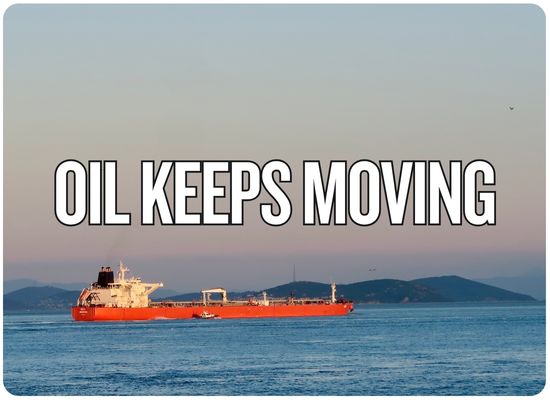
Iran Is Attacking Ships, Yet More Gulf Oil Is Moving Than Before the War

🔔 Subscribe to ShipUniverse Weekly →

Middle East oil exports have now recovered to at least their prewar level despite continuing attacks around the Strait of Hormuz. Kpler data show regional oil flows, including Hormuz transits and alternative routes, averaging more than 24 million barrels per day in the week through October 18, above Kpler’s 23.3 million-bpd prewar baseline. Preliminary Hormuz-linked flows, including offshore transfers in the Gulf of Oman, averaged roughly 14 million bpd, about 82% of prewar levels. The missing Hormuz volume is being replaced by an improvised logistics system built around short shuttle voyages, ship-to-ship transfers near Oman, U.S.-protected transit along the Omani side of the strait, Saudi and UAE bypass pipelines and alternative export terminals.

Hormuz Oil System · Week Through October 18

The Strait Is Still Disrupted. The Export System Is Not.

Gulf producers have rebuilt oil throughput around the damaged chokepoint. The result is a hybrid logistics network using protected tanker corridors, short shuttle voyages, offshore transfers, bypass pipelines and export terminals outside the Persian Gulf.

Regional Oil Flow 24M+ barrels per day
Kpler's latest flow estimates put combined non-Iranian Middle East oil exports back above the 23.3M-bpd prewar reference used in its regional tracker.
Hormuz-Linked Flow ~14M bpd
Includes flows through the strait and associated Gulf of Oman offshore transfers.
Hormuz Recovery ~82%
Compared with the prewar Hormuz-linked flow used by Kpler.
Bypass Share · September ~40%
Share of non-Iranian Gulf crude that bypassed Hormuz, versus about 17% before the war.
VLCC Shuttle Fleet ~80 ships
Vitol estimate for VLCCs tied up in Middle East shuttle operations by mid-October.
The New Persian Gulf Export Machine
Instead of one tanker loading inside the Gulf and sailing all the way to Asia, the highest-risk section of the voyage is increasingly isolated from the long-haul leg.
Inside Gulf Load the Shuttle
Older or specially committed tankers load Saudi, Iraqi, Kuwaiti or other Gulf crude.
→
Danger Zone Cross Hormuz
Short outbound runs use an Omani-side corridor with U.S. air cover. Some vessels transit with AIS switched off.
→
Gulf of Oman Transfer Offshore
Crude is moved ship-to-ship near Oman onto long-haul tankers, allowing the shuttle vessel to turn back quickly.
→
Long-Haul Leg Asia / Global Market
The receiving tanker continues toward the refinery without repeatedly entering the highest-risk zone.
Confirmed ME Incidents 113
IMO total through October 14.
Confirmed Fatalities 24
Seafarer deaths recorded by IMO.
Gulf-China Freight $37.37/bbl
Near-record VLCC transport cost cited by Kpler this week.
War-Risk Insurance Up to 10%
Share of vessel value cited by Windward, up from less than 3%.
This is not a return to normal shipping. The volume has recovered because the logistics system has become more complex, vessel-intensive and expensive. A prewar-sized barrel flow is now being produced with more ship-to-ship transfers, more dedicated shuttle tonnage, greater military protection and dramatically higher freight and insurance costs.
How the Chokepoint Was Re-Engineered

Six Adaptations Are Keeping Oil Moving Through a Maritime War Zone

No single solution restored Gulf exports. Producers, shipowners, traders and governments built overlapping layers of redundancy that reduce dependence on one vessel making one uninterrupted voyage.

Hormuz resilience system ← →
Adaptation How It Works Evidence / Scale Shipping Benefit Cost or Constraint What Could Break It
Protected Hormuz Corridor Omani-side passage Tankers use a more established transit corridor with U.S. surveillance and air cover while crossing the highest-risk section of the strait. Hormuz-linked oil flow has recovered to roughly 14M bpd, around 82% of the prewar reference level. Provides greater confidence that selected vessels can make repeated crossings despite attacks and Iranian threats. Military protection cannot eliminate drones, missiles, mines, small-boat attacks or crew risk. A sustained escalation that produces major casualties, repeated sinkings or forces escort operations to pause.
Gulf of Oman Shuttle / STS Split the voyage Tankers make short runs out of the Gulf, transfer crude near Oman and then return rather than sailing all the way to Asia. GoO liquids STS reached record levels during the war. Vitol now estimates roughly 80 VLCCs tied to regional shuttle activity. Limits repeated danger-zone exposure for long-haul tankers and increases the number of cargoes that can clear Hormuz. Uses far more vessel-days, tug support, mooring equipment, fenders, pilots and offshore transfer capacity. Fujairah/Sohar support limits, bad weather, attacks in the Gulf of Oman or insufficient shuttle tonnage.
Saudi East-West Pipeline Ras Tanura → Yanbu Saudi crude is pumped across the peninsula and loaded from the Red Sea instead of entering Hormuz. Pipeline rated at up to 7M bpd, with roughly 5M bpd available for export use under current EIA estimates. Removes barrels entirely from the Hormuz risk zone. Pipeline and Yanbu infrastructure become strategic targets and cannot replace the entire Gulf export system. Missile or drone strikes on the pipeline, pumping stations, storage or Red Sea export infrastructure.
UAE ADCOP Abu Dhabi → Fujairah Crude moves by pipeline from Abu Dhabi fields to Fujairah, already outside the Strait of Hormuz. Maximum capacity currently around 1.8M bpd. Gives the UAE direct Gulf of Oman export capability without a strait transit. Much of the pipeline was already utilized before the conflict, limiting spare incremental bypass capacity. Pipeline disruption or attacks on Fujairah storage and marine infrastructure.
Dedicated High-Risk Fleet Older tonnage redeployed Owners move older vessels previously active in Russian, Venezuelan or other high-risk trades into Gulf shuttle work. Shipbrokers report older vessels being repositioned because extreme tanker earnings compensate for the additional risk. Creates a pool of tonnage whose business model is specifically suited to repeated high-risk voyages. Raises maintenance, vetting, insurance and casualty concerns. Major vessel losses, tighter underwriting, sanctions restrictions or crew refusal.
Crew Risk Compensation Pay people to enter Seafarers are offered very large voyage bonuses to accept repeated crossings into the Persian Gulf. WSJ reports offers of two to three times normal monthly pay, including one recruitment offer of up to $25,000 for a round trip. Keeps critical crews available despite a severe deterioration in maritime security conditions. Human exposure remains real. IMO had recorded 24 confirmed seafarer deaths by mid-October. Casualty rates high enough that financial incentives no longer attract adequate crews.
Hormuz resilience system ← →
The Tradeoff Volume Recovered. Efficiency Did Not.
The industry has reconstructed physical throughput, but it is consuming much more shipping capacity and taking substantially more commercial and human risk to move each barrel.
Gulf → China Freight $37.37/bbl
Near-record supertanker freight reported this week.
War-Risk Cover Up to 10%
Of ship value, versus below 3% previously.
September Bypass 40%
Of non-Iranian Gulf crude, versus 17% before the war.
Daily Commodity Ships ~19
Recent Hormuz crossings versus more than 100 daily before the war across commodity shipping.
Ship Universe Hormuz Resilience Tool

War-Zone Oil Flow Stress Test

Test how much regional export capacity now sits inside the Hormuz-linked system, how much has migrated to alternative routes, and what happens if another wave of attacks sharply reduces strait throughput.

M bpd
M bpd
Default uses Kpler's 23.293M-bpd regional baseline. A later preliminary snapshot has used 24.4M bpd.
M bpd
M bpd
% cut
Assumes non-Hormuz routes remain unchanged.
M barrels
Regional Recovery 105.2% current regional flow divided by entered prewar baseline
Above / Below Prewar +1.2M current regional flow minus prewar regional baseline
Hormuz Recovery 81.9% current Hormuz-linked flow versus entered prewar level
Implied Alternative Routes 10.5M regional flow less current Hormuz-linked flow
Alternative Route Share 42.9% modeled non-Hormuz share of current regional flow
Flow After New Hormuz Shock 17.5M alternative routes plus reduced Hormuz flow
Current Route Mix
This is a simplified split between the entered Hormuz-linked flow and all other regional export routes.
Total Current
24.5M
Hormuz Linked
14M
Alternative Routes
10.5M
Resilience Interpretation Adapted, Not Normal
Current regional throughput is above the entered prewar baseline, but the system remains highly exposed to another sharp loss of Hormuz capacity.
Current Total 24.5M
Hormuz 14M
Stress Cut 50%
VLCC Cargo 2M bbl
Scenario model only: Kpler's flow estimates are preliminary and can be revised as dark transits and delayed AIS data are identified. “Alternative routes” in this tool are calculated as a simple residual and can include Red Sea exports, Fujairah/Oman terminal loadings and other flows outside the entered Hormuz-linked figure. The model assumes those alternative flows remain unchanged during the stress case.
Feedback Welcome

We welcome your feedback, suggestions, corrections, and ideas for enhancements.

Please click here to get in touch

By the ShipUniverse Editorial Team — About Us | Contact


← Browse more ShipUniverse posts
MARITIME DECISION TOOLS

Practical tools for real vessel and commercial decisions

Browse the latest 24 tools or instantly search every published ShipUniverse maritime tool.

24 latest toolsView all 285 →
TOOL

Maritime Crew Recruitment, Retention, Manning Agency Fees & Attrition Cost Tool

🔔 Subscribe to ShipUniverse Weekly → ShipUniverse · Fleet Crewing Economics…

Open →
TOOL

Container Rail Intermodal Connection, Terminal Dwell & Train Slot Tool

🔔 Subscribe to ShipUniverse Weekly → Ship-to-Rail · Intermodal Terminal ·…

Open →
TOOL

Bulk Grain Cargo Quality, Fumigation, Hold Readiness & Rejection Exposure Tool

🔔 Subscribe to ShipUniverse Weekly → Cargo quality · Hold inspection…

Open →
TOOL

Marine Equipment OEM Warranty, Service SLA & Repair Claim Tool

🔔 Subscribe to ShipUniverse Weekly → Equipment Reliability · OEM Claims…

Open →
TOOL

Freight Forwarder Shipment Quotation, Buy/Sell Rates, Routing & Margin Tool

🔔 Subscribe to ShipUniverse Weekly → Freight forwarding · NVOCC pricing…

Open →
TOOL

Ro-Ro Vehicle Terminal Yard Capacity, PDI & Vessel Loading Flow Tool

🔔 Subscribe to ShipUniverse Weekly → Vehicle terminals · PCTC &…

Open →
TOOL

Marine Hull & P&I Renewal, Premium Quote, Deductible & Coverage Comparison Tool

🔔 Subscribe to ShipUniverse Weekly → Marine Insurance · Renewal Tender…

Open →
TOOL

Offshore Support Vessel Charter Bid, Utilization & Campaign Profitability Tool

🔔 Subscribe to ShipUniverse Weekly → Offshore commercial operations · PSV…

Open →
TOOL

Marine Repair Tender, Shipyard Bid Comparison & Contract Cost Risk Tool

🔔 Subscribe to ShipUniverse Weekly → Ship Repair Procurement · Yard…

Open →
TOOL

Container Transshipment, Missed Connection, Rollover & Recovery Cost Tool

🔔 Subscribe to ShipUniverse Weekly → Container Liner Networks · Feeder-to-Mother…

Open →
TOOL

Vessel Pre-Purchase Technical Survey, Defect Valuation & Acquisition CAPEX Tool

🔔 Subscribe to ShipUniverse Weekly → Vessel S&P · Technical Due…

Open →
TOOL

Contract of Affreightment, Cargo Nomination, Fleet Allocation & Fulfilment Risk Tool

🔔 Subscribe to ShipUniverse Weekly → Dry Bulk Contracts · Cargo…

Open →
TOOL

Port Pilotage, Tug Dispatch, Berth Window & Marine Services Coordination Tool

🔔 Subscribe to ShipUniverse Weekly → Harbor Operations · Pilotage ·…

Open →
TOOL

Offshore Heavy Lift, Crane Spread, Weather Window & Installation Cost Tool

🔔 Subscribe to ShipUniverse Weekly → Offshore Construction · Heavy Lifts…

Open →
TOOL

Cruise Embarkation, Terminal Security, Gangway Queue & Passenger Processing Tool

🔔 Subscribe to ShipUniverse Weekly → Cruise Operations · Terminal Security…

Open →
TOOL

Dangerous Goods Declaration, Booking Acceptance & Documentation Readiness Tool

🔔 Subscribe to ShipUniverse Weekly → IMDG Documentation · Dangerous Goods…

Open →
TOOL

Marine Salvage, Wreck Removal, Pollution Response & Casualty Cost Tool

🔔 Subscribe to ShipUniverse Weekly → Marine Casualty · Emergency Salvage…

Open →
TOOL

Ferry Route Capacity, Timetable Reliability & Passenger Revenue Tool

🔔 Subscribe to ShipUniverse Weekly → Ferry Networks · Route Planning…

Open →
TOOL

Inland Barge Tow, Lock Delay, Fleet Utilization & Voyage Profitability Tool

🔔 Subscribe to ShipUniverse Weekly → Inland Navigation • Towboat Economics…

Open →
TOOL

Marine Bunker Procurement, Supplier Quote Comparison & Delivered Fuel Cost Tool

🔔 Subscribe to ShipUniverse Weekly → Bunker Procurement • Fuel Grades…

Open →
TOOL

Reefer Cargo Temperature Excursion, Cold Chain & Cargo Claim Exposure Tool

🔔 Subscribe to ShipUniverse Weekly → Reefer Cargo • Temperature Evidence…

Open →
TOOL

Electronic Bill of Lading, Cargo Release & Documentation Discrepancy Tool

🔔 Subscribe to ShipUniverse Weekly → Container Shipping • Digital Trade…

Open →
TOOL

Crew Change, Relief Logistics, Port Coordination & Cost Tool

🔔 Subscribe to ShipUniverse Weekly → Fleet Crewing • Seafarer Repatriation…

Open →
TOOL

Marine Insurance Hull, P&I, Deductible & Claim Reserve Tool

🔔 Subscribe to ShipUniverse Weekly → Marine Claims • Hull &…

Open →