
🔔 Subscribe to ShipUniverse Weekly →
One Collision Cancels a Cruise
What does a casualty involving a 100,000-GT passenger ship actually cost?
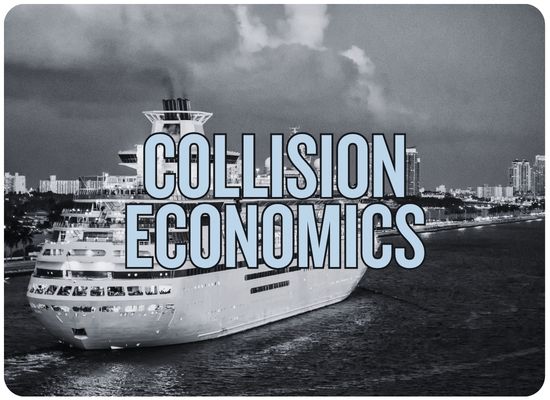
Mein Schiff 3 collided with two containerships while leaving Bremerhaven. Nobody was injured. The ship retained power. There was no reported water ingress.
The voyage was still over.
A cruise casualty does not have to threaten the ship's buoyancy or propulsion to destroy the economics of a voyage. Damage a safety-critical system and the commercial consequence can be almost instantaneous.
Mein Schiff 3 was carrying 2,428 passengers when it came into contact with two containerships during its October 25 departure from Bremerhaven.
The ship returned to the cruise terminal under its own power with tug assistance. Yet damaged lifeboats, launching equipment and external structure forced TUI Cruises to cancel the entire 20-night Canary Islands itinerary and arrange a shipyard repair.
That turns one harbor maneuver into several separate economic events: refunded fares, customer recovery, lost onboard revenue, shipyard work, survey and certification, possible third-party collision claims and the risk that the next scheduled sailing also disappears.
is only one layer.
A casualty can cost more in lost operation than damaged steel
Police have put the overall property damage from the collision in the millions. TUI Cruises has not disclosed its own repair bill.
But the canceled passenger operation is already large. TUI advertised the affected voyage from €3,499 per person and had 2,428 guests aboard.
Even if every passenger had paid only that lowest published fare, the voyage represented approximately €8.5 million of passenger fares before premium cabins, packages and other spending are considered.
The casualty itself lasted minutes. The economic event can last weeks.
Bremerhaven
Mein Schiff 3 was departing with tug assistance when strong wind pushed the vessel toward two containerships at the Stromkaje terminal.
Why damaged lifeboats become a commercial hard stop
The ship may still float, generate electricity and maneuver normally. Passenger operations remain impossible if the required lifesaving capacity cannot be demonstrated for everyone onboard.
Repair the Boats
Damaged survival craft have to be repaired or replaced with approved equipment.
Repair the Davits
The launching arrangement must itself be structurally and mechanically fit for service.
Test the System
Lifesaving appliances are subject to regulatory, class and equipment-certification requirements.
Restore Complement
TUI says sufficient lifesaving capacity must exist for everyone onboard before service resumes.
This is what makes passenger ships economically fragile after localized damage
Damage can occur several metres above the waterline and still remove the vessel from commercial service.
The relevant question is not simply whether the ship is seaworthy enough to move. It is whether the ship is fully compliant to carry thousands of passengers again.
The casualty cost expands through seven layers
Refund
Paid cruise fares for the canceled itinerary are returned to affected guests.
Recovery
Ground transportation, hotels, travel assistance and rebooking create additional costs.
Ancillary Loss
Excursions, premium dining, retail and other purchases disappear with the cruise.
Repair
Steel, glazing, lifeboats, davits, labor, cranes and replacement components.
Survey
Testing, class review, certification and safety verification can govern return-to-service timing.
Other Ships
Damage, cargo effects, survey costs and loss-of-use claims may enter the collision file.
Cascade
Every missed future departure creates another passenger and revenue problem.
The canceled cruise carried at least an €8.5 million fare pool
The conservative floor
2,428 actual guests multiplied by the lowest publicly advertised fare of €3,499 per passenger.
This deliberately understates the true booked-fare pool because passengers occupied multiple cabin categories and tariffs.
Do not add “lost fare revenue” and “fare refunds” twice
A refunded ticket is both a cash payment back to the guest and a reversal of revenue that the canceled cruise would otherwise have earned.
For economic-loss analysis, it should generally be counted once. The separate losses are ancillary contribution, customer-recovery costs, repairs and any later sailings that also disappear.
The first canceled cruise may not be the expensive one
20 nights. Starting fare €3,499. 2,428 passengers actually onboard.
14-night departure from Bremerhaven. TUI has not yet confirmed whether it will be affected.
Four-night repositioning-style itinerary from Bremerhaven to Kiel.
Seven-night Norway itinerary scheduled after the short November cruise.
The November 14 sailing is the key financial deadline
If repairs and safety verification are completed before November 14, the casualty may remain a one-voyage revenue event.
If that departure is lost, the next layer of passenger-fare exposure begins. At 2,428 passengers multiplied by the currently advertised €2,199 entry fare, the lowest-fare pool would be approximately €5.34 million.
Actual exposure would depend on booked passenger count, cabin mix, paid fares, refunds, future credits and costs avoided by not operating the voyage.
One unusually favorable factor: almost no ocean repositioning
Casualty, yard and next cruise
Mein Schiff 3 remains in Bremerhaven. Lloyd Werft is also in Bremerhaven. The next scheduled cruise also begins in Bremerhaven.
This could have been much worse geographically
A cruise ship damaged in a remote port may require an empty repositioning voyage, tug assistance, temporary repairs, a suitable drydock hundreds or thousands of nautical miles away and another positioning voyage before commercial service resumes.
In this case the repair facility is effectively local. Tug movements, yard shifting and other logistics still cost money, but the casualty does not currently require a long deadhead voyage merely to reach the repair yard.
The variable that matters most is therefore repair duration rather than distance.
Three possible casualty cost envelopes
These are ShipUniverse scenarios, not estimates of TUI Cruises' actual loss. No company repair cost, insurance deductible, third-party liability reserve or business-interruption recovery has yet been disclosed.
Repair is relatively straightforward and the November 14 cruise operates.
Higher average paid fare and a mid-single-digit-million repair package.
Repair scope expands and the November 14 cruise is also lost.
Scenario totals are gross modeled economic exposure before insurance recoveries. They are designed to demonstrate sensitivity, not predict the eventual claim.
Insurance can move the loss without eliminating it
Damage to Mein Schiff 3
Physical collision damage to the insured vessel is normally a hull-and-machinery matter, subject to policy terms, deductibles and insured value.
Damage to Other Ships
Hull insurance and P&I can divide collision liabilities depending on the insurance wording and proportion of liability covered under the hull policy.
Revenue Is Different
Lost passenger revenue is not automatically the same claim as repairing physical ship damage. Any business-interruption or loss-of-hire recovery depends on specific coverage.
The other vessels can create a second casualty balance sheet
MSC Victorine sustained significant structural damage and reported damage to container guides and some containers.
Collision claims can include physical repair, survey costs, damaged equipment, cargo consequences and loss of earnings while the other vessel is unavailable. Final liability depends on the investigation, applicable law and apportionment of fault.
What is known, modeled and still unknown
| Cost Layer | Known Today | ShipUniverse Model Treatment | Main Uncertainty |
|---|---|---|---|
| Current Voyage Fare | 2,428 passengers; lowest published fare €3,499 | €8.50M minimum advertised-fare pool | Actual average fare and cabin mix |
| Passenger Refund | 100% of paid cruise fare reported | Adjustable from 0% to 100% | Exact cash amount refunded |
| Future Discount | 10% future-booking concession reported | Discount multiplied by assumed redemption rate | How many affected guests rebook |
| Guest Recovery | Guests disembarked after voyage cancellation | User-set cost per passenger | Hotels, transfers, travel reimbursement and assistance |
| Physical Repair | Yard repair required; lifeboats and launching equipment affected | User-set repair budget | Steel scope, replacement parts and hidden damage |
| Survey / Certification | Lifesaving capacity must be restored before service | Separate yard/survey allowance | Testing and approval duration |
| Repositioning | Repair yard and next scheduled departure are both Bremerhaven | Low default input | Tug, berth and yard movement cost |
| Third-Party Claims | Two containerships involved | Default zero until user enters retained exposure | Fault allocation, insurance and detention claims |
| Next Sailing | November 14 Norway cruise not yet confirmed canceled | Optional cascade toggle in model | Repair completion and lifesaving approval |
The economic clock is now running toward November 14
Every repair decision is now measured against a fixed commercial deadline.
Steel can often be repaired quickly. Replacement lifesaving equipment, correct components, testing and certification can become the schedule drivers. If the repair crosses the next embarkation date, the casualty stops being a one-cruise event.
What does one canceled cruise really cost?
Adjust the passenger fare, repair scope, refund policy, customer recovery, insurance and cascade assumptions to model the total economic exposure.
Scenario model only. It does not estimate TUI Cruises' eventual casualty claim. The actual 2,428 passenger count, 20-night voyage length and published €3,499 entry fare are sourced to the affected sailing. The €4,000 average fare, €15 ancillary revenue per passenger-day, €250 passenger-recovery cost, €6 million repair budget, €1 million yard/survey allowance and €120,000 daily avoided variable operating cost are illustrative assumptions. TUI Cruises has not publicly disclosed the final repair cost, actual average paid fare, passenger-recovery expense, insurance deductible, business-interruption cover or liability allocation. The model counts refunded fare revenue once rather than adding both “lost fare” and “refund” as separate economic losses. Insurance recovery applies only to the modeled physical repair, yard/survey and retained third-party liability categories. Actual policy treatment may differ substantially.
Research basis
- TUI Cruises October 29, 2026 official Mein Schiff 3 update confirming the canceled Canary Islands voyage, Lloyd Werft transfer and damage affecting lifesaving equipment.
- TUI Cruises voyage listing for the October 25 to November 14, 2026 20-night Timeless Canary Islands itinerary and published cabin pricing.
- Bremen and German media reporting on the October 25 collision, passenger count, crew count and police assessment that property damage runs into the millions.
- Cruise Industry News and Seatrade Cruise reporting on lifeboat, davit, hull damage and the Lloyd Werft repair plan.
- W. K. Webster casualty reporting covering MSC Victorine's approximately ten-metre hull gash, damaged container guides and potential cargo and recovery claims.
- TUI Cruises fleet information identifying Mein Schiff 3 as a 2014-built, approximately 99,526-GT vessel with 2,506-passenger nominal capacity.
- Current November 14 Mein Schiff 3 sales listings showing the next scheduled 14-night Norway cruise from Bremerhaven from approximately €2,199 per person.
- Current November 28 Mein Schiff 3 sales listings showing the four-night Bremerhaven-to-Kiel itinerary from approximately €559 per person.
- Passenger communications and German cruise-market reporting indicating full reimbursement of the canceled cruise fare and a 10% discount on a future booking.
- DNV life-saving-appliance certification material covering SOLAS, LSA Code and marine-equipment certification requirements.
- Gard collision-liability guidance explaining that recoverable collision damage can include repairs, equipment, loss of earnings and related costs depending on liability.
- Gard and other marine-insurance guidance distinguishing physical hull-and-machinery damage from P&I and third-party collision liabilities.
We welcome your feedback, suggestions, corrections, and ideas for enhancements.
Please click here to get in touch