
🔔 Subscribe to ShipUniverse Weekly →
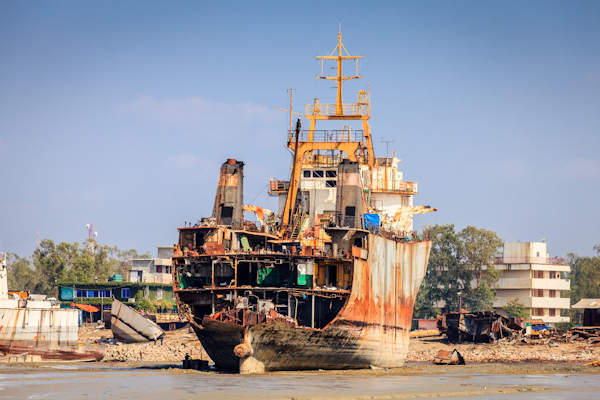
Shipbreaking, often overlooked in the colossal maritime industry, is the intricate process of dismantling obsolete vessels to reclaim their materials. This practice holds a dual significance; on one hand, it’s an environmental attempt to manage marine waste and reduce the ecological footprints of defunct ships. On the other, it’s an economic powerhouse for many developing nations, providing jobs and valuable materials. However, the disposal of massive vessels isn’t without challenges, ranging from environmental degradation to humanitarian issues.
* Please send feedback/suggestions to editor @ shipuniverse.com
The Shipbreaking Hubs: India, Bangladesh, and Pakistan
Over the past few decades, the shores of India, Bangladesh, and Pakistan have transformed into global epicenters for shipbreaking. Historically, ships were often left to decay or were sunk intentionally. But as steel’s value became evident in the 20th century, the dismantling of ships for their metal turned into a thriving business.
History and Evolution in these Countries:
The evolution of shipbreaking in these regions wasn’t just a random occurrence. It was a confluence of factors, including the availability of vast coastlines, a low-cost labor force, and growing demands for steel. Alang in India, Gadani in Pakistan, and Chittagong in Bangladesh emerged as the primary yards, each with its unique stories of growth. For instance, Alang became the world’s most significant shipbreaking hub in the ’80s, capitalizing on its tidal flats that allowed ships to be easily beached.
Current Statistics:
- India: Alang breaks approximately 300 ships annually, contributing significantly to the country’s steel market and offering employment to thousands.
- Bangladesh: Chittagong stands as one of the leading shipbreaking capitals, dismantling about 250 ships every year. This industry contributes almost 15% of the steel used in the country.
- Pakistan: Gadani, once a more dominant player, now breaks around 100 ships annually. Though it’s seen a decline, the yard remains pivotal for the local economy and steel production.
The Process of Shipbreaking
The daunting task of dismantling a ship, once a symbol of human engineering and maritime prowess, requires meticulous planning and execution.
Step-by-step Breakdown:
- Beaching: The ship is intentionally run aground on a beach during high tide. As the tide recedes, the vessel becomes accessible for dismantling.
- Decontamination: Any potentially toxic substances, including fuels, oils, and refrigerants, are drained and safely stored for appropriate disposal or recycling.
- Dismantling the Superstructure: Cranes, bulldozers, and manual laborers systematically tear down the ship’s upper parts, including the bridge, masts, and other above-deck structures.
- Interior Stripping: Workers enter the vessel to remove valuable components such as machinery, electronics, and furnishings.
- Cutting the Hull: Using a combination of blowtorches and heavy machinery, the ship’s steel hull is cut into manageable pieces. These segments are often directly sold or further melted down.
- Material Segregation: Metals, woods, plastics, and other materials are separated for recycling, repurposing, or disposal.
- Final Cleanup: The remaining parts, often the ship’s skeleton, are broken down, and any residual waste is cleared from the site.
Manpower and Machinery Involved:
Shipbreaking is both labor-intensive and machinery-dependent. It typically employs thousands in a single yard, ranging from skilled torch cutters to semi-skilled laborers handling the materials. The machinery includes cranes for lifting heavy parts, bulldozers for moving debris, and specialized equipment like shears and blowtorches for cutting. It’s a symphony of man and machine, orchestrated to extract maximum value from these steel giants.
Environmental Concerns
While shipbreaking is undeniably vital for the maritime economy, its environmental consequences can be dire if unchecked.
Pollution of Coastal Waters:
The immediate marine environment is the first victim. Leaks of oil, remnants of asbestos, heavy metals like lead and mercury, and other hazardous materials can seep into the coastal waters. This not only affects the marine life but also jeopardizes the livelihoods of local fishermen and the health of communities relying on these waters.
Air Pollution from Burning Materials:
To expedite the dismantling process, some yards opt to burn certain parts of the ship, leading to toxic emissions. This releases pollutants like dioxins and furans, which can have severe health repercussions for workers and neighboring communities.
Long-term Damage to Marine Ecosystems and Biodiversity:
Beyond the immediate pollution, there’s a chronic impact on marine biodiversity. Disrupted habitats, introduction of invasive species (from ballast waters), and the accumulation of toxins in the food chain can irreparably harm ecosystems. Coastal mangroves, often razed to make way for shipbreaking, act as vital breeding grounds for many marine species and their loss can have cascading effects on the food web.
In essence, while shipbreaking plays an indispensable role in the maritime industry, a balance must be struck to safeguard our environment and the very oceans that these ships once majestically sailed.
The Push for Sustainable Ship Recycling
The recognition of the environmental and humanitarian challenges posed by shipbreaking has led to a global movement towards more sustainable ship recycling practices. At the heart of this movement lies a mix of international conventions, national efforts, and corporate responsibilities.
Hong Kong International Convention for the Safe and Environmentally Sound Recycling of Ships:
In 2009, a significant stride was made with the establishment of the Hong Kong International Convention. This Convention, designed under the International Maritime Organization (IMO), aims to ensure that ships, when being recycled, don’t pose unnecessary risks to human health, safety, or the environment. Key aspects of the Convention include:
- Requirements for ships to carry an Inventory of Hazardous Materials.
- Obligations for ship recycling facilities to provide a Ship Recycling Plan, specifying the manner in which each ship will be recycled.
- Certifications and audits to ensure that both ships and recycling facilities comply with the Convention.
Efforts by Individual Countries:
Several shipbreaking nations are making notable efforts to align with global standards:
- India: Alang, the shipbreaking hub, has seen significant upgrades with many yards now compliant with the Hong Kong Convention’s standards. There’s been a conscious shift to create “green” shipbreaking yards, minimizing environmental impacts.
- Bangladesh: Despite previous environmental and labor concerns, Bangladesh is investing in improved facilities and training for workers. The government is keen on modernizing the industry with safer and more efficient technologies.
- Pakistan: Pakistan’s Gadani yard has witnessed several accidents in the past. Recognizing this, there’s a push towards better safety regulations, equipment upgrades, and rigorous inspections.
Initiatives by Shipping Companies and Industries:
Shipping magnates and companies play a pivotal role in steering the ship recycling narrative. Many corporations now prioritize end-of-life vessel disposal as part of their corporate social responsibility (CSR) initiatives:
- Green Ship Recycling: Companies are choosing recycling yards that adhere to environmentally sound practices, even if it means incurring slightly higher costs.
- Collaborative Platforms: Industry giants are collaborating to form platforms and coalitions, like the Sustainable Shipping Initiative, to promote responsible ship recycling.
- Transparency and Reporting: More companies are becoming transparent about their ship recycling policies, with detailed reports and adherence to international guidelines, showcasing their commitment to sustainability.
The push for sustainable ship recycling symbolizes a broader global recognition: that economic growth and environmental responsibility aren’t mutually exclusive. With collective efforts from international bodies, countries, and corporations, the maritime world is charting a course towards a more sustainable and responsible future.
The Future of Shipbreaking
As the maritime industry evolves in the face of global environmental and socio-economic challenges, so too does shipbreaking. Here’s a glimpse into what the future might hold:
Predictions and Trends for the Next Decade:
- Technology Integration: With the advent of new technologies, we can expect to see more automation and robotics in shipbreaking processes, reducing human risks and increasing efficiency.
- Eco-friendly Breakdown: The trend towards ‘green’ shipbreaking will continue, with more emphasis on reducing waste and maximizing recycling.
- Shift in Global Hubs: While South Asia currently dominates, other regions might emerge as significant players due to regulatory shifts and technological advancements.
Role of Global Cooperation and Treaties:
Global unity will be paramount. Treaties like the Hong Kong Convention will need wider ratification and stricter enforcement. New conventions might emerge, focusing on the integration of technology, worker rights, and environmental preservation in shipbreaking.
Opportunities for Transformation:
The challenges in shipbreaking also present opportunities:
- Economic Growth: Sustainable shipbreaking can lead to job creation, not just in the actual breaking but in the subsequent recycling and repurposing industries.
- Environmental Innovation: With research and investment, new methods can be developed to minimize environmental impact, such as biodegradable components for ships or better pollutant management systems.
- Education and Training: Elevating the skill set of workers can make the industry safer and more productive. By offering training, workers can also find opportunities beyond shipbreaking.
The story of shipbreaking is a microcosm of our broader global narrative – one of progress, challenges, and the perpetual quest for balance. As we sail forward, it’s crucial to understand that every vessel, no matter how majestic in its prime, has a lifecycle. Ensuring the end of this lifecycle is handled with care, responsibility, and vision is a testament to our commitment to the planet and its people.
To readers, industry leaders, and policymakers alike – the onus is upon us. Let’s champion the cause of sustainable ship recycling, steering our global fleet towards a horizon that’s not just prosperous, but also compassionate and green.
Additional Resources
- International Maritime Organization (IMO)
- About the Hong Kong Convention: IMO – Hong Kong Convention
- Shipbreaking Platform
- A coalition of environmental, human, and labor rights organizations focusing on shipbreaking issues. NGO Shipbreaking Platform
- Basel Convention
- An international treaty designed to reduce the movements of hazardous waste between nations. Basel Convention
- United Nations Conference on Trade and Development (UNCTAD)
- They provide transport news and statistics, some of which touch on shipbreaking. UNCTAD – Transport and Trade Logistics
- Greenpeace
- Greenpeace has conducted investigations into the environmental and human rights implications of shipbreaking. Greenpeace International
- Safety4Sea
- An online platform providing maritime safety and environmental news, including updates about shipbreaking. Safety4Sea